


How Do I Replace Windshield Washer Reservoir & Pump?




It is very easy.
1) remove fill tube. This is a simple twist and remove.
2) remove front passenger wheel
3) remove passenger inner fender (splash shield)
4) disconnect hose to pump
5) disconnect pump and level sensor harnesses
6) remove three bolts that hold the reservoir
That is it
1) remove fill tube. This is a simple twist and remove.
2) remove front passenger wheel
3) remove passenger inner fender (splash shield)
4) disconnect hose to pump
5) disconnect pump and level sensor harnesses
6) remove three bolts that hold the reservoir
That is it

Thread Starter
Banned
Joined: Apr 2008
Posts: 1,159
From: Ontario, Canada
I suspect it's the whole resevoir, as when I put fluid in, it drains out the bottom of the car. I don't know where the leak is, I guess I should investigate first. The tub is a rip off through the dealer, 200.00 for that plastic tub. I think it includes the pump.
Thread Starter
Banned
Joined: Apr 2008
Posts: 1,159
From: Ontario, Canada
It is very easy.
1) remove fill tube. This is a simple twist and remove.
2) remove front passenger wheel
3) remove passenger inner fender (splash shield)
4) disconnect hose to pump
5) disconnect pump and level sensor harnesses
6) remove three bolts that hold the reservoir
That is it
1) remove fill tube. This is a simple twist and remove.
2) remove front passenger wheel
3) remove passenger inner fender (splash shield)
4) disconnect hose to pump
5) disconnect pump and level sensor harnesses
6) remove three bolts that hold the reservoir
That is it
Any ideas as to why it would be draining right out the bottom when I put the fluid in the top?
Thanks. 3) - are you talking about the mud flap type piece that's hard plastic? I'm concerned about rust - if I remove it I hope I can get it back on. Either way i'll have to take it off I guess.
Any ideas as to why it would be draining right out the bottom when I put the fluid in the top?
Any ideas as to why it would be draining right out the bottom when I put the fluid in the top?
Most likely it is a busted line. You would have to have hit the reservoir to crack it, or have filled it with straight water in the winter and it froze. So unless you have been in an accident, or had it freeze, check the line.
You will still have to remove the inner fender either way.
You will still have to remove the inner fender either way.
I actually had the IDENTICAL issue on my dull grey VE. Turns out the washer pump was in poorly. I replaced the pump and no more leak. or maybe I just pushed the pump back in, it was an easy fix.
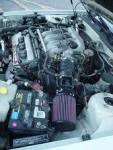
autozone.. 18bux. not too hard. first repair i ever did to the car back in, oh, july 06. i got my car and my camera about the same time (car first) so that was among the first few pictues i took as well. but i don't know if they are on the internet, or on my old computer's hard drive, which is currently in too much disarray for me to find ANYTHING i'm looking for on it. Anyhow, you just use a pair of 3m splices and get the hoses as short as you can without crimping anything. i tucked it up near the tank somewhere and it just kinda stays there. it sucks fluid THROUGH the old pump (which was busted on mine) and pushes it on to the hood.
Thread Starter
Banned
Joined: Apr 2008
Posts: 1,159
From: Ontario, Canada
Maybe it's not broken after all, and the hose just got disconnected when I smacked the side of the bumper.



Senior Member
Joined: Apr 2008
Posts: 1,355
From: Surrey, B.C
Senior Member
Joined: Apr 2008
Posts: 1,355
From: Surrey, B.C
It is very easy.
1) remove fill tube. This is a simple twist and remove.
2) remove front passenger wheel
3) remove passenger inner fender (splash shield)
4) disconnect hose to pump
5) disconnect pump and level sensor harnesses
6) remove three bolts that hold the reservoir
That is it
1) remove fill tube. This is a simple twist and remove.
2) remove front passenger wheel
3) remove passenger inner fender (splash shield)
4) disconnect hose to pump
5) disconnect pump and level sensor harnesses
6) remove three bolts that hold the reservoir
That is it

I think the mechanic was lying when he said the whole thing needs replacing, I haven't gotten around to it, but I looked in though the crack in my bumper when I slid into the curb, and I notice I see a loose hose in there, and I see the fluid draining out a sideways little spout or something.
Maybe it's not broken after all, and the hose just got disconnected when I smacked the side of the bumper.
Maybe it's not broken after all, and the hose just got disconnected when I smacked the side of the bumper.
Thread Starter
Banned
Joined: Apr 2008
Posts: 1,159
From: Ontario, Canada
It was the hose after all (disconnected) - he tried to pull a fast one and tell me it was cracked and quoted me $170.00 for a new tub, and 1 hr. for labor. Thankfully, he forgot his Snap-On screw driver on the floor, so it wasn't so bad.
so you owe him $170? or he was trying to get you to pay that much when all it was was the hose?
Thread Starter
Banned
Joined: Apr 2008
Posts: 1,159
From: Ontario, Canada
He gave me the quote, then I came back to the ORG and posted the message back then, then I checked it like you guys said and after all - it was just the hose disconnected.
He had the car up on the hoist, and were looking at the tub but I was in the waiting area. Never paid them to do the work after we solved the problem.
I'm a proud owner of 1 free Snap-On screw driver.
He had the car up on the hoist, and were looking at the tub but I was in the waiting area. Never paid them to do the work after we solved the problem.
I'm a proud owner of 1 free Snap-On screw driver.
Senior Member
Joined: Apr 2008
Posts: 1,355
From: Surrey, B.C
He gave me the quote, then I came back to the ORG and posted the message back then, then I checked it like you guys said and after all - it was just the hose disconnected.
He had the car up on the hoist, and were looking at the tub but I was in the waiting area. Never paid them to do the work after we solved the problem.
I'm a proud owner of 1 free Snap-On screw driver.
He had the car up on the hoist, and were looking at the tub but I was in the waiting area. Never paid them to do the work after we solved the problem.
I'm a proud owner of 1 free Snap-On screw driver.


Junior Member
Joined: Oct 2002
Posts: 87
I have the same problem on my '89 GXE. I assumed it was from when I used the "summer only" type washer fluid, without the alcohol in it (no freeze protection). I was thinking it froze and cracked the reservoir.
But given your experience with same problem and "easy fix", and the helpful info on this thread about how to get at the reservoir, I think I'll put on my list to take off that passenger wheel and splash shield and take a closer look at the reservoir and tubing to see what is really wrong with it.
Maybe with a little luck, mine only has a disconnected hose too.
But given your experience with same problem and "easy fix", and the helpful info on this thread about how to get at the reservoir, I think I'll put on my list to take off that passenger wheel and splash shield and take a closer look at the reservoir and tubing to see what is really wrong with it.
Maybe with a little luck, mine only has a disconnected hose too.
Thread Starter
Banned
Joined: Apr 2008
Posts: 1,159
From: Ontario, Canada
Just pour the fluid into the tub and watch for where the leak is. It may also be better to just use the winter fluid all yr around, so you don't forget in the fall. I almost forgot this yr., and it almost went to freezing one night before I bought the winter stuff.
Junior Member
Joined: Oct 2002
Posts: 87
Update: I found and fixed the wiper fluid leak that was around the wiper fluid reservoir area.
The reservoir turned out to be fine (I actually removed it and filled it completely with water to make sure there were no cracks or leaks, it checked out OK.)
The leak it turned out was not the reservoir, but was a loose connection of the hose to the squirter pump outlet nipple. This seemed to have been caused by the hose taking a "set" over time, in an expanded, loose fitting position. It was still attached, but was connected a little loosely.
I fixed it by yanking off the hose, cutting off the swollen/loose hose end, and with fresh hose end now exposed, re-inserting over the wiper squirter pump outlet nipple.
No more loose fit, no more leak.
It turns out the pump is actually a centrifugal design, and not a "constant displacement" design, and this allows fluid to pass through it even if the pump is not running.
The reservoir turned out to be fine (I actually removed it and filled it completely with water to make sure there were no cracks or leaks, it checked out OK.)
The leak it turned out was not the reservoir, but was a loose connection of the hose to the squirter pump outlet nipple. This seemed to have been caused by the hose taking a "set" over time, in an expanded, loose fitting position. It was still attached, but was connected a little loosely.
I fixed it by yanking off the hose, cutting off the swollen/loose hose end, and with fresh hose end now exposed, re-inserting over the wiper squirter pump outlet nipple.
No more loose fit, no more leak.
It turns out the pump is actually a centrifugal design, and not a "constant displacement" design, and this allows fluid to pass through it even if the pump is not running.
Last edited by jakeru; Jan 13, 2009 at 11:30 AM.
Junior Member
Joined: Oct 2002
Posts: 87
A follow-up post on how I repaired a non-functioning washer squirter motor:
Perhaps from not using the wiper squirter motor for an extended period of time, it was no longer working at all. No squirting, no noise, no response of any sort.
I removed the pump (pried away from reservoir with a flat screwdriver), and determined it had far too much resistance in the electrical terminals (something in the kiloohm-megaohm range.)
So I managed to disassemble and rebuild my washer squirter pump as follows:
1. removed three phillips screws holding the cover on (removing pump cover and rotating centrifugal pump vanes after that)
2. pried away the three mounting tabs, carefully removed lower bearing & brush support, and removed rotor from housing
3. cut a small, long strip of 400 grit sandpaper, and used it to polish the commutator by spinning the sandpaper back and forth over the commutator by hand. Kept polishing until the entire length of the commutator surface was smooth and bright and shiney copper color (started off uneven from where the brush wore a gouge in it, and also quite darkened/blackish in color from surface corrosion of the copper)
4. scuffed up the surface of the brushes (where they touch the commutator pads) with ~100 grit sandpaper
5. scraped out the dust/junk from between the commutator's pads, and blew the pump out with compressed air.
6. added a drop 3-in-one oil to each bronze bearing (one at each end)
7. reassembled (crimped the three mounting tabs back with vice grips), being careful not to crack the brushes and all the parts get put back.
8. verified resistance of the electrical portion was now drastically lower (down to about 1.2-3 ohms)
And now the pump not only works, but boy does it have a strong spray!
Perhaps from not using the wiper squirter motor for an extended period of time, it was no longer working at all. No squirting, no noise, no response of any sort.
I removed the pump (pried away from reservoir with a flat screwdriver), and determined it had far too much resistance in the electrical terminals (something in the kiloohm-megaohm range.)
So I managed to disassemble and rebuild my washer squirter pump as follows:
1. removed three phillips screws holding the cover on (removing pump cover and rotating centrifugal pump vanes after that)
2. pried away the three mounting tabs, carefully removed lower bearing & brush support, and removed rotor from housing
3. cut a small, long strip of 400 grit sandpaper, and used it to polish the commutator by spinning the sandpaper back and forth over the commutator by hand. Kept polishing until the entire length of the commutator surface was smooth and bright and shiney copper color (started off uneven from where the brush wore a gouge in it, and also quite darkened/blackish in color from surface corrosion of the copper)
4. scuffed up the surface of the brushes (where they touch the commutator pads) with ~100 grit sandpaper
5. scraped out the dust/junk from between the commutator's pads, and blew the pump out with compressed air.
6. added a drop 3-in-one oil to each bronze bearing (one at each end)
7. reassembled (crimped the three mounting tabs back with vice grips), being careful not to crack the brushes and all the parts get put back.
8. verified resistance of the electrical portion was now drastically lower (down to about 1.2-3 ohms)
And now the pump not only works, but boy does it have a strong spray!
Last edited by jakeru; Jan 13, 2009 at 11:35 AM.

Thread Starter
Banned
Joined: Apr 2008
Posts: 1,159
From: Ontario, Canada
A follow-up post on how I repaired a non-functioning washer squirter motor:
Perhaps from not using the wiper squirter motor for an extended period of time, it was no longer working at all. No squirting, no noise, no response of any sort.
I removed the pump (pried away from reservoir with a flat screwdriver), and determined it had far too much resistance in the electrical terminals (something in the kiloohm-megaohm range.)
So I managed to disassemble and rebuild my washer squirter pump as follows:
1. removed three phillips screws holding the cover on (removing pump cover and rotating centrifugal pump vanes after that)
2. pried away the three mounting tabs, carefully removed lower bearing & brush support, and removed rotor from housing
3. cut a small, long strip of 400 grit sandpaper, and used it to polish the commutator by spinning the sandpaper back and forth over the commutator by hand. Kept polishing until the entire length of the commutator surface was smooth and bright and shiney copper color (started off uneven from where the brush wore a gouge in it, and also quite darkened/blackish in color from surface corrosion of the copper)
4. scuffed up the surface of the brushes (where they touch the commutator pads) with ~100 grit sandpaper
5. scraped out the dust/junk from between the commutator's pads, and blew the pump out with compressed air.
6. added a drop 3-in-one oil to each bronze bearing (one at each end)
7. reassembled (crimped the three mounting tabs back with vice grips), being careful not to crack the brushes and all the parts get put back.
8. verified resistance of the electrical portion was now drastically lower (down to about 1.2-3 ohms)
And now the pump not only works, but boy does it have a strong spray!
Perhaps from not using the wiper squirter motor for an extended period of time, it was no longer working at all. No squirting, no noise, no response of any sort.
I removed the pump (pried away from reservoir with a flat screwdriver), and determined it had far too much resistance in the electrical terminals (something in the kiloohm-megaohm range.)
So I managed to disassemble and rebuild my washer squirter pump as follows:
1. removed three phillips screws holding the cover on (removing pump cover and rotating centrifugal pump vanes after that)
2. pried away the three mounting tabs, carefully removed lower bearing & brush support, and removed rotor from housing
3. cut a small, long strip of 400 grit sandpaper, and used it to polish the commutator by spinning the sandpaper back and forth over the commutator by hand. Kept polishing until the entire length of the commutator surface was smooth and bright and shiney copper color (started off uneven from where the brush wore a gouge in it, and also quite darkened/blackish in color from surface corrosion of the copper)
4. scuffed up the surface of the brushes (where they touch the commutator pads) with ~100 grit sandpaper
5. scraped out the dust/junk from between the commutator's pads, and blew the pump out with compressed air.
6. added a drop 3-in-one oil to each bronze bearing (one at each end)
7. reassembled (crimped the three mounting tabs back with vice grips), being careful not to crack the brushes and all the parts get put back.
8. verified resistance of the electrical portion was now drastically lower (down to about 1.2-3 ohms)
And now the pump not only works, but boy does it have a strong spray!

Junior Member
Joined: Oct 2002
Posts: 87
Now that I made such awesome working squirters, my wipers just weren't up to snuff. "Sqeeek squeek, squeek squeek" they went every wipe.
Also, there was something obviously wrong with the position of the wiper arm, because it scraped against my hood every time I opened and closed the hood.
I got underneath at the problem by first removing the wiper arms, simply by removing a nut (14mm I think) holding each onto a splined shaft. I then pried off the ~5 little plastic covers on the plastic cover just below the winshield. Under the plastic covers were little friction fit, pop-in fasteners that just pried off with a flathead screwdriver, plus one phillips screw under the middle cover. The rubber weatherstrip between the engine bay and wiper area simply pried up with a screwdriver, hold on several friction-fit fasteners.
After removing the plastic cover, I removed the wiper shaft & bearing by removing three 10mm nuts holding it to the frame, and prying off the wiper linkage below.
It turned out the wiper bearing was nylon plastic, with steel shaft inside. The steel shaft had worn an "egg shaped" hole in the nylon, which is why the wiper arm rested too high up and scraped the hood wheneven I opened/closed the hood. A lack of lubrication caused the squeak/squealing noise when the wipers were operaing.
I was able to disassemble the shaft from the bearing by removing a c-clip. I fixed it by by drilling out a brass/bronze bushing, drilling out the plastic for the bushing, and pressing the bushing into the plastic. I lubed it up good with my favorite synthetic grease and put everything back. Wiper arm is now night and tight, no more hitting on the hood, and no more squeaking noise. My driver's side wiper seemed tight, no problems there it seemed, but I did try and add a little grease into it down through the top.
Also, there was something obviously wrong with the position of the wiper arm, because it scraped against my hood every time I opened and closed the hood.
I got underneath at the problem by first removing the wiper arms, simply by removing a nut (14mm I think) holding each onto a splined shaft. I then pried off the ~5 little plastic covers on the plastic cover just below the winshield. Under the plastic covers were little friction fit, pop-in fasteners that just pried off with a flathead screwdriver, plus one phillips screw under the middle cover. The rubber weatherstrip between the engine bay and wiper area simply pried up with a screwdriver, hold on several friction-fit fasteners.
After removing the plastic cover, I removed the wiper shaft & bearing by removing three 10mm nuts holding it to the frame, and prying off the wiper linkage below.
It turned out the wiper bearing was nylon plastic, with steel shaft inside. The steel shaft had worn an "egg shaped" hole in the nylon, which is why the wiper arm rested too high up and scraped the hood wheneven I opened/closed the hood. A lack of lubrication caused the squeak/squealing noise when the wipers were operaing.
I was able to disassemble the shaft from the bearing by removing a c-clip. I fixed it by by drilling out a brass/bronze bushing, drilling out the plastic for the bushing, and pressing the bushing into the plastic. I lubed it up good with my favorite synthetic grease and put everything back. Wiper arm is now night and tight, no more hitting on the hood, and no more squeaking noise. My driver's side wiper seemed tight, no problems there it seemed, but I did try and add a little grease into it down through the top.

Junior Member
Joined: May 2008
Posts: 33
Necropost bump to say thanks to jonmandude and jakeru for their helpful posts. I want to add that to just access the pump you probably don't need to remove the front wheel. By removing the one screw on the bottom of the splash panel (which has the cross brace attached) and the next two screws on the inner fender closest to the front/bottom of the car you can pull the splash liner back enough to access the pump. Remove the electrial connector on the pump first. Note that the pump is on the wheel side of the reservoir, not the bottom which is where the low fluid sensor is. Then get a catch basin under the reservoir and wiggle the pump free from the reservoir and let the reservoir drain. The pump is still attached to the hose that runs to the spray nozzles so carefully wiggle that free as well.
On the pump disassembly, make note of the direction each part faces. Specifically the electrical connector, the reservoir interface and the nozzle hose interface. This will make reassembly much easier.
On the pump cleaning, I used a Dremel with a stainless steel wire brush/wheel to clean and polish the commutator and brushes rather than sandpaper. You do need to wear eye protection for this as wires from the brush will fly off while cleaning.
On the pump rebuild, when reassembling the parts note the direction the white plastic (which contains the electrical connector) goes into the housing. If you put it in upside down it will look OK but the black plastic part will not fit properly on top of it. The tabs can be recrimped with a flat blade screwdriver. Also note that the pump vane assembly, which goes over the motor shaft, has an inner tab which fits over the recess on the pump shaft. The vane assembly should fall right in place and require almost no force to get it over the shaft.
I would say this is a very easy job to accomplish and saves you about twenty bucks. But even more importantly the pump is an exact fit so you don't have to worry about rigging something up with a universal pump replacement.
On the pump disassembly, make note of the direction each part faces. Specifically the electrical connector, the reservoir interface and the nozzle hose interface. This will make reassembly much easier.
On the pump cleaning, I used a Dremel with a stainless steel wire brush/wheel to clean and polish the commutator and brushes rather than sandpaper. You do need to wear eye protection for this as wires from the brush will fly off while cleaning.
On the pump rebuild, when reassembling the parts note the direction the white plastic (which contains the electrical connector) goes into the housing. If you put it in upside down it will look OK but the black plastic part will not fit properly on top of it. The tabs can be recrimped with a flat blade screwdriver. Also note that the pump vane assembly, which goes over the motor shaft, has an inner tab which fits over the recess on the pump shaft. The vane assembly should fall right in place and require almost no force to get it over the shaft.
I would say this is a very easy job to accomplish and saves you about twenty bucks. But even more importantly the pump is an exact fit so you don't have to worry about rigging something up with a universal pump replacement.


Thread
Thread Starter
Forum
Replies
Last Post
Lilchikcadee
7th Generation Maxima (2009-2015)
9
May 1, 2019 08:49 AM
pkfinn
1st-3rd Generations Classifieds (1981-1994)
2
Jan 3, 2016 02:55 PM
Justinmc760
4th Generation Maxima (1995-1999)
11
Aug 23, 2015 03:10 AM
jchronis2552
4th Generation Classifieds (1995-1999)
0
Aug 13, 2015 07:48 AM