


02 Prix GTP vs. 02 Max Auto


Thread Starter
Member
Joined: Feb 2002
Posts: 45
02 Prix GTP vs. 02 Max Auto
When I was considering buying a new car back in Sept 01...I had a couple of cars in mind....02 Camry V6, Passat 1.8T, Altima V6, Max, and the GTP.....evntually the first two dropped out when I found out I wanted more preformance than they offered....then the Altima fell out of the list because I thought it was gonna be selling above MSRP because everyone was talking about it.....then it came down to the Max and the GTP.....and to be honest, the only real edge I saw in the max at the moment was the fact that the GTP was everywhere and every punk kid had one.....lol i shouldnt say anything im just turned 20...anyway now that I do have the Max a couple of people are telling me that I can beat the GTP even though it has about 40 more lbs of torque.... Can anyone give me any feeback as far as this being true.... Which car would have better quarter mile times???
Thanks guys
Thanks guys
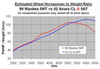
Dyno plot says I have the most area under the Administrator curve

Joined: Jul 2001
Posts: 7,064
The GTP will take a 2k2 auto off the line because of superior low-end torque. The Maxima will catchup in short order though and probably be ahead by the 1/4 mile. I think GTP's run about 15-flat or high-14's stock. The 2k2 auto Maxima will do that or slightly better.
From a roll on the highway, it'd be all 2k2 Maxima. GTP's are weak up top.
Or course, low-14's on a GTP are only a smaller pulley for the S/C away, but those cars already rip apart tranny's on the STOCK pulley as-is so reliability is not the greatest.
GTP owners FEER the 2k2 Maxima. I notice they haven't been coming here nearly as much since it was released!

From a roll on the highway, it'd be all 2k2 Maxima. GTP's are weak up top.
Or course, low-14's on a GTP are only a smaller pulley for the S/C away, but those cars already rip apart tranny's on the STOCK pulley as-is so reliability is not the greatest.
GTP owners FEER the 2k2 Maxima. I notice they haven't been coming here nearly as much since it was released!


Or course, low-14's on a GTP are only a smaller pulley for the S/C away, but those cars already rip apart tranny's


Supporting Maxima.org Member
Joined: Aug 2000
Posts: 672
Originally posted by SteVTEC
huh? How do you figure?

huh? How do you figure?


Originally posted by SteVTEC
huh? How do you figure?
huh? How do you figure?
I'm going to try to find a stock GTP dyno, I bet the max puts down about the same amount of FWTQ.
Dyno plot says I have the most area under the Administrator curve
Joined: Jul 2001
Posts: 7,064
The math doesn't work out that way though. You can't use the same multiplier for torque as you do for horsepower. Torque is a direct reading, but horsepower is not. If anything, wheel torque is the most accurate way to measure drivetrain loss unless your power peak occurs directly at 5252 rpm when the horsepower:torque ratio is 1:1 as per this formula:
Horsepower = (Torque x RPM) / 5252
If your peak power occurs later, like 5800rpm on the VQ35DE, then you have another ratio to account for (5800/5252 = 1.1) to account for.
Most engines with higher horsepower than torque will appear to have more torque than horsepower on dyno's. I'm going to figure out the mathematics behind this when I get some time.
Just for comparison, a stock Accord V6 dynos at around 155 fwhp and 165 fwtq, yet its stock numbers are 200HP / 195 TQ.
Trust me, the Maxima doesn't have 280 fwtq
I think I just figured out how to prove this too, but now I gotta run to work.
Tonight. Somebody post up some stock dyno's of Maxima's
Horsepower = (Torque x RPM) / 5252
If your peak power occurs later, like 5800rpm on the VQ35DE, then you have another ratio to account for (5800/5252 = 1.1) to account for.
Most engines with higher horsepower than torque will appear to have more torque than horsepower on dyno's. I'm going to figure out the mathematics behind this when I get some time.
Just for comparison, a stock Accord V6 dynos at around 155 fwhp and 165 fwtq, yet its stock numbers are 200HP / 195 TQ.
Trust me, the Maxima doesn't have 280 fwtq
I think I just figured out how to prove this too, but now I gotta run to work.
Tonight. Somebody post up some stock dyno's of Maxima's
Originally posted by SteVTEC
The math doesn't work out that way though. You can't use the same multiplier for torque as you do for horsepower. Torque is a direct reading, but horsepower is not. If anything, wheel torque is the most accurate way to measure drivetrain loss unless your power peak occurs directly at 5252 rpm when the horsepower:torque ratio is 1:1 as per this formula:
Horsepower = (Torque x RPM) / 5252
If your peak power occurs later, like 5800rpm on the VQ35DE, then you have another ratio to account for (5800/5252 = 1.1) to account for.
Most engines with higher horsepower than torque will appear to have more torque than horsepower on dyno's. I'm going to figure out the mathematics behind this when I get some time.
Just for comparison, a stock Accord V6 dynos at around 155 fwhp and 165 fwtq, yet its stock numbers are 200HP / 195 TQ.
Trust me, the Maxima doesn't have 280 fwtq
I think I just figured out how to prove this too, but now I gotta run to work.
Tonight. Somebody post up some stock dyno's of Maxima's
The math doesn't work out that way though. You can't use the same multiplier for torque as you do for horsepower. Torque is a direct reading, but horsepower is not. If anything, wheel torque is the most accurate way to measure drivetrain loss unless your power peak occurs directly at 5252 rpm when the horsepower:torque ratio is 1:1 as per this formula:
Horsepower = (Torque x RPM) / 5252
If your peak power occurs later, like 5800rpm on the VQ35DE, then you have another ratio to account for (5800/5252 = 1.1) to account for.
Most engines with higher horsepower than torque will appear to have more torque than horsepower on dyno's. I'm going to figure out the mathematics behind this when I get some time.
Just for comparison, a stock Accord V6 dynos at around 155 fwhp and 165 fwtq, yet its stock numbers are 200HP / 195 TQ.
Trust me, the Maxima doesn't have 280 fwtq
I think I just figured out how to prove this too, but now I gotta run to work.
Tonight. Somebody post up some stock dyno's of Maxima's
this one only made 190 at the wheels and 242 at the wheels........hmm
http://www.thrasher-ep.com/images/he...ers%20only.JPG
this actually confuses me b/c it made a difference of 50(between the hp and tq), but the engine is rated at 40(between hp/tq), so the maxi is weird, b/c its not supposed to put out more tq than its hp, like the gtp. the gtp is rated at more tq than hp from the factory, but the 02 max isnt.......
http://www.thrasher-ep.com/images/he...ers%20only.JPG
this actually confuses me b/c it made a difference of 50(between the hp and tq), but the engine is rated at 40(between hp/tq), so the maxi is weird, b/c its not supposed to put out more tq than its hp, like the gtp. the gtp is rated at more tq than hp from the factory, but the 02 max isnt.......
Dyno plot says I have the most area under the Administrator curve
Joined: Jul 2001
Posts: 7,064
I have a new mathematical method to calculate drivetrain loss and it can convert your wheel horsepower right to crank horsepower and it seems to be pretty accurate too. I need to test out the math on some more stock dyno's though and see how well it works out. It seems to be pretty good so far.
I'll post up in a separate thread with some example dyno pics when I get this done
Yet another project that will be put on the back burner!
I'll post up in a separate thread with some example dyno pics when I get this done
Yet another project that will be put on the back burner!

Member
Joined: Dec 2001
Posts: 80
Let the Drive Line Loss (DLL) debate begin!
I have researched this quite a bit and here are my conclusions ... draw from them what you may. I am not a mechanical expert, but the math/logic is rock solid.
1) There is only one true way to know YOUR DLL. First, you must pull the engine and have it placed on an engine dyno, then place it back in the car and run it on a chasis dyno. Assuming that the two dynos are calibrated exactly the same (probably NEVER will be), the difference would be the TQ amount that you are off by and can thus be used to calculate your DLL. Since this would be quite expensive to do, most people rely on the manufacturers published numbers. Ask ANY late model Camero/Firebird owner and they will tell you that the car makers OFTEN lie for insurance classification reasons
2) HP is nothing more than a mathimatical product of TQ. TQ is measured, then HP is figured ... HP is never measured. The forumla for those too lazy to reread SteVTEC post, it's
HP = TQ * RPM / 5252
This is why ALL dyno charts should cross at around 5252 RPMs ... if yours doesn't, it's about as accurate as your butt dyno (assuming that yours works).
3) The DLL percentage is only calculated one way. Engine dyno results - DLL% = chasis dyno results. Think about it! For simple illustration, I will use round numbers. 100 TQ - 15% = 85 TQ. 85 TQ + 15% = 97.75 TQ ... NOT 100 TQ.
4) Becuase of the point 3, a correction factor must be used to calculate the Flywheel numbers from a Chasis Dyno's results. Again, I must refer to point 1 ... all this does no good if you don't know your true flywheel numbers. So, you must rely on the factory numbers, which can and probably are wrong. I don't know the true name of this, but I call it the DLL Correction Factor. This factor is another simple formula.
DLL = (Flywheel TQ - Front Wheel TQ) / Flywheel TQ * 100
DLLCF = (Flywheel TQ - Front Wheel TQ) / Front Wheel TQ * 100
Example
Your car's engine is pulled and engine dynoed at 246 TQ and is then put back in the car and chasis dynoed at 212 TQ. Given the above formulas, your DLL is calculated as:
(246 - 212) / 246 * 100
34 / 246 * 100
0.13821 (rounded down) * 100
13.821% ... you have one hell of an efficient drive line!
Your DLLCF is calculated as:
(246 - 212) / 212 * 100
34 / 212 * 100
0.16038 (rounded up) * 100
16.038 %
This math will always work. However, for it to truely work, you must know the EXACT Flywheel number. Also, what works for you will not work for your friends with the same car. Engines made one after the other will dyno different numbers. Each engine is not a clone of the next, they are all individuals and as such will differ in their power levels. This difference may be minute, but it's very relivent. Same goes for the drive line and all components therein.
What I learned most from my research ... who cares about your flywheel HP/TQ! Flywheel TQ only comes into play when you exceed the specs of the tranny/engine and need to worry about blowing parts. The front wheel/rear wheel/all wheel dyno numbers are what counts ... that is what you feel!
I have researched this quite a bit and here are my conclusions ... draw from them what you may. I am not a mechanical expert, but the math/logic is rock solid.
1) There is only one true way to know YOUR DLL. First, you must pull the engine and have it placed on an engine dyno, then place it back in the car and run it on a chasis dyno. Assuming that the two dynos are calibrated exactly the same (probably NEVER will be), the difference would be the TQ amount that you are off by and can thus be used to calculate your DLL. Since this would be quite expensive to do, most people rely on the manufacturers published numbers. Ask ANY late model Camero/Firebird owner and they will tell you that the car makers OFTEN lie for insurance classification reasons
2) HP is nothing more than a mathimatical product of TQ. TQ is measured, then HP is figured ... HP is never measured. The forumla for those too lazy to reread SteVTEC post, it's
HP = TQ * RPM / 5252
This is why ALL dyno charts should cross at around 5252 RPMs ... if yours doesn't, it's about as accurate as your butt dyno (assuming that yours works).
3) The DLL percentage is only calculated one way. Engine dyno results - DLL% = chasis dyno results. Think about it! For simple illustration, I will use round numbers. 100 TQ - 15% = 85 TQ. 85 TQ + 15% = 97.75 TQ ... NOT 100 TQ.
4) Becuase of the point 3, a correction factor must be used to calculate the Flywheel numbers from a Chasis Dyno's results. Again, I must refer to point 1 ... all this does no good if you don't know your true flywheel numbers. So, you must rely on the factory numbers, which can and probably are wrong. I don't know the true name of this, but I call it the DLL Correction Factor. This factor is another simple formula.
DLL = (Flywheel TQ - Front Wheel TQ) / Flywheel TQ * 100
DLLCF = (Flywheel TQ - Front Wheel TQ) / Front Wheel TQ * 100
Example
Your car's engine is pulled and engine dynoed at 246 TQ and is then put back in the car and chasis dynoed at 212 TQ. Given the above formulas, your DLL is calculated as:
(246 - 212) / 246 * 100
34 / 246 * 100
0.13821 (rounded down) * 100
13.821% ... you have one hell of an efficient drive line!
Your DLLCF is calculated as:
(246 - 212) / 212 * 100
34 / 212 * 100
0.16038 (rounded up) * 100
16.038 %
This math will always work. However, for it to truely work, you must know the EXACT Flywheel number. Also, what works for you will not work for your friends with the same car. Engines made one after the other will dyno different numbers. Each engine is not a clone of the next, they are all individuals and as such will differ in their power levels. This difference may be minute, but it's very relivent. Same goes for the drive line and all components therein.
What I learned most from my research ... who cares about your flywheel HP/TQ! Flywheel TQ only comes into play when you exceed the specs of the tranny/engine and need to worry about blowing parts. The front wheel/rear wheel/all wheel dyno numbers are what counts ... that is what you feel!

Member
Joined: Dec 2001
Posts: 80
Forgot to mention ... I have yet to see a drive line that has less than a 15% DLL. Rule of thumb ... FWD cars will have a DLL of about 16-20%, RWD cars will normally be between 20-25% with only about and AWD and 4X4 systems will almost always be above 25%. This is assuming a manual transmission is present. Automatics will increase by about another 5-12% on top of these figures. So, the worst car you could drive would be an Automatic AWD car.
I would like to see the figures for the V8 Jeep Grand Cherokee
So, where do the losses come from you ask? Friction There is a multitude of friction sources between the flywheel and the road ... gears, bearings, tires, etc. Some loss also comes from the power required to convert Potental energy into Kinetic Energy (turn your half-shafts) ... also known as rotational mass ... the lighter your tires/wheels/half-shafts, the more power will get to the ground as long as there is adequite grip.
I would like to see the figures for the V8 Jeep Grand Cherokee
So, where do the losses come from you ask? Friction
There is a multitude of friction sources between the flywheel and the road ... gears, bearings, tires, etc. Some loss also comes from the power required to convert Potental energy into Kinetic Energy (turn your half-shafts) ... also known as rotational mass ... the lighter your tires/wheels/half-shafts, the more power will get to the ground as long as there is adequite grip.

Senior Member
Joined: Jun 2001
Posts: 144
Considering just performance, the GTP and Regal GS can put down some serious numbers with a few light, easy, and cheap mods. Intake, Exhaust, and Pulley (as low as $300-500) will have taken some down into the 13.5-13.7 area even with a street-frendly 3.4" pulley. Well faster than what a bolt on 2k2 Max could run. You hear "stock" numbers anywhere in the 14.3-15.0, comparable to a 2k2 Auto Max. The only weak point in the car seems to be trans, but a oil cooler and closer fluid intervels seem to help from what I've heard. New trans are around $2300, a new engine is around $1900-2100. I'm shopping for one now, they are hard to come by in my area, missed a 98 I was going to buy earlier this week, it was a very good deal that I missed, 98 GTP Sedan, 48k miles, $8900.
However, new car shopping is different. I probably get a new Max, they seem to keep resale a little better and there are other things to consider.
However, new car shopping is different. I probably get a new Max, they seem to keep resale a little better and there are other things to consider.
Senior Member
Joined: Jun 2001
Posts: 144
Originally posted by FastCougar
Forgot to mention ... I have yet to see a drive line that has less than a 15% DLL. Rule of thumb ... FWD cars will have a DLL of about 16-20%, RWD cars will normally be between 20-25% with only about and AWD and 4X4 systems will almost always be above 25%. This is assuming a manual transmission is present. Automatics will increase by about another 5-12% on top of these figures. So, the worst car you could drive would be an Automatic AWD car.
Forgot to mention ... I have yet to see a drive line that has less than a 15% DLL. Rule of thumb ... FWD cars will have a DLL of about 16-20%, RWD cars will normally be between 20-25% with only about and AWD and 4X4 systems will almost always be above 25%. This is assuming a manual transmission is present. Automatics will increase by about another 5-12% on top of these figures. So, the worst car you could drive would be an Automatic AWD car.
Member
Joined: Dec 2001
Posts: 80
Originally posted by c5hardtop
I've seen RWD Corvettes and Fbodies dyno will less than 15% loss, and Mustang GTs right around 15%, and those are suppost to have higher drivetrain loss, you give (20-25% as an estimate). GM estimates 15% drivetrain loss on Manuels and 18% on Automatics for the RWD cars. Plenty of C5 Vettes and LS1 Fboies have dynoed at 310rwhp or higher, even some with Automatics. If you have a FWD car that losing over 15%, it just isn't putting down the power it should.
I've seen RWD Corvettes and Fbodies dyno will less than 15% loss, and Mustang GTs right around 15%, and those are suppost to have higher drivetrain loss, you give (20-25% as an estimate). GM estimates 15% drivetrain loss on Manuels and 18% on Automatics for the RWD cars. Plenty of C5 Vettes and LS1 Fboies have dynoed at 310rwhp or higher, even some with Automatics. If you have a FWD car that losing over 15%, it just isn't putting down the power it should.
Senior Member
Joined: Jun 2001
Posts: 144
Originally posted by FastCougar
Like I said above ... those are rules of thumb and apply accross MANY different makes and models that I have seen dyno numbers for vs. factory specs. Also mentioned before is the validity of factory specs ... case in point ... friend of mine with a stock 2001 WS6 firebird and was putting 310 lbs/ft of TQ to the ground and factory specs are 350 ... explain that one ... it's a drive line with only 11.43% DLL! That is extremely low and most likely skewed by the fact that GM is lying about it's specs to keep insurance down for car owners to make them more attractive to buy. Chances are that the average WS6 car buyer can't afford to pay Corvette insurance premiums
Like I said above ... those are rules of thumb and apply accross MANY different makes and models that I have seen dyno numbers for vs. factory specs. Also mentioned before is the validity of factory specs ... case in point ... friend of mine with a stock 2001 WS6 firebird and was putting 310 lbs/ft of TQ to the ground and factory specs are 350 ... explain that one ... it's a drive line with only 11.43% DLL! That is extremely low and most likely skewed by the fact that GM is lying about it's specs to keep insurance down for car owners to make them more attractive to buy. Chances are that the average WS6 car buyer can't afford to pay Corvette insurance premiums
Insurance rates are much higher on Fbodies than Corvettes. Yeck, the my insurance is lower on my C5 than it was on my last Mustang GT and 2000 Maxima SE and only a hair higher than the insurance on my current 99 Civic.

Supporting Maxima.org Member
Joined: Oct 2000
Posts: 3,150
From: Rochester, NY
I can answer your question about which to choose with ease...
go sit in a GTP then in a maxima... when you see and feel the differnce between the quality of the interiors you'll know which to choose
go sit in a GTP then in a maxima... when you see and feel the differnce between the quality of the interiors you'll know which to choose

Senior Member
Joined: Apr 2001
Posts: 903
Hey, I was in a simliar situation as you last month. I wanted a larger car to replace my Prelude but wanted something really fast for a sedan (under $30K). I drove the GTP and really liked it. Handled pretty good and made a nice sound. Ofcourse the Max handled just as well and made a nice (yet quieter) sound. Keep in mind I wanted the 6spd that I have so that made the final difference amongst two other factors.
1) Drive a GTP at night. I felt like I was piloting an F-15 with all those red lights. Not me at all. It may be you though, so who knows.
2) The Pontiac dealer was the biggest jerk out there. He told me "this car will outrun Z28s" and "it will outhandle a BMW". Now it was fast and handled well, but I dont appreciate being lyed to so I walked out and bought the Maxima two hours later.
BTW, if you live in the midwest (St.Louis) area and want the greatest deal possible, I'll let you know where I got mine and who to talk to.
1) Drive a GTP at night. I felt like I was piloting an F-15 with all those red lights. Not me at all. It may be you though, so who knows.
2) The Pontiac dealer was the biggest jerk out there. He told me "this car will outrun Z28s" and "it will outhandle a BMW". Now it was fast and handled well, but I dont appreciate being lyed to so I walked out and bought the Maxima two hours later.
BTW, if you live in the midwest (St.Louis) area and want the greatest deal possible, I'll let you know where I got mine and who to talk to.

Member
Joined: Jan 2002
Posts: 35
Re: 02 Prix GTP vs. 02 Max Auto
yea guys I raced a 2002 gtp about 2 weeks ago and I destroyed it by about 8 car lengths, I also raced him off the line. I have an exaust and intake though, but I think a 2k2 stock will still destroy the gtp like I did.

Senior Member
Joined: Jul 2001
Posts: 230
Food for thought
Originally posted by FastCougar
Like I said above ... those are rules of thumb and apply accross MANY different makes and models that I have seen dyno numbers for vs. factory specs. Also mentioned before is the validity of factory specs ... case in point ... friend of mine with a stock 2001 WS6 firebird and was putting 310 lbs/ft of TQ to the ground and factory specs are 350 ... explain that one ... it's a drive line with only 11.43% DLL! That is extremely low and most likely skewed by the fact that GM is lying about it's specs to keep insurance down for car owners to make them more attractive to buy. Chances are that the average WS6 car buyer can't afford to pay Corvette insurance premiums
Like I said above ... those are rules of thumb and apply accross MANY different makes and models that I have seen dyno numbers for vs. factory specs. Also mentioned before is the validity of factory specs ... case in point ... friend of mine with a stock 2001 WS6 firebird and was putting 310 lbs/ft of TQ to the ground and factory specs are 350 ... explain that one ... it's a drive line with only 11.43% DLL! That is extremely low and most likely skewed by the fact that GM is lying about it's specs to keep insurance down for car owners to make them more attractive to buy. Chances are that the average WS6 car buyer can't afford to pay Corvette insurance premiums
Also ...
All cars with power accessories lose HP/TQ before there is any drivetrain loss, so that's right off the top, and linear.
let's say that to run most cars today it takes 15-20HP/TQ, well that loss as a percentage of a car with 150HP vs 300HP will be less, hence the "drive train" seems more efficient.
I think automatics will be more inconsistant, given different implementations of the ...
Member
Joined: Dec 2001
Posts: 80
Re: Food for thought
Good point ... I never accounted for accessories ... that is probobly where my calculations fall apart ... we need to account for accessory loss. This brings up another good point ... are the factory numbers always engine only or are they running the engine on the stand with accessories hooked up and on (asside from AC)?

Senior Member
Joined: Nov 2000
Posts: 805
Originally posted by SteVTEC
The math doesn't work out that way though. You can't use the same multiplier for torque as you do for horsepower. Torque is a direct reading, but horsepower is not. If anything, wheel torque is the most accurate way to measure drivetrain loss unless your power peak occurs directly at 5252 rpm when the horsepower:torque ratio is 1:1 as per this formula:
Horsepower = (Torque x RPM) / 5252
If your peak power occurs later, like 5800rpm on the VQ35DE, then you have another ratio to account for (5800/5252 = 1.1) to account for.
Most engines with higher horsepower than torque will appear to have more torque than horsepower on dyno's. I'm going to figure out the mathematics behind this when I get some time.
Just for comparison, a stock Accord V6 dynos at around 155 fwhp and 165 fwtq, yet its stock numbers are 200HP / 195 TQ.
Trust me, the Maxima doesn't have 280 fwtq
I think I just figured out how to prove this too, but now I gotta run to work.
Tonight. Somebody post up some stock dyno's of Maxima's
The math doesn't work out that way though. You can't use the same multiplier for torque as you do for horsepower. Torque is a direct reading, but horsepower is not. If anything, wheel torque is the most accurate way to measure drivetrain loss unless your power peak occurs directly at 5252 rpm when the horsepower:torque ratio is 1:1 as per this formula:
Horsepower = (Torque x RPM) / 5252
If your peak power occurs later, like 5800rpm on the VQ35DE, then you have another ratio to account for (5800/5252 = 1.1) to account for.
Most engines with higher horsepower than torque will appear to have more torque than horsepower on dyno's. I'm going to figure out the mathematics behind this when I get some time.
Just for comparison, a stock Accord V6 dynos at around 155 fwhp and 165 fwtq, yet its stock numbers are 200HP / 195 TQ.
Trust me, the Maxima doesn't have 280 fwtq
I think I just figured out how to prove this too, but now I gotta run to work.
Tonight. Somebody post up some stock dyno's of Maxima's

Senior Member
Joined: Aug 2000
Posts: 1,018
The answer's easy...
Originally posted by EZ
Interesting. I didn't know that How come the CLS/TLS torque readings are still lower than their horsepower ratings?
Interesting. I didn't know that
How come the CLS/TLS torque readings are still lower than their horsepower ratings?
Think about it, now. The supercar NSX makes 290hp from a 3.2 V6, and barely makes more torque at the crank than the 2k and 2k1 3.0 Maximas. The 1st and 2nd gen Altimas made more torque than an S2000.I have a 99 Max with a K&N drop-in, and make almost twice as much torque as my friend's modded(intake, UDPs, spark plugs and wires, exhaust, axles, clutch) '95 Civic EX. Amazingly, the car at least on its 3rd engine. He hates me and wants to get a 3rd gen SupraTT.

Thread Starter
Member
Joined: Feb 2002
Posts: 45
Thanks everyone for your replies.....another question as i came across of reading everything....Does anyone have any exact times for the Max with an auto on the 1/4?? i know high 14's but has anyone actually timed one??
Also with talk about the DLL on cars....can someone give me an estimate of how much a max has to the wheels, considering that I a navi as an option, the only option i dont have is the heated bum warmer
Thanks guys
Also with talk about the DLL on cars....can someone give me an estimate of how much a max has to the wheels, considering that I a navi as an option, the only option i dont have is the heated bum warmer
Thanks guys

Thread
Thread Starter
Forum
Replies
Last Post
hayne
6th Generation Maxima (2004-2008)
2
Oct 5, 2015 11:53 AM