


Heating A Garage


First thing I would suggest is that you insulate your garage as it's not expensive. I have installed a 4800 watts Ceiling Fan-Forced Diffuser. It heat the garage in no time and it tonly cost 450$ cdn.
http://www.ouellet.com/residential-h...-usa.aspx?i=56
http://www.ouellet.com/residential-h...-usa.aspx?i=56
I guess it depends on how long term of a solution you are looking for and if NG is available in your area. If I plan to stay in a house for more than 5 years then I would go with NG hands down over electric for a heating appliance
A 4.8kW electric heater will cost you 43 cents/hr to run at a typical electricity rate of 9 cents/kWh
The equivalent output NG heater will cost 18 cents/hr to run at a typical gas rate of 35 cents/m^3. (assuming a heater efficency of 90%)
That is a 240% difference in operating costs.
Last edited by eng92; Dec 20, 2007 at 06:33 AM.

Thread Starter
Senior Member
Joined: Sep 2005
Posts: 1,113
From: NY
First thing I would suggest is that you insulate your garage as it's not expensive. I have installed a 4800 watts Ceiling Fan-Forced Diffuser. It heat the garage in no time and it tonly cost 450$ cdn.
http://www.ouellet.com/residential-h...-usa.aspx?i=56
http://www.ouellet.com/residential-h...-usa.aspx?i=56

I'm not sure which route I will go. NG or a Wood Pellet sove.
I will have to wait till it gets warmer outside to re do my garage. It's in need of a new shelf layout. It's too cold these days, so for now I picked up a propane heater. It's the one that goes on top of the tank (in my case 20 lb'ers) and has two heating domes that can be pionted in their individual directions. It's an upgrade from my single unit.

I just use my 125,000 BTU jet engine looking heater thats so loud you have to yell to have a conversation, it uses Kero, diesel, or jet fuel. heats fast but woo it gets hot and when it shuts off, it dont take long to get cold again ><

Senior Member
Joined: Nov 2006
Posts: 406
From: Long Island, New York
I saw this at costco the other day, I have something similar to this and it seems to work just fine on long projects.

Here is the link.
Here is the link.

I guess it depends on how long term of a solution you are looking for and if NG is available in your area. If I plan to stay in a house for more than 5 years then I would go with NG hands down over electric for a heating appliance
A 4.8kW electric heater will cost you 43 cents/hr to run at a typical electricity rate of 9 cents/kWh
The equivalent output NG heater will cost 18 cents/hr to run at a typical gas rate of 35 cents/m^3. (assuming a heater efficency of 90%)
That is a 240% difference in operating costs.
A 4.8kW electric heater will cost you 43 cents/hr to run at a typical electricity rate of 9 cents/kWh
The equivalent output NG heater will cost 18 cents/hr to run at a typical gas rate of 35 cents/m^3. (assuming a heater efficency of 90%)
That is a 240% difference in operating costs.
In Qc the electricity is so much cheaper than other place in Canada & USA, it cost me no where near the amount you are referring. I pay .052 cents/kWh and I use an electronic thermostat to control the temp. When I'm not in the garage I keep it a 50F, all in all it may cost me 15-20$ per month to heat the garage.
NG was not an option since the infrastructure are not done in my area, just for that alone Gaz metro would have charge me over 3000$ just to bring the gaz to my home, then I would have had to use at least 3 device that burn NG. Also it's mandatory here to choose a certified NG heater which will run another 1500 -2000$ we cant use a construction heater inside a garage it's not legal or safe.
In Qc the electricity is so much cheaper than other place in Canada & USA, it cost me no where near the amount you are referring. I pay .052 cents/kWh and I use an electronic thermostat to control the temp. When I'm not in the garage I keep it a 50F, all in all it may cost me 15-20$ per month to heat the garage.
$20/month eh. That only works out to be about an 11% duty cycle on that heater. Do the heater and fan outputs vary with the heating requirement?

Sorry to bring this thread back but there were alot of suggestions in here. Now that its cold here in tn. I want something to heat the garage to do a little work. I saw a portable garage ceramic heater at lowes. I heard those use alot of electricity. If I went propane I could use the grill tank when not using it and then put it back. Ive got 2 windows in the garage I could use to vent. Im looking for somerhing very inexpensive at the moment. I also saw a oil filed radiator heater that the guys at lowes suggested. It had a listing of what btu"s it would take to heat a room size but never said what the btu"s the unit put out. I dont have to heat the whole garage but just want to bring up the temp alittle while under the car. More suggestions please.

Sorry to bring this thread back but there were alot of suggestions in here. Now that its cold here in tn. I want something to heat the garage to do a little work. I saw a portable garage ceramic heater at lowes. I heard those use alot of electricity. If I went propane I could use the grill tank when not using it and then put it back. Ive got 2 windows in the garage I could use to vent. Im looking for somerhing very inexpensive at the moment. I also saw a oil filed radiator heater that the guys at lowes suggested. It had a listing of what btu"s it would take to heat a room size but never said what the btu"s the unit put out. I dont have to heat the whole garage but just want to bring up the temp alittle while under the car. More suggestions please.

Member
Joined: Feb 2004
Posts: 61
Be a man, don't heat.
Besides numb hands don't hurt as much when you bust a knuckle.
I do heat though, and I use a torpedo heat slightly pointed toward the ground and under the car because a wet floor and snow falling on my face pisses me off more than the chilly air.
Besides numb hands don't hurt as much when you bust a knuckle.
I do heat though, and I use a torpedo heat slightly pointed toward the ground and under the car because a wet floor and snow falling on my face pisses me off more than the chilly air.

Senior Member
Joined: Apr 2002
Posts: 554
I work for a HVAC company and most dealership garages are fitted with gas fired tubular radiant style heaters suspended from the ceiling.
After talking to a vender who sells the product, this makes the most sense. It will heat the floor without having to build up all the heat in the whole room. That way, if you open your garage door, you don't have to heat the whole room all over again.
But the costco radiant style heater above is a good cost effective way of just providing heat where you need it.
After talking to a vender who sells the product, this makes the most sense. It will heat the floor without having to build up all the heat in the whole room. That way, if you open your garage door, you don't have to heat the whole room all over again.
But the costco radiant style heater above is a good cost effective way of just providing heat where you need it.

Newbie - Just Registered
Joined: Aug 2008
Posts: 3
they make special heaters you can bolt to your rafters that project heat down actually there are microwave ones for sale that just heat the surface of things and then the air is heated through the surface of stuff

Senior Member
Joined: May 2007
Posts: 652
From: Atlanta, GA
Ive actutally got a seperate furnace for my garage. I got it for free, so if it wasnt for that I wouldn't have a heated garage. I also already had insullated walls in the garage or I wouldnt have even wanted the furnace. All I did was fill the garage door with that yellow sealant foam crap to insullate the door and installed the furnace in the attic above the garage. All it costs me was the cost of the foam insullation can, some wires/ductwork, vents for the ceiling in the garage, and time. $200 total.

Junior Member
Joined: Nov 2008
Posts: 35
From: Appleton, WI
I am wanting to save my money to insulate our garage. I was not sure whether to do just the lower half and close off the upstairs or do both levels right away. What do you recommend for the walls and ceiling?


Use R12/13 for 2x4 and R20 for 2x6.
What access do you have to your ceiling? Were you planning on going with batts or loose fill (cellulose fibre)?



for the garage door, glue some 1" thick styrofoam sheets to the back and cover with some sort of vinyl backing to make it look better. that's what's on the back of my gargae doors and it works wonders.
walls and such you can use fiberglass, but styrofoam is cheap and is an excellent insulator. (i.e. a 3.5" thick piece of foam for 2x4 walls is good for R40 rating. 5.5" to go inside a 2x6 rafter is R60!!!!)
walls and such you can use fiberglass, but styrofoam is cheap and is an excellent insulator. (i.e. a 3.5" thick piece of foam for 2x4 walls is good for R40 rating. 5.5" to go inside a 2x6 rafter is R60!!!!)
I was looking at using rigid board when I did my walls, but all my information sources showed R-values of 4 and 5 per inch for the white and blue respectively.
It is kind of a pain to work with if you have any significant amount of wiring or plumbing running through your walls.
Also, around here they throw the houses up with wreckless abandon so the stud cavity sizes can vary by up to 1/2" from one to the next as well as from top to bottom.

Unless you really spend a lot of time working on your car in the winter months this seems like overkill. Consider investing in some long johns. I spent two hours working on my car the other night, it was 20 degrees outside. Between being dressed properly and the activity working on the car I was toasty. Could have easily spent another couple hours out there with no problems, but it does make it more difficult to have a beer while working.
Speaking for myself, I am not heating the garage for personal comfort.
You cannot paint or do fibreglass work when the ambient temperature is below freezing.
Also, I keep all of my hazardous materials (solvents, paints, adhesives, etc.) in a locked garage to eliminate the possibility of any of my children doing themselves harm.
You cannot paint or do fibreglass work when the ambient temperature is below freezing.
Also, I keep all of my hazardous materials (solvents, paints, adhesives, etc.) in a locked garage to eliminate the possibility of any of my children doing themselves harm.
Are you referring to white or blue board?
I was looking at using rigid board when I did my walls, but all my information sources showed R-values of 4 and 5 per inch for the white and blue respectively.
It is kind of a pain to work with if you have any significant amount of wiring or plumbing running through your walls.
I was looking at using rigid board when I did my walls, but all my information sources showed R-values of 4 and 5 per inch for the white and blue respectively.
It is kind of a pain to work with if you have any significant amount of wiring or plumbing running through your walls.
my folks built their house out of a similar brand of product a few years ago...
http://siperiorhomes.com/index.htm
4500sq ft house, 3 floors, and they run a 1 ton AC unit when it's 110 deg outside.
Unless you really spend a lot of time working on your car in the winter months this seems like overkill. Consider investing in some long johns. I spent two hours working on my car the other night, it was 20 degrees outside. Between being dressed properly and the activity working on the car I was toasty. Could have easily spent another couple hours out there with no problems, but it does make it more difficult to have a beer while working.
Nope. I'm talking about styrofoam.
my folks built their house out of a similar brand of product a few years ago...
http://siperiorhomes.com/index.htm
my folks built their house out of a similar brand of product a few years ago...
http://siperiorhomes.com/index.htm
That link refers to a EPS/OSB composite panel. They rate the 6.5" thick panel at an R-value of 25.
http://siperiorhomes.com/SIP_facts.htm
Do you have a link to the product you were referring to here?
I have not insulated my ceiling yet so I am exploring all the possibilities.
White and blue board are industry references for two types of styrofoam product made by Dow Chemical.
That link refers to a EPS/OSB composite panel. They rate the 6.5" thick panel at an R-value of 25.
http://siperiorhomes.com/SIP_facts.htm
Do you have a link to the product you were referring to here?
I have not insulated my ceiling yet so I am exploring all the possibilities.
That link refers to a EPS/OSB composite panel. They rate the 6.5" thick panel at an R-value of 25.
http://siperiorhomes.com/SIP_facts.htm
Do you have a link to the product you were referring to here?
I have not insulated my ceiling yet so I am exploring all the possibilities.
As for post-construction insulating a garage door, I just mean go to Home Depot and buy the sheets of cheap squeaky styrofoam and glue them to the door. that blue/white stuff in the construction materials section is $$$ compared to the el cheapo crap. and the cheap stuff works just fine assuming you take care in working with it.


Member
Joined: May 2002
Posts: 231
From: Hfx, N.S.
I have not insulated my ceiling yet so I am exploring all the possibilities.
Here is a pic of our attached garage when we built our house.Blown cellulose in the ceiling was not installed then. The garage is air tight. The only drafts are from aound the insulated garage doors.
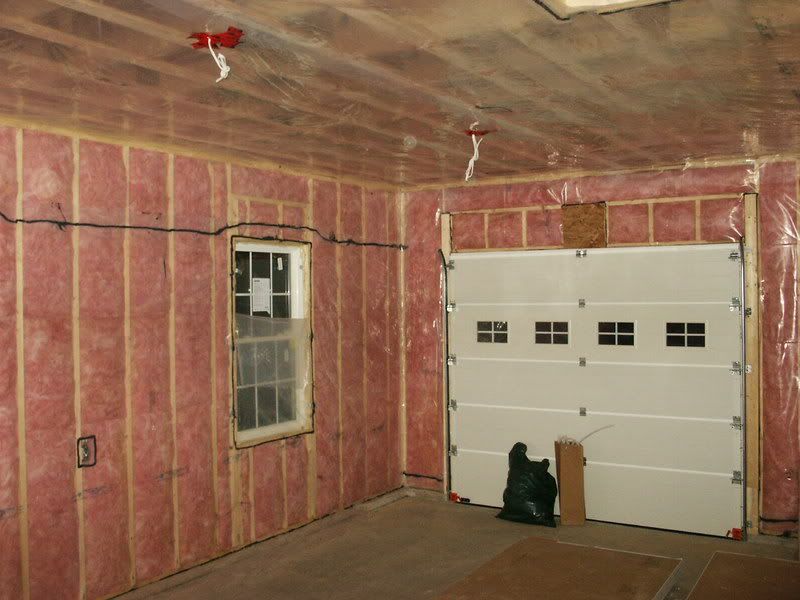
The garage ceiling was drywalled and taped when we moved in. There was
no separate plastic vapor retarder installed. Although more and more codes now are considering a drywalled and taped (and painted ceiling) to be sufficient and no separate plastic layer is required.
Member
Joined: May 2002
Posts: 231
From: Hfx, N.S.
Sorry about the late post. Actually a few coats of paint is just fine or you can use thishttp://www.hytechsales.com/prod85.html
We park one of our cars in the garage during the winter and with the snow and slush from the car the garage has a high moisturel level.
We park one of our cars in the garage during the winter and with the snow and slush from the car the garage has a high moisturel level.

Thread
Thread Starter
Forum
Replies
Last Post
tarun900
4th Generation Maxima (1995-1999)
19
Dec 20, 2021 06:57 PM
Derrick2k2SE
5th Generation Maxima (2000-2003)
9
Nov 19, 2015 10:14 PM