


what is in my rotor? (pic)


what is in my rotor? (pic)
Im going to take a picture of it right now.
I am replacing my brembo blanks with brembo slotted on the front and I noticed while looking at the profile of the rotor there is this metal wire going through about 3 or 4 of the cooling fins. is this some sort of weight for balancing? or should I remove it?
also ive got the rotors on correct right? this picture is of the passenger side of the car. outter part of the slot should be hitting the brake pad first right?


I am replacing my brembo blanks with brembo slotted on the front and I noticed while looking at the profile of the rotor there is this metal wire going through about 3 or 4 of the cooling fins. is this some sort of weight for balancing? or should I remove it?
also ive got the rotors on correct right? this picture is of the passenger side of the car. outter part of the slot should be hitting the brake pad first right?
Last edited by chillin014; Feb 8, 2008 at 12:27 PM.



that's pretty normal. they'll use that to balance the rotors instead of grinding metal off the other side to put it in balance.
personally I'd rather see it ground off on the other side instead of adding weight and something that might fall out later.
personally I'd rather see it ground off on the other side instead of adding weight and something that might fall out later.
thats what i was thinking....oh well...nothing i can do about it now. My brake pedal still feels frickin spongey. like the car just doesnt seem to ever BITE when I brake. I even embedded the pads...
pads are metal master's.

pick up a bottle of valvoline synpower brake fluid from autozone. it's the best stuff you'll find for the price.
suck the old fluid out of the reservoir and pour fresh stuff in. then bleed one wheel at a time according to the FSM (or see stickies in 3/4/5/6 gen forums.). use 2 people. one to pump up the pedal about 3-4-5 times and hold it, then the second person to crack the bleeder screw open and let fluid drain out. when the pedal is on the floor, close the bleeder and have the guy ont he pedal pump up pressure again.
that's the best way to bleed these systems, regardless of what all the other forums and people tell you (and if anyone's bled more nissan brakes than me around here, I'd like to meet them. )
)
suck the old fluid out of the reservoir and pour fresh stuff in. then bleed one wheel at a time according to the FSM (or see stickies in 3/4/5/6 gen forums.). use 2 people. one to pump up the pedal about 3-4-5 times and hold it, then the second person to crack the bleeder screw open and let fluid drain out. when the pedal is on the floor, close the bleeder and have the guy ont he pedal pump up pressure again.
that's the best way to bleed these systems, regardless of what all the other forums and people tell you (and if anyone's bled more nissan brakes than me around here, I'd like to meet them.
)
thanks. yeah that sounds like how i was doing it. I do have one question though..when you open the valve the fluid squirts out right (i have a little clear hose on the end of the bleeder). So my question is, do you open it until the pressure stops pushing fluid out and then close the bleeder? Or do you open it and close it fairly quickly. Because I always felt like when i leave it open more than a few seconds the fluid is able to go backwards into the bleeder since the pressure is no longer there. you know what im sayin?
i'll let matt (or someone else) answer that since i don't know much about bleeding, but iirc you are supposed to close the bleeder screw once the brake pedal has bottomed out.
anybody got opinions on speed bleeders?
anybody got opinions on speed bleeders?

thanks. yeah that sounds like how i was doing it. I do have one question though..when you open the valve the fluid squirts out right (i have a little clear hose on the end of the bleeder). So my question is, do you open it until the pressure stops pushing fluid out and then close the bleeder? Or do you open it and close it fairly quickly. Because I always felt like when i leave it open more than a few seconds the fluid is able to go backwards into the bleeder since the pressure is no longer there. you know what im sayin?
Son is the pedal pusher,I am the bleeder screw guy,(clear bleed hose into cup of fluid and wrench ready)
My son already knows the drill by heart now
 , but instruct your pedal guy to pump the brakes 2/3 times,then hold firmly on the pedal,when he signals ready, I open the bleeder, KEY PART HERE..Make sure your pedal helper is continuing to push the pedal until it hits the floor, then make sure he/she holds it there until you close the bleeder screw. Then repeat a few more times.
Communication between you and your helper is key if they haven't done this sort of thing before..


I've used speed bleeders, but don't like them that well. with how picky nissans are about spongy pedals, I tend to recommend against them on nissans.
I even have a set on my 240 with the wilwood front/Z32 rear brake setup, and I do it just like they weren't there.
I even have a set on my 240 with the wilwood front/Z32 rear brake setup, and I do it just like they weren't there.

Alright, here's a question for ya...when does the bleeder screw guy close the valve? Do you let the fluid drain until it stops, or shut it before it stops? I would figure that when it stops, it would suck in more air, correct?

So that's why when my dad and I bled my brakes for the first time they were spongy. No hose on it or anything, just a little bottle to have the fluid sip into.

What does the rubber hose do exactly? Prevent air from coming in?

Senior Member
Joined: Jul 2004
Posts: 888
I connect a hose to the bleeder and bleed. I can see the bubble in the air line tube. But after a few pumps of fresh fluid, the bubbles are gone, and the fluid changes from brownish to clear. hehe..
The LAST one, I do what was mentioned. PUMP HOLD and LOCK.
The LAST one, I do what was mentioned. PUMP HOLD and LOCK.
for the most part you're squeezing fluid out the house, but then the small air bubbles too.
but for the small volume that gets sucked back in before you close the bleeder, the hose prevents it from being air because its holding a decent amount of fluid right there at the bleeder.
I bought a speed bleeder some years back, didn't like the results at all, the pedal was still spongy. It's in the bottom of one of my tool boxes collecting dust..

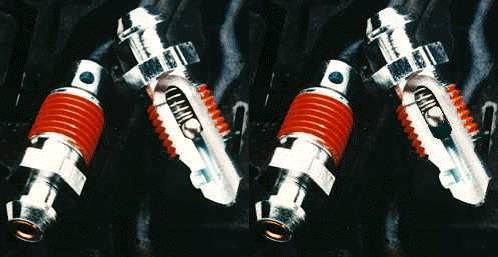


heh... geuss this thread was just a little late then. not only did i just buy a set of speed bleeders but i shelled out for the stainless version. oh well, won't be the first time i waisted some money. hopefully they'll work out for me though. i'm not as performance oriented as a lot of you guys.
heh... geuss this thread was just a little late then. not only did i just buy a set of speed bleeders but i shelled out for the stainless version. oh well, won't be the first time i waisted some money. hopefully they'll work out for me though. i'm not as performance oriented as a lot of you guys.


Ok, so I am having the same issue, just bled mine with valvoline synpower stuff(big gold bottle), but still spongy. Let me get this straight, this is the order of things to do it in, correct?
Pump Brakes, loosen bleed screw, pump brakes once and hold down, tighten screw.
So you are not supposed to push and let go and push again if the screw is loose?
Pump Brakes, loosen bleed screw, pump brakes once and hold down, tighten screw.
So you are not supposed to push and let go and push again if the screw is loose?
without being a brake bleeding pro and only having a general understanding of the way things work, if you release the brake pedal with the bleeder screw open you will be sucking whatever you just pumped out back in (assuming you have a hose/container connected).
Ok, so I am having the same issue, just bled mine with valvoline synpower stuff(big gold bottle), but still spongy. Let me get this straight, this is the order of things to do it in, correct?
Pump Brakes, loosen bleed screw, pump brakes once and hold down, tighten screw.
So you are not supposed to push and let go and push again if the screw is loose?
Pump Brakes, loosen bleed screw, pump brakes once and hold down, tighten screw.
So you are not supposed to push and let go and push again if the screw is loose?
simple concept. sounds more complicated when written out.
The fluid goes down in the resevoir because your pressing the pedal and pushing fluid out of the bleeder. So yeah you have to keep filling up the resevoir as the fluid goes down so you don't end up taking in more air and defeating the purpose.
even doing it the wrong way, you'll still be pumping fluid out the other end. the issue is that youll be sucking in a small amount of air around the bleeder screw fitting and possibly the bubbles back in throught he hose when you let off the pedal and the bleeder is still open. all it takes is one or two itty bitty air bubbles to give you a spongy pedal.
BUT.. I've also noticed with some pads and fluid (usually valvoline doesn't do it tho..) that my pedal is always spongy right after bleeding, but firms up after 20-30 miles of driving. strange.. but it's always been find after I drove the car a while.
BUT.. I've also noticed with some pads and fluid (usually valvoline doesn't do it tho..) that my pedal is always spongy right after bleeding, but firms up after 20-30 miles of driving. strange.. but it's always been find after I drove the car a while.

Thread
Thread Starter
Forum
Replies
Last Post
BPuff57
Advanced Suspension, Chassis, and Braking
33
Apr 16, 2020 05:15 AM
bigfrank
4th Generation Maxima (1995-1999)
2
Oct 1, 2015 12:51 PM