


Wrapped my Turbo hot side.


Wrapped my Turbo hot side.
Well iv been wanting to do this for some time. At first I wanted to save up to get a blanket for the exhaust housing, but I already had header wrap available. I took off the turbo, wrapped the housing with a layer of 1" wide wrap, then wrapped it with 2" wide wrap that i had, then painted it with silicone DEI paint (also i painted the housing itself to protect against rust, since the wrap can hold moisture between the metal and itself). Then painted the wrap really good, soaking it, to protect it and reduce the chances of absorbing water or moisture. Held the wrap together with zip ties and also worm gear clamps for extra support since the zip ties will become hard over time and crack.
Result?
I notice better and quicker spool up, usually i didnt get full boost (10psi) in 1st gear (auto). normally the boost would go to about 7psi then shift to 2nd gear and get to 10psi. but now, the needle climbs up straight to almost 10psi, shifts, n stays at 10. feels very nice. I am now getting boost at same rpm as a 5sp with front mount turbo setup with this same turbo. All it took is some wrapping of the exhaust piping and turbo housing. So to those that think RMT would cause alot of lag, think again. =)


Result?
I notice better and quicker spool up, usually i didnt get full boost (10psi) in 1st gear (auto). normally the boost would go to about 7psi then shift to 2nd gear and get to 10psi. but now, the needle climbs up straight to almost 10psi, shifts, n stays at 10. feels very nice. I am now getting boost at same rpm as a 5sp with front mount turbo setup with this same turbo. All it took is some wrapping of the exhaust piping and turbo housing. So to those that think RMT would cause alot of lag, think again. =)


Last edited by streetzlegend; Nov 3, 2007 at 08:07 PM.



I'm using an ebc using my emanage blue. I have a GN boost solenoid and I use the emanage additional injector duty cycles to control the solenoid, basically 100% duty cycle is full turbo boost, and 0% duty cycle is spring pressure. so for 10psi I have it at about 85% duty cycle.

bahahahah, nice work man. this may just have completely busted the myth of lag on RMTs...
Off the bat, yes there will be more lag than on an RPM, but with a few tricks, it'll spool at the same point as a front mount... for less money still

Off the bat, yes there will be more lag than on an RPM, but with a few tricks, it'll spool at the same point as a front mount... for less money still
Last edited by 95BLKMAX; Nov 3, 2007 at 10:32 PM. Reason: I cant spell when im sleepy
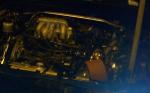
Yeah, that kind of wraps it up! Great job.





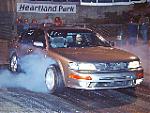
I have been putting off the 1/4 track for a while, even went to it to watch 95blkmax but I refused to take my car all this time, Now we are getting cooler weather, my car is running pretty good, (might not even need the nitrous for the 60'), but my plan is to do a 12 sec pass.
I have been putting off the 1/4 track for a while, even went to it to watch 95blkmax but I refused to take my car all this time, Now we are getting cooler weather, my car is running pretty good, (might not even need the nitrous for the 60'), but my plan is to do a 12 sec pass.
But I have to finish the install first


Here's my take on rear mount turbo setups vs front mount setups.
First of all, the PFI kit and other reverse Y setups can hardly be called front mount. If you look at the length of exhaust piping going to the turbo, it's really long. Like probably 2/3 as long as a rear mount setup, so basically, even those kits are basically rear mount setups when it comes to what matters, exhaust piping length. Then they have the added detriment of keeping all that heat in the engine bay, and all the bends involved.
A good front mount setup will do everything better than a PFI style or rear mount setup. BUT, it is much easier for people to fabricate a well executed RMT than a well executed front mount setup because there is less complication, less packaging constraints, etc. I think RMTs are a good solution for many people because it makes things quite a bit easier in many respects.
First of all, the PFI kit and other reverse Y setups can hardly be called front mount. If you look at the length of exhaust piping going to the turbo, it's really long. Like probably 2/3 as long as a rear mount setup, so basically, even those kits are basically rear mount setups when it comes to what matters, exhaust piping length. Then they have the added detriment of keeping all that heat in the engine bay, and all the bends involved.
A good front mount setup will do everything better than a PFI style or rear mount setup. BUT, it is much easier for people to fabricate a well executed RMT than a well executed front mount setup because there is less complication, less packaging constraints, etc. I think RMTs are a good solution for many people because it makes things quite a bit easier in many respects.
First of all, the PFI kit and other reverse Y setups can hardly be called front mount. If you look at the length of exhaust piping going to the turbo, it's really long. Like probably 2/3 as long as a rear mount setup, so basically, even those kits are basically rear mount setups when it comes to what matters, exhaust piping length. Then they have the added detriment of keeping all that heat in the engine bay, and all the bends involved.
Easy breezy!
Yup your right nealoc, when I did my setup i remember more or less comparing the exhaust piping distance vs. reverse y pipe, and it was almost as long as my piping off by a couple of feet, and for the charge piping, i dont have intercooler in my case so if you get a front mount setup and get all the IC piping, stretch it out in a straight line, you'd be surpriced and it might be just as long as mine, also there's minimal bends as well, just a straight pipe from back to front. overall, i love my RMT and if i had the chance and funds to do it all over again, i would still go with RMT.

GearHead
Joined: Nov 2007
Posts: 20
What's up, new guy here. I know streetzlegend from over at another site. His setup proves that rear or remote mounts can work as long as you pay attention to heat loss before the turbo.
Remote mounts are not a new concept. They were used in WW2 fighter planes and they worked. This is from a P-47 Thunderbolt.

The exhaust driven turbine is approximately 22 ft aft of the propeller and is supported by a ring attached to the lower longerons. The exhaust gases are collected by two rings, one each for the left and right bank of cylinders and directed to the nozzle box of the turbine through shrouded exhaust piping along either side of the airplane beneath the fuselage. Spent gas escapes through a stainless steel flight hood which extends below the fuselage.
Remote mounts are not a new concept. They were used in WW2 fighter planes and they worked. This is from a P-47 Thunderbolt.
The exhaust driven turbine is approximately 22 ft aft of the propeller and is supported by a ring attached to the lower longerons. The exhaust gases are collected by two rings, one each for the left and right bank of cylinders and directed to the nozzle box of the turbine through shrouded exhaust piping along either side of the airplane beneath the fuselage. Spent gas escapes through a stainless steel flight hood which extends below the fuselage.

Thread
Thread Starter
Forum
Replies
Last Post
litch
4th Generation Maxima (1995-1999)
123
Jan 4, 2024 07:01 PM
jmlee44
4th Generation Maxima (1995-1999)
8
Oct 2, 2022 02:13 PM
tarun900
4th Generation Maxima (1995-1999)
19
Dec 20, 2021 06:57 PM