


car modification confusion


car modification confusion
hi, I've been reading the maxima.org forums for quite a whle now, very interesting place. I figured it's about time i register and start posting some of my own questions. One of the things I've been reading about most is what mods/performance parts you can put on your maxima. They all seem great but I always ask around to see what others think. So I decided to ask my dad and his friend. His friend owns an 86 mustang, and has turned it into a beast. he races it on tracks etc... so I thought he'd be a good guy to ask about the mods I've read up on the internet. He kinda shot down every idea i had about modding my car. first example, my dad told me this before he even said anything, would be the Cold Air Intake, many people talk about how great it is and what a huge difference it makes, but they tell me alls it will do is make your car sound louder, no performance increase and sometimes you'll even loose a few hp. Second is the piping on the car, y pipe for instance; I was told that the Y pipe would only convert torque into horsepower, which is not what i want(according to him). Why would that be bad? is he right? does it actually convert torque to hp? what's the difference between the two? Do I really need torque is or hp better? Next mod, I read somewhere you can put a high flow catalytic converter on the car to allow better flow, but he told me my maxima should already have a high flow catalytic converter on it and that they come like that from the manufacturer, I don't think he said too much about that one, but is it true that the one on the car is good enough and that an after market catalytic converter would only be a waste of money? he suggested that if i want something to make my car "Cooler" that i should jsut do a catback exhaust and call it good. Then I decided to ask him about the lightened underdrive pulley, he was a little less abusive to that mod, he said i would actually feel a small difference, but at what cost? He told me that most people dont live in arizona and by reducing the speed your accessories rotate, your car will run hotter, your car will generate less power which in turn will affect the ecu and possibly cause your ecu to malfunction. Which brings me to another question, when upgrading the ecu, there are many places you can go to that will change your settings, but which one is the right one for me? Are they all the same? I'm under the impression that if its not done right you can actually lose performance. How bad does the underdrive pulley affect your car? does it affect the car's accessories that badly or is he just wrong? Anyways I dont know if i can think of anymore questions on the top of my head, I'm sorry about asking so many but I really want to know if it's worth my time and money to upgrade my car and make it faster or if i should just hang tight until I have a faster car. I already know turbo or supercharge is out of the question, because I'd like my engine to last a bit longer than it would with one of the two. I dont expect an answer to all of my questions from any single person, but whatever you guys can answer would really help a lot. I appreciate you guys taking the time in reading such a long post. also any other suggestions for mods would be great, I read the sticky at the top of the forums i just can't remember them all now. just a side note, I have a 92 Maxima SE currently getting a new engine (VE30DE) with 56k miles.

I forgot one last thing, I'd also like to put in bigger roters and stronger brakes. I know you have to have bigger wheels than stock, so I'll be getting some light 17" rims, but what should I do as for bigger roters and better pads? front and back 
Originally Posted by Jeff92se
Ask your dad what intake and exhaust he has. hehe


Man, I almost fell asleep reading all of that. Cliff notes next time...
Since you seem to have money for all these mods, donate to maxima.org (at least $20) so you can search. Look up the term "BBK" and you will get answers on brakes. Try digging through the stickies at the top of the 3rd gen forum here for more answers to your other questions.
The combination of an intake/exhaust/cat-back will net you hp gains. If your dad and his friend are into drag racing, they should know that these mods will lower times in the quarter mile. Individually, the CAI and cat-back don't add very much.
UDPs are common and I can't recall anyone ruining their ECU by running one. Getting your ECU reprogrammed costs about $600 and Jim Wolf Technology is about the only reputable place that does it, and they need your ECU for a while.
With the right performance mods, reaching the mid to upper 14s in the quarter mile is attainable, especially if your car is a 5-speed. If you know your stuff, you could reach the low 14s, but very few have. With the right suspension and brake mods, autocross isn't out of the question, either.
Since you seem to have money for all these mods, donate to maxima.org (at least $20) so you can search. Look up the term "BBK" and you will get answers on brakes. Try digging through the stickies at the top of the 3rd gen forum here for more answers to your other questions.
The combination of an intake/exhaust/cat-back will net you hp gains. If your dad and his friend are into drag racing, they should know that these mods will lower times in the quarter mile. Individually, the CAI and cat-back don't add very much.
UDPs are common and I can't recall anyone ruining their ECU by running one. Getting your ECU reprogrammed costs about $600 and Jim Wolf Technology is about the only reputable place that does it, and they need your ECU for a while.
With the right performance mods, reaching the mid to upper 14s in the quarter mile is attainable, especially if your car is a 5-speed. If you know your stuff, you could reach the low 14s, but very few have. With the right suspension and brake mods, autocross isn't out of the question, either.
ah thank you for that. I'm actually not even close to that rich but I like planning ahead. as for donating, come next paycheck or next car part i sell on ebay which ever is first I wouldn't mind donating some to maxima.org, the help here is great. sorry about making that so long and boring, i didnt think to make it more readable lol.

seems like most rustang owners are know-it-alls. If these mods were dumb, i dont think smart people like us would do them.
As for him saying cat-back is way to go, i think that having restricted air flow to the cat wont really make a cat back system that great, plus you would have spent a lot of money on a low hp gain. get a y-pipe. Everyone on here has had nothing but good to say when getting one.
as for him saying mods dont do anything. Why did he mod his car into a beast? you do modding becuase its fun and cool. be creative but dont be rice. ok be alittle rice. but just do what makes you happy.
good luck with your ride.
As for him saying cat-back is way to go, i think that having restricted air flow to the cat wont really make a cat back system that great, plus you would have spent a lot of money on a low hp gain. get a y-pipe. Everyone on here has had nothing but good to say when getting one.
as for him saying mods dont do anything. Why did he mod his car into a beast? you do modding becuase its fun and cool. be creative but dont be rice. ok be alittle rice. but just do what makes you happy.
good luck with your ride.


Senior Member
Joined: Dec 2004
Posts: 4,323
From: EU Scandinavia
"lightened underdrive pulley"
I Would Be very careful of this mod cause its mass acts also as vibration dampener. Might cause severe harmonics vibration to brake the crank.
Typically 'all' stock cars have intakes crimped to dampen noise. So there's reserve to be opened in intake & exhaust as told already, and that pwr increase is real, and can be done cheap. However, do not try to win turbos on drag race...
VG30E intake surgery: http://www.cardomain.com/memberpage/748507/2
I Would Be very careful of this mod cause its mass acts also as vibration dampener. Might cause severe harmonics vibration to brake the crank.
Typically 'all' stock cars have intakes crimped to dampen noise. So there's reserve to be opened in intake & exhaust as told already, and that pwr increase is real, and can be done cheap. However, do not try to win turbos on drag race...
VG30E intake surgery: http://www.cardomain.com/memberpage/748507/2

Originally Posted by Wiking
"lightened underdrive pulley"
I Would Be very careful of this mod cause its mass acts also as vibration dampener. Might cause severe harmonics vibration to brake the crank.
I Would Be very careful of this mod cause its mass acts also as vibration dampener. Might cause severe harmonics vibration to brake the crank.


Originally Posted by Wiking
"lightened underdrive pulley"
I Would Be very careful of this mod cause its mass acts also as vibration dampener. Might cause severe harmonics vibration to brake the crank.
I Would Be very careful of this mod cause its mass acts also as vibration dampener. Might cause severe harmonics vibration to brake the crank.
"Is my crank pulley a harmonic/torsional/vibration damper or a harmonic balancer?"
People are getting their crank pulleys confused with the harmonic dampers found on some V6 / V8 engines. "Harmonic Balancer" is a term that is used loosely in the automotive industry. Technically, this type of device does not exist. The "balancer" part comes from engines that are externally balanced and have a counterweight cast into the damper, hence the merging of the two terms. None of the applications that we offer utilize a counterweight as part of the pulley as these engines are internally balanced.
The pulleys on most of the new import and smaller domestic engines have an elastomer (rubber ring) incorporated into the pulley that looks similar to a harmonic damper. The elastomer in the OEM pulley serves as an isolator, which is there to suppress natural vibration and noise from the engine itself, the A/C compressor, P/S pump, and alternator. This is what the manufacturers call NVH (Noise Vibration & Harshness) when referring to noticeable noise and vibration in the passenger compartment. It is important to note that in these applications, this elastomer is somewhat inadequate in size, as well as life span, to act as an effective torsional damper. If you look at the pulleys on some of the imports there is no rubber to be found at all. We have samples of these, mostly from Acura/Honda, the Nissan Altima, 1.8L Eclipse, 2.3L Fords, Chrysler 2.2L's, and 1.8L VW's, to mention a few. This is not to say that with our pulleys you will hear a ton of noise or feel more vibration from your engine compartment. Most who have installed and driven a vehicle with our pulleys will notice the engine actually feels smoother. This is a natural result of replacing the heavy steel crank pulley with a CNC-machined aluminum pulley. NVH is variable and unique to every car. NVH will increase with the installation of an aftermarket intake and/or exhaust, for example. Think of OEM intake systems in newer cars, they use baffles and resonators in the intake to quiet all the intake noise. Aftermarket intakes eliminate these resonators and create dramatic increases in engine noise from the throttle opening and closing. So to most tuners, certain types of NVH can make the driving experience more enjoyable.
The purpose of a traditional harmonic damper is to protect against crank failure from torsional movement. This is not necessary in most modern engines because of the many advances in engine design and materials. Factors such as stroke, displacement, inline, V configurations, power output, etc., do determine when and how these harmonics and torsional movements occur.
Again, there is a lot of internet hearsay about the pulleys. When engine problems occur, too often people are quick to blame the pulley first, rather than taking the time to look logically into why there was a problem. We hope that after reading this you will understand the crank pulleys better.
Senior Member
Joined: Dec 2004
Posts: 4,323
From: EU Scandinavia
Originally Posted by lophix
say what, jose?
So there must be a cause based on "smtg". I suspect its reliability. Nissan V6 'block' is known to be rock solid, as are their other engine's.
Dunno really, have not done research in cranck harmonics...

Yeah, what Dan said.
I've had a UDP and lightweight flywheel on my car for almost 60,000 miles (installed both at around 158,000 miles) and many of those miles are at redline on a race track.. The engine still runs great, with 217,000 total miles.
Nissan put the rubber in the pulley simply for noise damping from the accessories, and to make the car idle smoother when the accessories kick on. when the AC compressor kicks on, it puts a pretty big load on the engine. With a light pulley and flywheel on there, I can tell exactly when it clicks on as the engine RPM drops dramatically until the ECU compensates for it.
It does make stop and go driving a bit more tedious as you have to be careful with the clutch, but for open track use or trying to merge on the higway, the car is a freak.
Last week I was at the track and Corvettes and Vipers had a hard time catching up to me- even on the straights.
I've had a UDP and lightweight flywheel on my car for almost 60,000 miles (installed both at around 158,000 miles) and many of those miles are at redline on a race track.. The engine still runs great, with 217,000 total miles.
Nissan put the rubber in the pulley simply for noise damping from the accessories, and to make the car idle smoother when the accessories kick on. when the AC compressor kicks on, it puts a pretty big load on the engine. With a light pulley and flywheel on there, I can tell exactly when it clicks on as the engine RPM drops dramatically until the ECU compensates for it.
It does make stop and go driving a bit more tedious as you have to be careful with the clutch, but for open track use or trying to merge on the higway, the car is a freak.
Last week I was at the track and Corvettes and Vipers had a hard time catching up to me- even on the straights.
Originally Posted by Wiking
--that sentence was not 'my invention'. Anyway, I will not believe slick ads... And just go figure: thinkabaout -globally- all nissan manufacturing and how much would they gain in mfg expenses if that thing's weight would be 10% less. I suppose Nissan would run for it.
So there must be a cause based on "smtg". I suspect its reliability. Nissan V6 'block' is known to be rock solid, as are their other engine's.
Dunno really, have not done research in cranck harmonics...
So there must be a cause based on "smtg". I suspect its reliability. Nissan V6 'block' is known to be rock solid, as are their other engine's.
Dunno really, have not done research in cranck harmonics...
Senior Member
Joined: Dec 2004
Posts: 4,323
From: EU Scandinavia
Originally Posted by Matt93SE
Yeah, what Dan said.
I've had a UDP and lightweight flywheel on my car for almost 60,000 miles (installed both at around 158,000 miles) and many of those miles are at redline on a race track.. The engine still runs great, with 217,000 total miles.
Nissan put the rubber in the pulley simply for noise damping from the accessories, and to make the car idle smoother when the accessories kick on. when the AC compressor kicks on, it puts a pretty big load on the engine. With a light pulley and flywheel on there, I can tell exactly when it clicks on as the engine RPM drops dramatically until the ECU compensates for it.
It does make stop and go driving a bit more tedious as you have to be careful with the clutch, but for open track use or trying to merge on the higway, the car is a freak.
Last week I was at the track and Corvettes and Vipers had a hard time catching up to me- even on the straights.
I've had a UDP and lightweight flywheel on my car for almost 60,000 miles (installed both at around 158,000 miles) and many of those miles are at redline on a race track.. The engine still runs great, with 217,000 total miles.
Nissan put the rubber in the pulley simply for noise damping from the accessories, and to make the car idle smoother when the accessories kick on. when the AC compressor kicks on, it puts a pretty big load on the engine. With a light pulley and flywheel on there, I can tell exactly when it clicks on as the engine RPM drops dramatically until the ECU compensates for it.
It does make stop and go driving a bit more tedious as you have to be careful with the clutch, but for open track use or trying to merge on the higway, the car is a freak.
Last week I was at the track and Corvettes and Vipers had a hard time catching up to me- even on the straights.
This harmonics management is a scientific question, not how some individual cranks last. Power boost must be true, but Nissan as a global company has to be careful of their image. Therefore !? they have selected the more costly, heavier pulley.
Repeat: Dunno, thats why I want to live without wild horses... =wild to me because I do not know how safe they are. Will not start research on them, but the ones keen swapping that, should. But if its your race car, who cares?
Oh, so many variables in life: luckily we are free to choose on this one, no gvmt re gulag itions on this...
-----------------------------------------------------------------
Did u read this:
Starting next year every car has to be ABS in russia, state law now. What will happen? Will all moskwitch, trabants from fourties have ABS like miracle? Yes they will, starting next year. Only needs forged 'propushka' from the very same gvmt mini -s- try behind this article. Bouhaahhhaa. Btw. I Love reagan...
Senior Member
Joined: Dec 2004
Posts: 4,323
From: EU Scandinavia
Originally Posted by DanNY
you're one of those guys that will never believe anyone until you rip it apart yourself and do your research enh?
Edit:
Gold is seldom found lying on main street. All alone without maps u might find u survived paddling u canoe downstream through a posh villa 'front yard' with their pit bulls chasing. Now figure how u gonna pulley back through upstream? Do not follow me...
You're missing the point... Nissan didn't design it to damp the engine vibrations for reliability.. they did it to eliminate NVH from the cabin so customers would be happy with a nice quiet ride.
back in the day of big V8s with horrible balance problems, the harmonic dampers were necessary. Such isn't the case anymore with well balanced, smooth running V6s that run to 7,000rpm from the factory.
back in the day of big V8s with horrible balance problems, the harmonic dampers were necessary. Such isn't the case anymore with well balanced, smooth running V6s that run to 7,000rpm from the factory.
Senior Member
Joined: Dec 2004
Posts: 4,323
From: EU Scandinavia
Originally Posted by Matt93SE
You're missing the point... Nissan didn't design it to damp the engine vibrations for reliability.. they did it to eliminate NVH from the cabin so customers would be happy with a nice quiet ride.
back in the day of big V8s with horrible balance problems, the harmonic dampers were necessary. Such isn't the case anymore with well balanced, smooth running V6s that run to 7,000rpm from the factory.
back in the day of big V8s with horrible balance problems, the harmonic dampers were necessary. Such isn't the case anymore with well balanced, smooth running V6s that run to 7,000rpm from the factory.
Maybe you are right, I miss many points and often. And I know its too easy to throw cheap questions, will shut up after this:
Any 'living' car manufacturer CEO has TWO worries balanced on the table, others are peanuts:
The two: Short vs. Long
--->Incoming cash flow ...
Based on that, I still wonder why 'wasted zillions' on that weight? --->If its balanced anyway, that is. They have done this on thinning the harness on the starving level, why not in here also? [calculate nissan vehicles globally and how much they would save if...]
totally understand. Thinning the wiring harness saves money and doesn't affect the ride quality of the car (unless you catch it on fire!).
lightening the rotating mass of the engine will make it accelerate quicker, but it also causes driveability issues. I've chopped about 20lb of rotating mass off my engine between the flywheel and the crank pulley, and it's very noticeable. the car revs to redline in less than a second, BUT it's hard to slip the clutch from a stop because of it. Nissan left the heavy flywheel and pulleys on it to make the car easy to drive and smooth when shifting gears.
look at most carmakers and it's the same way. a factory flywheel usually weighs upwards of 25lb (roughly 12kg) on a small car.. the crank pulley weighs about 8lb (~4kg). The ones on a large V8 weigh double that. back in the 60s, a 50lb flywheel was not uncommon. they had a much larger mass to accelerate from a stop, so the engine required more intertia behind it to get it rolling when you let out the clutch.
lightening the rotating mass of the engine will make it accelerate quicker, but it also causes driveability issues. I've chopped about 20lb of rotating mass off my engine between the flywheel and the crank pulley, and it's very noticeable. the car revs to redline in less than a second, BUT it's hard to slip the clutch from a stop because of it. Nissan left the heavy flywheel and pulleys on it to make the car easy to drive and smooth when shifting gears.
look at most carmakers and it's the same way. a factory flywheel usually weighs upwards of 25lb (roughly 12kg) on a small car.. the crank pulley weighs about 8lb (~4kg). The ones on a large V8 weigh double that. back in the 60s, a 50lb flywheel was not uncommon. they had a much larger mass to accelerate from a stop, so the engine required more intertia behind it to get it rolling when you let out the clutch.
Most if not all harmonic balancers have a rubber elastic ring in the pulley. Take yours off and see if it has one or not.
As far as "why". Why did Nissan use such a crappy design for their Y pipes? Why did they use such soft spring/shocks? Why did they use such a small rear sway bar? Why did they use such a conservative timing curves for their ecu???
As far as "why". Why did Nissan use such a crappy design for their Y pipes? Why did they use such soft spring/shocks? Why did they use such a small rear sway bar? Why did they use such a conservative timing curves for their ecu???
Senior Member
Joined: Dec 2004
Posts: 4,323
From: EU Scandinavia
"...to make the car easy to drive...
This is near the 'Long' $ nerve ...=Ladies decide what husbands are allowed.
- Y-pipe has to do smtg with timing and strictly minded de signer. It looks grazy, but at quick look seem to have about same gas travel lengths. Dunno, but suspect that the straight configuration (warp etc.) is still far from what it could be, because nobody (have they?) has calculated the 'pressure *****' rollin dwon from cylinder, and how they mix to fit to one pipe. Suppose best timing would be like zipper... is it?
- Shocks: its shockinh how americans love their sofas. Have to live all life on it, be it before telly, wheel. And dont get me wrong again, me on sofa love america, but was dropped on 'wrong side' of globe =here cars are hated. Did God make an error in my case?
I suspect my stock springs are much tighter that the american originals, dunno really. But tastes are different, and its dangerous to separete from crowd, for manufacturers at least.
- ECU plus others: crimp now, add cheap 10% hp on next year model. I think the differences between VG and VE have been designed, handpicked: VE 60% of capacity, VG 50% of capacity. As the board with CEO commanded.... most what we see is just different flavous on the 'cake' to fulfil -Long $- requirements (blanketing market). I know u start to speak of intake, coilpacks, VTC, but then I'll ask: CEO's cake was real good?
Nothing wrong having more hp, with security, wannabe...
This is near the 'Long' $ nerve ...=Ladies decide what husbands are allowed.
- Y-pipe has to do smtg with timing and strictly minded de signer. It looks grazy, but at quick look seem to have about same gas travel lengths. Dunno, but suspect that the straight configuration (warp etc.) is still far from what it could be, because nobody (have they?) has calculated the 'pressure *****' rollin dwon from cylinder, and how they mix to fit to one pipe. Suppose best timing would be like zipper... is it?
- Shocks: its shockinh how americans love their sofas. Have to live all life on it, be it before telly, wheel. And dont get me wrong again, me on sofa love america, but was dropped on 'wrong side' of globe =here cars are hated. Did God make an error in my case?
I suspect my stock springs are much tighter that the american originals, dunno really. But tastes are different, and its dangerous to separete from crowd, for manufacturers at least.
- ECU plus others: crimp now, add cheap 10% hp on next year model. I think the differences between VG and VE have been designed, handpicked: VE 60% of capacity, VG 50% of capacity. As the board with CEO commanded.... most what we see is just different flavous on the 'cake' to fulfil -Long $- requirements (blanketing market). I know u start to speak of intake, coilpacks, VTC, but then I'll ask: CEO's cake was real good?
Nothing wrong having more hp, with security, wannabe...
Originally Posted by Matt93SE
I've chopped about 20lb of rotating mass off my engine between the flywheel and the crank pulley, and it's very noticeable. the car revs to redline in less than a second, BUT it's hard to slip the clutch from a stop because of it.
Jeffy... the Y helps the engine run more efficiently, thus better fuel economy. Same with intake. the only problem is the driver has a tendency to stick their foot in it more to take advantage of said efficiency benefits, so they get worse mileage.
kiyakerz, drive an old '63 ford with a 60lb flywheel, then go drive an '88 Honda civic with a 13lb flywheel. you can get the old ford rolling without ever touching the gas- just let your foot out on the clutch. the flywheel and rotating mass is so heavy that the engine doesn't bog down.
now the civic, you won't be able to do that. there's no huge mass that's rotating with the engine, so when you let out on the clutch, the engine dies. you have to rev it up more and be more careful slipping the clutch in order to keep the engine running.
Think about the way the drivetrain is designed.. you have the rotating assembly- engine crank, flywheel, pullies, accessories, etc. that weighs about 80lb total on a stock maxima engine.
the car itself weighs about 3000lb. you have to take that weight that's rotating (moving in a circular direction) and use the momentum of it to get the rest of the car moving...
move that onto flat ground and the heavy rotating mass is akin to a freight train running into a car parked on the tracks. the light rotating mass is a person running into the side of the same car... which will make it move easier? the human, or the freight train?
obvious extremes there, but it simply illustrates my point.
kiyakerz, drive an old '63 ford with a 60lb flywheel, then go drive an '88 Honda civic with a 13lb flywheel. you can get the old ford rolling without ever touching the gas- just let your foot out on the clutch. the flywheel and rotating mass is so heavy that the engine doesn't bog down.
now the civic, you won't be able to do that. there's no huge mass that's rotating with the engine, so when you let out on the clutch, the engine dies. you have to rev it up more and be more careful slipping the clutch in order to keep the engine running.
Think about the way the drivetrain is designed.. you have the rotating assembly- engine crank, flywheel, pullies, accessories, etc. that weighs about 80lb total on a stock maxima engine.
the car itself weighs about 3000lb. you have to take that weight that's rotating (moving in a circular direction) and use the momentum of it to get the rest of the car moving...
move that onto flat ground and the heavy rotating mass is akin to a freight train running into a car parked on the tracks. the light rotating mass is a person running into the side of the same car... which will make it move easier? the human, or the freight train?
obvious extremes there, but it simply illustrates my point.
I asked "why did Nissan use a crappy design for their Y?" Brian said "economy". I asked "how does the stock Y help economy?"
And no one is getting my point anyway so I'll spell it out. Nissan built their components very conservative. Buy overcoming the conservatism, we can extract more power/better handling. Easy.
And no one is getting my point anyway so I'll spell it out. Nissan built their components very conservative. Buy overcoming the conservatism, we can extract more power/better handling. Easy.
Then why did you mention it?  It's purely a noise suppression device. Nothing more. I mean who in hell would up the backpressure by pointing the rear exhaust back into the front exhaust? Besides, "backpressure" is best controlled by the size of the exhaust pipe. Not by pointing it towards each other.
It's purely a noise suppression device. Nothing more. I mean who in hell would up the backpressure by pointing the rear exhaust back into the front exhaust? Besides, "backpressure" is best controlled by the size of the exhaust pipe. Not by pointing it towards each other.
Originally Posted by internetautomar
It doesn't neccessarily.
But a certain amount of backpressure will help with emissions and noise.
But a certain amount of backpressure will help with emissions and noise.
matt, that makes more sense. thank you. As for my original post, I kind of had the feeling my dads friend was full of crap, because like you guys said, why would so many people be investing money on these mods and have a forum dedicated to them (or at least partially dedicated to the mods)? I guess I just had ask the question flat out to everyone on these forums just to be sure.
Okay so which one did economy and emissions fall under?  hehe
hehe
hehe
Originally Posted by internetautomar
actually you also asked about ECU program , suspension stiffness and swaybars.
I just lumped all the reasons together
I just lumped all the reasons together
Senior Member
Joined: Dec 2004
Posts: 4,323
From: EU Scandinavia
Originally Posted by Jeff92se
I asked "why did Nissan use a crappy design for their Y?" Brian said "economy". I asked "how does the stock Y help economy?"
And no one is getting my point anyway so I'll spell it out. Nissan built their components very conservative. Buy overcoming the conservatism, we can extract more power/better handling. Easy.
And no one is getting my point anyway so I'll spell it out. Nissan built their components very conservative. Buy overcoming the conservatism, we can extract more power/better handling. Easy.
Exactly. That conservatism has kept Nissan alive. And almost destroyed it ten yrs ago... Balancing is quite tricky. busine$$. And me wannabe hp conservative in this pulley...
Y-PIPE:
Figure out 2.5" pink ***** being pushed down from exhaust manifold. These represent the cyl blasts that have to be routed out. How they meet in the intersection (is it here called plenum?) defines also gas consumption efficiency. I suppose in the stock arrangement they meet like zipper, not collide. Do they? Whats the rpm curve doing with these *****? How about comparison to warp speed & other mods, are they as efficient as can be in this combining of the explosions = timing?
Actually conservatism has not kept Nissan alive. It's certainly not what revived them lately.
I'm well versed in exhaust theory thank you. The stock Y does not meet like a zipper. It flows back into itself:
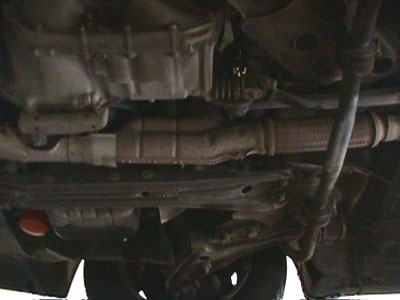
I'm well versed in exhaust theory thank you. The stock Y does not meet like a zipper. It flows back into itself: