


J30 Brake conversion


Originally Posted by maxmaxima91
im guessing its the differences in the j30-q45 calipers.. sucks man. sorry to hear that.
Cliffs: Maxmaxima91's way of doing coversion: J30 calipers work, Q45 calipers no work
Other way: works...I am about to go have the rotors machined. Also, outside brake pad needs a bit of modification with a dremel.

so we basically cannot do a even swap with out doing some fabrication done?
that sucks cuz i want to do this but have no idea what ur talking about when u start talking bout spacers n sizes.
is there an even bolt on caliper / rotor swap we can use on the max?
that sucks cuz i want to do this but have no idea what ur talking about when u start talking bout spacers n sizes.
is there an even bolt on caliper / rotor swap we can use on the max?

i've been looking at a pair but wasn't sure.

Member
Joined: Dec 2010
Posts: 180
From: STFU TROLL
They are good, I notice a good amount of difference. I mainly got them because I travel mountain passes a lot and wanted something that would dissipate heat faster. I travel between Washington and Montana. Those passes are fun to drive!

Slotted rotors dissipate heat no faster than a solid rotor. the only good they do on a street car is possibly wick away water faster if you drive through a deep puddle and get your brakes wet. 99.99% of the time, that's a non-issue.
http://forums.maxima.org/advanced-su...-not-work.html
As for a bolt-on brake setup that's bigger than the stock 3 gen, you can use stuff from the 5, 5.5 , or 6th gen. they bolt right on with the exception of drilling out the mounting holes for the calipers. just grab yourself a 14mm (9/16") drill bit from the hardware store and drill away. Then the 6th gen stuff bolts right on.
the problem is you're still limited to a junk brake pad selection.
Before you spend that kind of money searching for better brakes, install a set of Hawk HPS pads on your car, properly bleed the brakes with good fluid, then go and drive. You'll be impressed at just how capable the factory brakes are for street driving.
http://forums.maxima.org/advanced-su...-not-work.html
As for a bolt-on brake setup that's bigger than the stock 3 gen, you can use stuff from the 5, 5.5 , or 6th gen. they bolt right on with the exception of drilling out the mounting holes for the calipers. just grab yourself a 14mm (9/16") drill bit from the hardware store and drill away. Then the 6th gen stuff bolts right on.
the problem is you're still limited to a junk brake pad selection.
Before you spend that kind of money searching for better brakes, install a set of Hawk HPS pads on your car, properly bleed the brakes with good fluid, then go and drive. You'll be impressed at just how capable the factory brakes are for street driving.
Last edited by Matt93SE; Feb 1, 2011 at 09:55 AM.
Member
Joined: Dec 2010
Posts: 180
From: STFU TROLL
Slotted rotors dissipate heat no faster than a solid rotor. the only good they do on a street car is possibly wick away water faster if you drive through a deep puddle and get your brakes wet. 99.99% of the time, that's a non-issue.
http://forums.maxima.org/advanced-su...-not-work.html
As for a bolt-on brake setup that's bigger than the stock 3 gen, you can use stuff from the 5, 5.5 , or 6th gen. they bolt right on with the exception of drilling out the mounting holes for the calipers. just grab yourself a 14mm (9/16") drill bit from the hardware store and drill away. Then the 6th gen stuff bolts right on.
the problem is you're still limited to a junk brake pad selection.
Before you spend that kind of money searching for better brakes, install a set of Hawk HPS pads on your car, properly bleed the brakes with good fluid, then go and drive. You'll be impressed at just how capable the factory brakes are for street driving.
http://forums.maxima.org/advanced-su...-not-work.html
As for a bolt-on brake setup that's bigger than the stock 3 gen, you can use stuff from the 5, 5.5 , or 6th gen. they bolt right on with the exception of drilling out the mounting holes for the calipers. just grab yourself a 14mm (9/16") drill bit from the hardware store and drill away. Then the 6th gen stuff bolts right on.
the problem is you're still limited to a junk brake pad selection.
Before you spend that kind of money searching for better brakes, install a set of Hawk HPS pads on your car, properly bleed the brakes with good fluid, then go and drive. You'll be impressed at just how capable the factory brakes are for street driving.
 I am looking to get fidenza flywheel this tax return. Sorry, a bit off topic.
Thanks for the info. I cant remember what pads I have, but they work really well.
Last edited by doubleclutch92; Feb 1, 2011 at 10:45 AM.
"severe applications" are not what a typical Maxima driver encounters on public roads with DOT legal tires.
By the time you get to that point, you'll have R compound tires and be going fast enough you would be in jail if you were doing that on the street.
the big issue is pads and brake fluid. 90% of your braking abilities come from those two- the fluid's ability not to boil, and the pads ability to take the heat you're putting into it. not until your rotors are glowing orange and can't dissipate that heat are they an issue.
SCCA Production racing requires factory calipers and rotors. Every time I go to the track, I see 2700lb cars with 300hp running 9.5" rotors and stock calipers without issues. If they can do that on a race track with real slicks at 150mph, I'm gonna bet you can do a mountain drive in your grocery getter with half the power without problems.
you should also remember to downshift when going down those steep passes. the engine can brake quite well and you have much more radiator surface and airflow to dissipate heat vs. a brake rotor. there's nothing wrong with using the engine for braking, as long as you don't run it above redline to do so.
By the time you get to that point, you'll have R compound tires and be going fast enough you would be in jail if you were doing that on the street.
the big issue is pads and brake fluid. 90% of your braking abilities come from those two- the fluid's ability not to boil, and the pads ability to take the heat you're putting into it. not until your rotors are glowing orange and can't dissipate that heat are they an issue.
SCCA Production racing requires factory calipers and rotors. Every time I go to the track, I see 2700lb cars with 300hp running 9.5" rotors and stock calipers without issues. If they can do that on a race track with real slicks at 150mph, I'm gonna bet you can do a mountain drive in your grocery getter with half the power without problems.
you should also remember to downshift when going down those steep passes. the engine can brake quite well and you have much more radiator surface and airflow to dissipate heat vs. a brake rotor. there's nothing wrong with using the engine for braking, as long as you don't run it above redline to do so.
Member
Joined: Dec 2010
Posts: 180
From: STFU TROLL
"severe applications" are not what a typical Maxima driver encounters on public roads with DOT legal tires.
By the time you get to that point, you'll have R compound tires and be going fast enough you would be in jail if you were doing that on the street.
the big issue is pads and brake fluid. 90% of your braking abilities come from those two- the fluid's ability not to boil, and the pads ability to take the heat you're putting into it. not until your rotors are glowing orange and can't dissipate that heat are they an issue.
SCCA Production racing requires factory calipers and rotors. Every time I go to the track, I see 2700lb cars with 300hp running 9.5" rotors and stock calipers without issues. If they can do that on a race track with real slicks at 150mph, I'm gonna bet you can do a mountain drive in your grocery getter with half the power without problems.
you should also remember to downshift when going down those steep passes. the engine can brake quite well and you have much more radiator surface and airflow to dissipate heat vs. a brake rotor. there's nothing wrong with using the engine for braking, as long as you don't run it above redline to do so.
By the time you get to that point, you'll have R compound tires and be going fast enough you would be in jail if you were doing that on the street.
the big issue is pads and brake fluid. 90% of your braking abilities come from those two- the fluid's ability not to boil, and the pads ability to take the heat you're putting into it. not until your rotors are glowing orange and can't dissipate that heat are they an issue.
SCCA Production racing requires factory calipers and rotors. Every time I go to the track, I see 2700lb cars with 300hp running 9.5" rotors and stock calipers without issues. If they can do that on a race track with real slicks at 150mph, I'm gonna bet you can do a mountain drive in your grocery getter with half the power without problems.
you should also remember to downshift when going down those steep passes. the engine can brake quite well and you have much more radiator surface and airflow to dissipate heat vs. a brake rotor. there's nothing wrong with using the engine for braking, as long as you don't run it above redline to do so.

There arent very many mountains in texas. You know why its so windy in Oklahoma? lol, I kid. I am from Norman area. Its too flat over there. Yeah, I am not very small and I have a lot of tools and junk rolling around in my trunk. So that means on top of the car being around 3,200 lbs it also has to haul my big a$$ around. I didnt say that there was a huge, amazing difference. I said that there was a good amount. Thanks for the response.
FYI, I grew up in Tulsa. I'm only in TX for work. I hate it here, but the oil industry pays well so I stay for the money.
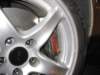
Other than that, you're going to choose from one of the kits. You're lucky, at least you have choices. Matt made his own and tried to sell them here.
I made my own brackets to use with 13" rotors
Member
Joined: Dec 2010
Posts: 180
From: STFU TROLL

I miss my VE

Joined: Apr 2005
Posts: 2,553
From: NY
Slotted rotors dissipate heat no faster than a solid rotor. the only good they do on a street car is possibly wick away water faster if you drive through a deep puddle and get your brakes wet. 99.99% of the time, that's a non-issue.
http://forums.maxima.org/advanced-su...-not-work.html
As for a bolt-on brake setup that's bigger than the stock 3 gen, you can use stuff from the 5, 5.5 , or 6th gen. they bolt right on with the exception of drilling out the mounting holes for the calipers. just grab yourself a 14mm (9/16") drill bit from the hardware store and drill away. Then the 6th gen stuff bolts right on.
the problem is you're still limited to a junk brake pad selection.
Before you spend that kind of money searching for better brakes, install a set of Hawk HPS pads on your car, properly bleed the brakes with good fluid, then go and drive. You'll be impressed at just how capable the factory brakes are for street driving.
http://forums.maxima.org/advanced-su...-not-work.html
As for a bolt-on brake setup that's bigger than the stock 3 gen, you can use stuff from the 5, 5.5 , or 6th gen. they bolt right on with the exception of drilling out the mounting holes for the calipers. just grab yourself a 14mm (9/16") drill bit from the hardware store and drill away. Then the 6th gen stuff bolts right on.
the problem is you're still limited to a junk brake pad selection.
Before you spend that kind of money searching for better brakes, install a set of Hawk HPS pads on your car, properly bleed the brakes with good fluid, then go and drive. You'll be impressed at just how capable the factory brakes are for street driving.
As for the porsche rotors, a few notes from a forum I frequent:
QUOTE
1) The holes are cast in giving a dense boundary layer-type crystalline grain structure around the hole at the microscopic level as opposed to drilling which cuts holes in the existing grain pattern leaving open endgrains, etc, just begging for cracks.
2) The holes are only 1/2 the diameter of the holes in most drilled rotors. This reduces the stress concentration factor due to hole interaction which is a function (not linear) of hole diameters and the distance between them.
3) Since the holes are only 1/2 as big they remove only 1/4 as much surface area and mass from the rotor faces as a larger hole. This does a couple of things:
It increases effective pad area compared with larger holes. The larger the pad area the cooler they will run, all else being equal. If the same amount of heat is generated over a larger surface area it will result in a lower temperature for both surfaces.
It increases the mass the rotor has to absorb heat with. If the same amount of heat is put into a rotor with a larger mass, it will result in a lower temperature.
3) The holes are placed along the vanes, actually cutting into them giving the vane a "half moon" cut along its width. You can see that here:
This does a couple of things:
First, it greatly increases the surface area of the vanes which allows the entire rotors to run cooler which helps prevent cracks by itself.
Second, it effectively stops cracking on that side of the hole which makes it very difficult to get "hole to hole" cracks that go all the way through the face rotor (you'll get tiny surface "spider cracks" on any rotor, blank included if you look hard enough).
That's why Porsche rotors are the only "crossdrilled" rotors I would ever consider putting on my car.
BTW, many of the above features are not present in older Porsche brakes. The above is for "Big Reds" and newer.
This is quite different from the standard drilled rotors you get from brembo/kvr/powerslot/"insert random ricer parts brand name here" brake rotors.
yup.. the ones that come on premium cars from the factory are done like the Porsche rotors. next time to see an SLK parked somewhere, take a look at the rotors and notice how tiny the holes are.
nonetheless, there's a much different quality of casting at play here.
nonetheless, there's a much different quality of casting at play here.

It's windy there cause they're trying to blow all their stink up to Kansas. ever driven through western OK and seen those huge fans? those aren't windmills, they're s*** stink blowers!!
FYI, I grew up in Tulsa. I'm only in TX for work. I hate it here, but the oil industry pays well so I stay for the money.
FYI, I grew up in Tulsa. I'm only in TX for work. I hate it here, but the oil industry pays well so I stay for the money.


Thread
Thread Starter
Forum
Replies
Last Post
BPuff57
Advanced Suspension, Chassis, and Braking
33
Apr 16, 2020 05:15 AM
Calabar
4th Generation Classifieds (1995-1999)
3
Oct 5, 2015 09:57 PM
HerpDerp1919
3rd Generation Maxima (1989-1994)
2
Sep 29, 2015 02:02 PM