


What Octane?


What Octane?
To all the VE owners out there, What octane rating of fuel do you use in your VE? Do you go by the sticker on the gas filler door and use 93 octane? Or do you just throw 87 in there?
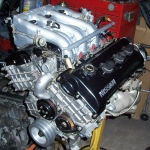
93 in my blue VE always (JWT ECU). I normally just stick 87 in the black one though it does definitely like the 93 better as it drives much better and gets markedly better gas mileage.

I always fill up using 93 but if i'm ever at a sunaco i'll put 91 because why pay the extra if it goes to waste? I believe the ve's ask for 91 octane no?
 alllll that money in that car and you use 87 no way james lol seriously? Your not concerned about your motor for the long hual or is that a myth.
alllll that money in that car and you use 87 no way james lol seriously? Your not concerned about your motor for the long hual or is that a myth.

I haven't driven the car in over a year and the car isn't officially back on the road yet. But after all that money, I probably will use at least 91 in it. I did use 87 in it almost exclusively up until I parked it to rebuild it. It hurts having to drop $60 a fill up on TWO cars

But keep in mind, thousands and thousands of other VE owners over the past 20 years have run 87 in it for the life of the car without even knowing any better.
The higher octane is just ideal for maximum performance not mandatory. But cost out of the equation obviously I would exclusively use 93.
I DO, however, exclusively use Chevron in all my cars. Does that make up for it?

I haven't driven the car in over a year and the car isn't officially back on the road yet. But after all that money, I probably will use at least 91 in it. I did use 87 in it almost exclusively up until I parked it to rebuild it. It hurts having to drop $60 a fill up on TWO cars
But keep in mind, thousands and thousands of other VE owners over the past 20 years have run 87 in it for the life of the car without even knowing any better.
The higher octane is just ideal for maximum performance not mandatory. But cost out of the equation obviously I would exclusively use 93.
I DO, however, exclusively use Chevron in all my cars. Does that make up for it?
But keep in mind, thousands and thousands of other VE owners over the past 20 years have run 87 in it for the life of the car without even knowing any better.
The higher octane is just ideal for maximum performance not mandatory. But cost out of the equation obviously I would exclusively use 93.
I DO, however, exclusively use Chevron in all my cars. Does that make up for it?
Ouch $60 yah that is rough but obviously you cant be driveing both cars at the same time so its like you have a back up Full tank...in another car
.Lol wuts so special about chevron? or is that a joke. I dont ever think ive seen a chevron maybe one time when I went out for parts in NJ.
Soon enough tho someone will have to do a write-up on making the VE a hybrid, gas wont be around much longer =/


haha I understand man I was under the impression the lower octane compromises the integrity of motor components I knew it had direct effect with performance but for some reason I thought it took a negative toll on motor parts.
Ouch $60 yah that is rough but obviously you cant be driveing both cars at the same time so its like you have a back up Full tank...in another car.
Lol wuts so special about chevron? or is that a joke. I dont ever think ive seen a chevron maybe one time when I went out for parts in NJ.
Soon enough tho someone will have to do a write-up on making the VE a hybrid, gas wont be around much longer =/
Ouch $60 yah that is rough but obviously you cant be driveing both cars at the same time so its like you have a back up Full tank...in another car
.Lol wuts so special about chevron? or is that a joke. I dont ever think ive seen a chevron maybe one time when I went out for parts in NJ.
Soon enough tho someone will have to do a write-up on making the VE a hybrid, gas wont be around much longer =/
as well.

lots of gas stations get their gas from the same supplier essentially too though
i used to faithfully use Shell until i heard stories of people getting water mixed gas out of the pump and fudging up their engines. thought whatever, but then a guy i work with was telling me one time he got shell on a trip and got water out of the pump and he got stranded on the highway because of it. swapped to Esso since
i used to faithfully use Shell until i heard stories of people getting water mixed gas out of the pump and fudging up their engines. thought whatever, but then a guy i work with was telling me one time he got shell on a trip and got water out of the pump and he got stranded on the highway because of it. swapped to Esso since

lots of gas stations get their gas from the same supplier essentially too though
i used to faithfully use Shell until i heard stories of people getting water mixed gas out of the pump and fudging up their engines. thought whatever, but then a guy i work with was telling me one time he got shell on a trip and got water out of the pump and he got stranded on the highway because of it. swapped to Esso since
i used to faithfully use Shell until i heard stories of people getting water mixed gas out of the pump and fudging up their engines. thought whatever, but then a guy i work with was telling me one time he got shell on a trip and got water out of the pump and he got stranded on the highway because of it. swapped to Esso since
Usually if there is water, it's because of a problem with the refilling of the store tanks at the station or the tanks themselves are cracked. Sometimes it might be because a store tank has a crack allowing water to leak in, as they only drain and xray this tanks about every 10 years. But it's more likely an issue at the gas station tanks.
Back to the OP, higher octane on newer, high compression engines will simply get the best power, performance, and fuel economy.
Additionally, non-ethanol will outperform any "brand" across the board. Ethanol is the greatest threat to modern engines and mechanics.
Can you even get non-ethanol anywhere? I know as of a few years ago there's virtually nowhere to get it anymore in the Dallas area. It's all got 10% ethanol now. I don't even think stations are required to disclose that they're using E10. My Civic has dropped by a full 4-5 MPG in gas mileage on the E10 crap.
E10 has really proven to be a near catastrophe as a fuel substitute - I mean it's a freaking solvent afterall! The EPA really botched that up considering it creates MORE smog, and just think now there's a push to up it to 15% +
E10 has really proven to be a near catastrophe as a fuel substitute - I mean it's a freaking solvent afterall! The EPA really botched that up considering it creates MORE smog, and just think now there's a push to up it to 15% +

Can you even get non-ethanol anywhere? I know as of a few years ago there's virtually nowhere to get it anymore in the Dallas area. It's all got 10% ethanol now. I don't even think stations are required to disclose that they're using E10. My Civic has dropped by a full 4-5 MPG in gas mileage on the E10 crap.
E10 has really proven to be a near catastrophe as a fuel substitute - I mean it's a freaking solvent afterall! The EPA really botched that up considering it creates MORE smog, and just think now there's a push to up it to 15% +
E10 has really proven to be a near catastrophe as a fuel substitute - I mean it's a freaking solvent afterall! The EPA really botched that up considering it creates MORE smog, and just think now there's a push to up it to 15% +
On the other hand, ethanol has a higher octane rating than gas, so I wonder if the rating on the pump is the pre-e rating, with the x% added after, or the rating with the ethanol...
as to whether or not low octane can kill an engine, a properly functioning VE won't be bothered by low octane. It's when there's a problem with knock sensor system that can potentially create serious problems, mechanically.
I know it wasn't asked, but my VG loves lower octane more than high octane. Gets better gas mileage and runs better. Have yet to figure out why...
I'm not surprised. Most autoparts stores I go to except Napa don't even know the VE even exist (probably cuz they're young guys going off what the computer says). Its 20+yrs old so depending on where you are they may not be readily available. I believe I actually have a spare if your interested pm me.

I dont trust shell.
I put it in the supra once while we were all on a cruise, and it has never run that poorly ever. It went into limp mode, bogged a couple times upon boosting. I thought something happened with the car. It was fine under light load but a WOT was driving terribly. After a couple weeks of driving it lightly, it was time for a fill up, and I went to Esso (as it was close and I didnt think anything of Shell gas being the issue) and it started to drive beautifully again. Being that the only thing that has ever changed was shell gas I opted to not go there and I have not had an issue with the car since. I have not gone back to shell and will not for that specific reason.
I will go to husky, esso and petro. But Shell gas is ****ty.
I put it in the supra once while we were all on a cruise, and it has never run that poorly ever. It went into limp mode, bogged a couple times upon boosting. I thought something happened with the car. It was fine under light load but a WOT was driving terribly. After a couple weeks of driving it lightly, it was time for a fill up, and I went to Esso (as it was close and I didnt think anything of Shell gas being the issue) and it started to drive beautifully again. Being that the only thing that has ever changed was shell gas I opted to not go there and I have not had an issue with the car since. I have not gone back to shell and will not for that specific reason.
I will go to husky, esso and petro. But Shell gas is ****ty.
Google ethanol free gas stations, there are sights dedicated to locating where these are. Some areas seem to have no ethanol free stations. The private owner of the store has to make the decision to use it at their pumps. E-free tends to cost a bit more, so price wise, it makes it hard to compete.
Regarding octane rating, it includes the ethanol. So, effectively companies are getting away with using weaker fuel, then add ethanol to get it up to the rating it's sold as.
The VG is a lower compresion engine than all newer Nissan engines. Therefore it will be less effected by the lower octane.
Regarding octane rating, it includes the ethanol. So, effectively companies are getting away with using weaker fuel, then add ethanol to get it up to the rating it's sold as.
The VG is a lower compresion engine than all newer Nissan engines. Therefore it will be less effected by the lower octane.
I just did some searching and no wonder I can't find any ethanol gas anywhere near Dallas and/or Houston for that matter - Dallas, Tarrant, Harris, and other major counties deemed for air pollution reasons in Texas are required by law to have the E10 mixture.

Junior Member
Joined: Jul 2008
Posts: 33
How much better are the MPG's? I run 87 all the time in my VE-5, and get between 25-30 mixed city and freeway. What could I expect using a higher octane?

Senior Member

Joined: Sep 2010
Posts: 10,344
From: Jacksonville, FL
Premium fuel starts at 91 octane, and depending on where you live, it could be 92 or 93. Premium here is 93 octane. All of your horsepower/torque specs you see listed on high performance cars sold here in the U.S. are based on 91 octane gas. (R+M)/2, which is RON (Research Octane Number) plus MON (Motor Octane Number) divided by 2.
Non-ethanol fuels can be found, but there's only a few that sell it here, and it's mid-grade 89 octane. Everything else is "up to 10 percent ethanol"...
Before I owned my Max, I had a 99 Grand Prix GTP (supercharged) and I averaged (via trip computer) 19 mpg. Once the mandated ethanol blended fuel showed up, it immediately dropped to 16-17 mpg.
As far as the octane rating of the E-85 flex fuel, which we cannot use, the reason why the octane rating isn't displayed on the pumps is because there is no accurate way to determine it. It's estimated that the octane of E-85 is between 94 and 96 octane.
Non-ethanol fuels can be found, but there's only a few that sell it here, and it's mid-grade 89 octane. Everything else is "up to 10 percent ethanol"...
Before I owned my Max, I had a 99 Grand Prix GTP (supercharged) and I averaged (via trip computer) 19 mpg. Once the mandated ethanol blended fuel showed up, it immediately dropped to 16-17 mpg.
As far as the octane rating of the E-85 flex fuel, which we cannot use, the reason why the octane rating isn't displayed on the pumps is because there is no accurate way to determine it. It's estimated that the octane of E-85 is between 94 and 96 octane.
Last edited by T_Behr904; Feb 19, 2012 at 11:17 AM.

Junior Member
Joined: Dec 2010
Posts: 62
From: NW Arkansas
Do the 3rd Gen ECU's compensate for lower octane by retarding the timing? Maybe for the VEs given the lack of a distributor? I've been tempted to advance the timing on my VG and use high octane, but since it does so fine on the cheap stuff, I haven't done it.
You can advance the VG and VE timing. However, beyond two degrees advance (or 17 degrees for
the VG- don't recall stock for VE). However, you should absolutely run premium if you increase timing.
Running non- ethanol will gain you 1-3 mpg depending on driving habits and condition of engine and fuel management components.
the VG- don't recall stock for VE). However, you should absolutely run premium if you increase timing.
Running non- ethanol will gain you 1-3 mpg depending on driving habits and condition of engine and fuel management components.

(R+M)/2)=AKI
AKI stand for Anti-Knock Index which is how we determine octane rating in the US, Canada and a few other countries. Most countries use RON.
E85 is measured to be between 104-108 depending on the specific blend.
While compression ratio is what people typically think of when it comes to knock, ignition timing plays a very large roll. Now I'm not talking about your base timing that is set with a distributor etc. The ECU is constantly adjusting timing based on RPM, load, etc. If the octane rating is low and the timing is too advanced the engine will knock. Engines with a knock sensor will retard ignition timing at the first sign of knock. Higher octane allows the car to run more advanced timing, which results in higher power output and increase efficiency (to a point of course).
Senior Member
Joined: Sep 2010
Posts: 10,344
From: Jacksonville, FL
I have also come across other octane numbers such as 100-105 for E85 in the past.
Senior Member
Joined: Sep 2010
Posts: 10,344
From: Jacksonville, FL
Found it...
The Renewable Fuels Foundation states in its Changes in Gasoline IV manual, "There is no requirement to post octane on an E85 dispenser. If a retailer chooses to post octane, they should be aware that the often cited 105 octane is incorrect. This number was derived by using ethanol’s blending octane value in gasoline. This is not the proper way to calculate the octane of E85. Ethanol’s true octane value should be used to calculate E85’s octane value. This results in an octane range of 94-96 (R+M)/2. These calculations have been confirmed by actual-octane engine tests." Examples of this mis-citation can be found at the Iowa Renewable Fuels Association titled "E85 Facts" which cites a range of 100-105, and a document at the Texas State Energy Conservation Office titled "Ethanol", which cites a 113 rating.
I was reading on a website somewhere a little while back about E85 and it's octane rating. If I can find it again I will post it. This is where I got my information about E85's true octane ratings, which is not 104-108 as believed.
I have also come across other octane numbers such as 100-105 for E85 in the past.
I have also come across other octane numbers such as 100-105 for E85 in the past.
Iowa Renewable Fuels Association (www.iowarfa.org)
American Lung Association – (Iowa Chapter www.lungilia.org)
Iowa Corn Promotion Board (www.iowacorn.org)
National Ethanol Vehicle Coalition (www.e85fuel.org)
http://www.iowarfa.org/PDF/E85_value...ct%20Sheet.pdf

Thread
Thread Starter
Forum
Replies
Last Post
JoshG
4th Generation Maxima (1995-1999)
51
Sep 21, 2015 10:41 PM
sdotcarter
6th Generation Maxima (2004-2008)
2
Sep 2, 2015 09:53 PM
Team STILLEN
Autocrossing and Road Course Racing
0
Aug 10, 2015 04:29 PM

