


time for some new BRAKE PADS


Thread Starter
Senior Member
Joined: Oct 2004
Posts: 463
time for some new BRAKE PADS
the other day when drivin up my street slowly i herd a metal on metal scrapping sound comin from out the front windows, i kinda herd this noise echoing off the cars. i have been harsh on the brakes lately.Im thinkin i need new pads and i hope thast what it is. when i rub my finger on the rotor the right one seems to have very slight ridges in it. the other rotor doesnt though. Do i need ne pads or what?
also what brake pads do u have and reccomend?
where can i get a decent pair? and how much are they?
last of all are they easy 2 install the 2 fronts by yourself?
thank you all very much
also what brake pads do u have and reccomend?
where can i get a decent pair? and how much are they?
last of all are they easy 2 install the 2 fronts by yourself?
thank you all very much

Take the wheel off and inspect it, pretty simple. You should know what to do when you take the wheel off and look at it. Get the rotors machined or pick up new ones too while you're at it.
This might be in the FAQ's/How to's, so look in there too.
But install is very easy, pick up a haynes manual or Chilton for guidance.
Pads are up to you, anywhere from 20 - 80 dollars.
This might be in the FAQ's/How to's, so look in there too.
But install is very easy, pick up a haynes manual or Chilton for guidance.
Pads are up to you, anywhere from 20 - 80 dollars.


Member
Joined: Jan 2001
Posts: 270
I have the Bendix Import Quiets on the front and they are definitely quiet. Performance wise they are excellent. They don't make them for the rears though. (At least thats what I was told at Advanced Auto) I have Wearever Golds on the back.
Import Quiets were around $30 something, and the Wearever were around $20. Ditto on the Haynes manual. Oh, and buy a breaker bar.
Import Quiets were around $30 something, and the Wearever were around $20. Ditto on the Haynes manual. Oh, and buy a breaker bar.
Thread Starter
Senior Member
Joined: Oct 2004
Posts: 463
Originally Posted by Big Tyme
I have the Bendix Import Quiets on the front and they are definitely quiet. Performance wise they are excellent. They don't make them for the rears though. (At least thats what I was told at Advanced Auto) I have Wearever Golds on the back.
Import Quiets were around $30 something, and the Wearever were around $20. Ditto on the Haynes manual. Oh, and buy a breaker bar.
Import Quiets were around $30 something, and the Wearever were around $20. Ditto on the Haynes manual. Oh, and buy a breaker bar.
Thread Starter
Senior Member
Joined: Oct 2004
Posts: 463
Originally Posted by Big Tyme
I'll post a how to when I get back from work, so if you don't have a Haynes don't worry about it. I don't get home till midnight though so you'll have to wait, if you don't mind. Till then later.
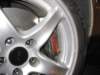
In the meantime, you should take your wheel off and familiarize yourself with the components, and heck, maybe give it a try, it's a piece of cake.
You definately shouldn't need a breaker bar, that's only in extreme cases when the bolts are tough to get off, but even then, it's not bad at all.
I think pads are a personal desicion.
You definately shouldn't need a breaker bar, that's only in extreme cases when the bolts are tough to get off, but even then, it's not bad at all.
I think pads are a personal desicion.
Thread Starter
Senior Member
Joined: Oct 2004
Posts: 463
4.
Compress the piston of the disc brake caliper.
5.
Install the brake pads and caliper assembly.
6.
Lubricate the guide pin. Tighten the guide pin to 16-23 ft. lbs. (22-31 Nm).
i dont get this part? what do the pads attach to? do u just place them in? will this grease come with it? if not what kind should i use
Compress the piston of the disc brake caliper.
5.
Install the brake pads and caliper assembly.
6.
Lubricate the guide pin. Tighten the guide pin to 16-23 ft. lbs. (22-31 Nm).
i dont get this part? what do the pads attach to? do u just place them in? will this grease come with it? if not what kind should i use

Originally Posted by exit10
4.
Compress the piston of the disc brake caliper.
5.
Install the brake pads and caliper assembly.
6.
Lubricate the guide pin. Tighten the guide pin to 16-23 ft. lbs. (22-31 Nm).
i dont get this part? what do the pads attach to? do u just place them in? will this grease come with it? if not what kind should i use
Compress the piston of the disc brake caliper.
5.
Install the brake pads and caliper assembly.
6.
Lubricate the guide pin. Tighten the guide pin to 16-23 ft. lbs. (22-31 Nm).
i dont get this part? what do the pads attach to? do u just place them in? will this grease come with it? if not what kind should i use

Originally Posted by exit10
i am about to order the OE ceramic quite stop RAYBESTOS brake pads off rock auto.com
the totall is 54 bucks with shipping... is this a good price?
or should i get some Porterfield R4-s pads
the totall is 54 bucks with shipping... is this a good price?
or should i get some Porterfield R4-s pads
Print out the quote and take it to Checker/Kragen. They will beat the price difference by 5%. That is exactly what I bought. It's the best deal I could find in my two days research.

Donating Maxima.org Member

Joined: Nov 2003
Posts: 96
If you take your time and use common sense, you should be fine with just the how-to. I have almost no prior mechanical knowledge or experience, and I was able to change my own brake rotors and pads. It took a lot of time, because I didn't know what I was doing, but I did it successfully, and it's been more than half a year now with no problems. I'd recommend you get a Chilton and/or a Haynes (service manuals) though, they make things a lot easier to figure out. By the way, if you let the brake pads go until they start grinding, that means they're already worn down past the braking material, which means that you're starting to do damage to your rotors. That's those ridges you felt. If you let it go long enough you might also start damaging your calipers. I might be restating the obvious, but since nobody else pointed it out... you'll probably want to change your pads before that starts happening, to avoid having to machine/replace your rotors every time. That gets costly... 
Thread Starter
Senior Member
Joined: Oct 2004
Posts: 463
Originally Posted by EugThinks
If you take your time and use common sense, you should be fine with just the how-to. I have almost no prior mechanical knowledge or experience, and I was able to change my own brake rotors and pads. It took a lot of time, because I didn't know what I was doing, but I did it successfully, and it's been more than half a year now with no problems. I'd recommend you get a Chilton and/or a Haynes (service manuals) though, they make things a lot easier to figure out. By the way, if you let the brake pads go until they start grinding, that means they're already worn down past the braking material, which means that you're starting to do damage to your rotors. That's those ridges you felt. If you let it go long enough you might also start damaging your calipers. I might be restating the obvious, but since nobody else pointed it out... you'll probably want to change your pads before that starts happening, to avoid having to machine/replace your rotors every time. That gets costly...
Why buy a breaker bar? A floor jack handle is the best and its free.
One thing you should buy is a torque wrench. Brakes are important and should be torqued correctly. The only worth while one from Sears can be had for $90.
One thing you should buy is a torque wrench. Brakes are important and should be torqued correctly. The only worth while one from Sears can be had for $90.
Originally Posted by Broaner
Why buy a breaker bar? A floor jack handle is the best and its free.
Member
Joined: Jan 2001
Posts: 270
Sorry if I'm too late. Heres what you need to know to change out your pads.
Tools and Materials neeed: Jack, Jackstands, Wrench or Ratchet with leverage, Breaker Bar (Maybe), various size sockets, Anti Squeal Compound, Hi-Temp Grease, Needle Nose Pliers, C-Clamp
1.Jack Up Car, use jackstands for safety.
2. Remove Wheel
3.Remove or loosen Brake Fluid Resevoir cover, your fluid will rise during piston compression make sure you at least loosen the cover
4.I cleaned the whole assembly with Brake Cleaner to get alot of the dust off, If you do this make sure its dry before proceeding.
5.Remove two bolts on rear of caliper top bolt is 17mm and bottom is 19mm, I think. If you don't need the whole caliper off you don't have to remove the bottom bolt, just the top and then pivot it up. I just found it easier to remove both. This is where the breaker bar will come in handy if you have I cheap *** ratchet like I did, that broke.
6.Using a C-clamp depress the pads prior to removing caliper. Take off the caliper. And hang it from your springs with something that will support the weight. I suggest a hanger made into a hook.
7.If you have the anti rattle springs, remove those and make sure you don't lose them like I did and have to go get new ones. Set them to the side.
8.Remove inner and outer brake pads. These pads should have metal shims (Flat piece of metal that connects to pads). If your new pads don't have built in shims make sure you keep these. Clean them up with a wire brush if they will be reused.
9.Next remove the retainers, these are what hold the pads in place they are on the top and bottom of the mounting bracket. Clean these up too, you will be reusing these.
10.Remove the caliper pins, these are the pins on the backside of the mounting bracket. They have rubber boots on them. Take these out and clean them, then regrease them. *Hi Temp Grease only*
11.Put caliper pins back in, apply anti squeal compound to the back of the pads, where the shims are. Reinstall the retainers, install the brake pads (they might fall off before you can get the caliper back on so be prepared to hold them in place). Install Anti Rattle Springs.
12.Now you are almost done, on the caliper piston you'll see that it is notched. You need a pair of needle nose pliers to get the piston to retract back into the caliper to allow enough clearance for the pads to fit in. There is also a special tool for this, if you don't want to use pliers. Using the pliers turn the piston clockwise I believe until the piston has gone in enough to allow you to slide the caliper over the brake pad and caliper mounting bracket.
13.Put the rear mounting bolts back in and tighten them. Put the fluid cover back on, get in car and step on the brakes a few times, recheck your fluid level, add if necessary. Go test your new pads.
Tools and Materials neeed: Jack, Jackstands, Wrench or Ratchet with leverage, Breaker Bar (Maybe), various size sockets, Anti Squeal Compound, Hi-Temp Grease, Needle Nose Pliers, C-Clamp
1.Jack Up Car, use jackstands for safety.
2. Remove Wheel
3.Remove or loosen Brake Fluid Resevoir cover, your fluid will rise during piston compression make sure you at least loosen the cover
4.I cleaned the whole assembly with Brake Cleaner to get alot of the dust off, If you do this make sure its dry before proceeding.
5.Remove two bolts on rear of caliper top bolt is 17mm and bottom is 19mm, I think. If you don't need the whole caliper off you don't have to remove the bottom bolt, just the top and then pivot it up. I just found it easier to remove both. This is where the breaker bar will come in handy if you have I cheap *** ratchet like I did, that broke.
6.Using a C-clamp depress the pads prior to removing caliper. Take off the caliper. And hang it from your springs with something that will support the weight. I suggest a hanger made into a hook.
7.If you have the anti rattle springs, remove those and make sure you don't lose them like I did and have to go get new ones. Set them to the side.
8.Remove inner and outer brake pads. These pads should have metal shims (Flat piece of metal that connects to pads). If your new pads don't have built in shims make sure you keep these. Clean them up with a wire brush if they will be reused.
9.Next remove the retainers, these are what hold the pads in place they are on the top and bottom of the mounting bracket. Clean these up too, you will be reusing these.
10.Remove the caliper pins, these are the pins on the backside of the mounting bracket. They have rubber boots on them. Take these out and clean them, then regrease them. *Hi Temp Grease only*
11.Put caliper pins back in, apply anti squeal compound to the back of the pads, where the shims are. Reinstall the retainers, install the brake pads (they might fall off before you can get the caliper back on so be prepared to hold them in place). Install Anti Rattle Springs.
12.Now you are almost done, on the caliper piston you'll see that it is notched. You need a pair of needle nose pliers to get the piston to retract back into the caliper to allow enough clearance for the pads to fit in. There is also a special tool for this, if you don't want to use pliers. Using the pliers turn the piston clockwise I believe until the piston has gone in enough to allow you to slide the caliper over the brake pad and caliper mounting bracket.
13.Put the rear mounting bolts back in and tighten them. Put the fluid cover back on, get in car and step on the brakes a few times, recheck your fluid level, add if necessary. Go test your new pads.
Donating Maxima.org Member
Joined: Nov 2003
Posts: 96
Originally Posted by Big Tyme
5.Remove two bolts on rear of caliper top bolt is 17mm and bottom is 19mm, I think.
Member
Joined: Jan 2001
Posts: 270
You could be right, for some reason 19mm was in my head for something. I'm too lazy right now to go outside and check. So when you read this Exit, make sure you have the correct tools and a friend (with Mechanical knowledge) to help would be a good idea if you've never done brake installs before. Its really not that complicated once everything is in front of you.
One thing that has not been mentioned is the following:
***MAKE SURE TO PUT ANTI-SEIZE COMPOUND ON THE CALIPER BOLTS THAT MOUNT THE CALIPER. YOU MAY ALSO CONSIDER SOME ON THE BOLTS THAT KEEP THE CALIPER PINS IN***
I took mine to a shop to have them loosened by air gun. My air gun did not have enough PSI for the job. In 15 seconds, he loosened all the caliper bolts on all four wheels, then a few seconds later had them tightened by hand with a breaker bar so that I could remove them at home.
If your rear calipers have seized, it may be difficult if not impossible to turn the piston with needlenose pliers. In this case, I pushed back the rubber cover and grabbed them with a thin but large pipe wrench. One I got them turning with the wrench (a giant-sized set of pliers, really), I greased the piston with some hi-temp and from there was able to use the needle-nosed pliers.
Checker and Kragen are auto parts stores owned by the same folks under different names in different cities. See www.partsamerica.com
***MAKE SURE TO PUT ANTI-SEIZE COMPOUND ON THE CALIPER BOLTS THAT MOUNT THE CALIPER. YOU MAY ALSO CONSIDER SOME ON THE BOLTS THAT KEEP THE CALIPER PINS IN***
I took mine to a shop to have them loosened by air gun. My air gun did not have enough PSI for the job. In 15 seconds, he loosened all the caliper bolts on all four wheels, then a few seconds later had them tightened by hand with a breaker bar so that I could remove them at home.
If your rear calipers have seized, it may be difficult if not impossible to turn the piston with needlenose pliers. In this case, I pushed back the rubber cover and grabbed them with a thin but large pipe wrench. One I got them turning with the wrench (a giant-sized set of pliers, really), I greased the piston with some hi-temp and from there was able to use the needle-nosed pliers.
Checker and Kragen are auto parts stores owned by the same folks under different names in different cities. See www.partsamerica.com

Thread
Thread Starter
Forum
Replies
Last Post
Cant_Get_Ryte
5th Generation Classifieds (2000-2003)
3
Aug 28, 2015 06:41 AM
RealityCheck
4th Generation Maxima (1995-1999)
2
Aug 5, 2015 06:18 AM