


350Z rear brakes.

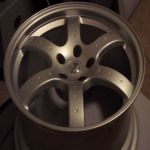

350Z rear brakes.
I know the 6th Gen people are able to put the 350Z rear brakes on there car but what about us. Has anybody tried it. Is our rear rotor the same size of the 6th gen rear rotor.


Stillen 2 piston behind stock wheels no spacers.


6th gen and 350z have an internal ebrake (not a mechanical pull on the caliper like the 5th gen). To do a conversion, you'd have to switch over to an internal-ebrake hub setup (basically it's like a drum brake inside the hub). Matt Blehm makes a kit to do it with z31 rear calipers, but it's $$.

This is bad advice. It depends on what you want to do with your car (track?) and what front brake setup you have. A rear bbk can get rid of excessive nose dive that comes from having a front bbk. It can also lower stopping distances when used in conjunction with a front bbk.
I'm not going into details because there is a ton of info in the advanced suspension/braking forum about it. Search for stuff like "brake bias" "rear bbk" and throw in "Matt93se" and you will learn a lot
To answer your question though, the bottom line is that no other rear rotors or calipers will work, while retaining the use of the e-brake, except for Matt Blehm's rear bbk. He's not making them right now, but he said he would if he gets enough interest. It's expensive due to lots of custom work to get the e-brake to work.
I'm not going into details because there is a ton of info in the advanced suspension/braking forum about it. Search for stuff like "brake bias" "rear bbk" and throw in "Matt93se" and you will learn a lot
To answer your question though, the bottom line is that no other rear rotors or calipers will work, while retaining the use of the e-brake, except for Matt Blehm's rear bbk. He's not making them right now, but he said he would if he gets enough interest. It's expensive due to lots of custom work to get the e-brake to work.
This is bad advice. It depends on what you want to do with your car (track?) and what front brake setup you have. A rear bbk can get rid of excessive nose dive that comes from having a front bbk. It can also lower stopping distances when used in conjunction with a front bbk.
I'm not going into details because there is a ton of info in the advanced suspension/braking forum about it. Search for stuff like "brake bias" "rear bbk" and throw in "Matt93se" and you will learn a lot
To answer your question though, the bottom line is that no other rear rotors or calipers will work, while retaining the use of the e-brake, except for Matt Blehm's rear bbk. He's not making them right now, but he said he would if he gets enough interest. It's expensive due to lots of custom work to get the e-brake to work.
I'm not going into details because there is a ton of info in the advanced suspension/braking forum about it. Search for stuff like "brake bias" "rear bbk" and throw in "Matt93se" and you will learn a lot
To answer your question though, the bottom line is that no other rear rotors or calipers will work, while retaining the use of the e-brake, except for Matt Blehm's rear bbk. He's not making them right now, but he said he would if he gets enough interest. It's expensive due to lots of custom work to get the e-brake to work.
I can agree with the other statements, but that nose dive thing is incorrect. Suspension plays more of a role, and again, rear BBK cannot defy the laws of gravity, no matter what your altitude. 


Originally Posted by Matt93SE
Drive a car with proper rear brakes and you'll understand.
There's a HUGE difference in the way the car nosedives under hard braking when you've got a proper rear brake setup..
There's a HUGE difference in the way the car nosedives under hard braking when you've got a proper rear brake setup..
YES!!!!!
especially with all these BBKs up front, the ABS starts kicking in waaaaay early and you lose stopping distance because the fronts are doing >90% of the work when they should only be doing about 75%.
This is bad advice. It depends on what you want to do with your car (track?) and what front brake setup you have. A rear bbk can get rid of excessive nose dive that comes from having a front bbk. It can also lower stopping distances when used in conjunction with a front bbk.
I'm not going into details because there is a ton of info in the advanced suspension/braking forum about it. Search for stuff like "brake bias" "rear bbk" and throw in "Matt93se" and you will learn a lot
To answer your question though, the bottom line is that no other rear rotors or calipers will work, while retaining the use of the e-brake, except for Matt Blehm's rear bbk. He's not making them right now, but he said he would if he gets enough interest. It's expensive due to lots of custom work to get the e-brake to work.
I'm not going into details because there is a ton of info in the advanced suspension/braking forum about it. Search for stuff like "brake bias" "rear bbk" and throw in "Matt93se" and you will learn a lot
To answer your question though, the bottom line is that no other rear rotors or calipers will work, while retaining the use of the e-brake, except for Matt Blehm's rear bbk. He's not making them right now, but he said he would if he gets enough interest. It's expensive due to lots of custom work to get the e-brake to work.

That said, I'm always impressed when I drive my wife's Mazda3 (factory brakes, factory pads) at how much more rear bias there is. The car stops on a dime and it hardly nosedives at all. It truly feels like all four brakes are working with the exact same amount of stopping power. It's kind of wierd at first, but the more you drive it, the more controlled it feels vs. even a stock maxima setup where the rear brakes don't feel like they're doing much of anything, which is somewhat exacerbated by having a BBK up front.
Add in the relative f/r weight distro in the maxima and that explains why the "nose dive" feel happens. I've seen vid of my max coming to an autocross stopbox on full brake and in reality there is very little dive with eibachs. It just feels like there is because of the front weight bias....
That said, even with the Wilwoods front and stock rears, I am not getting any premature lockup on either end, and haven't had any issues with unexpected trail brakng, even during very aggro "country road" driving.
I'd love to have better rear brakes in the maxima, but aside from open lapping, the cost-benefit really just isn't reasonable IMO.
I've considered teh best "budget" alternative would be to use larger rotors in back and move the stock caliper outward (via brackets) to increase the lever effect on the rotor. That woudl obviously require an extension of the ebrake cable as well, but I certainly don't think it would be all that difficult to do.
The only issue is finding a larger rotor with the appropriate thickness, bolt pattern, and offset....
anyhow...

 I do that all the time, and it works, the car SQUATS when I pull the eBrake, aha, I am beginning to see/visualize/conceptualize it now. If enough force is applied in the rear, it CAN/WILL 'pull' down the rear due to the forces applied to the wheel combined with the grip of the tire.
 it's damn near impossible for me to get my ABS to kick in up front exept in snow. Even on wet roads.....I can do it when I try, but can't recall the last time ABS kicked in when I wasn't trying to make it do so.
That said, my blizzaks and proxes are both sticky as hell in the wet and have impressive wet braking traction, so that could certainly be playing a role...
Yup, picking my brain now.
I do that all the time, and it works, the car SQUATS when I pull the eBrake, aha, I am beginning to see/visualize/conceptualize it now. If enough force is applied in the rear, it CAN/WILL 'pull' down the rear due to the forces applied to the wheel combined with the grip of the tire.
I do that all the time, and it works, the car SQUATS when I pull the eBrake, aha, I am beginning to see/visualize/conceptualize it now. If enough force is applied in the rear, it CAN/WILL 'pull' down the rear due to the forces applied to the wheel combined with the grip of the tire. I think the maxima just has poor stock bias balance, which is worse with front brake upgrades...
Originally Posted by Irish44j
That said, I'm always impressed when I drive my wife's Mazda3 (factory brakes, factory pads) at how much more rear bias there is. The car stops on a dime and it hardly nosedives at all. It truly feels like all four brakes are working with the exact same amount of stopping power. It's kind of wierd at first, but the more you drive it, the more controlled it feels vs. even a stock maxima setup where the rear brakes don't feel like they're doing much of anything, which is somewhat exacerbated by having a BBK up front.
, my GF has a Mazda 3, and well, there's that verification.
I'm gonna have to agree with matt here, although the role played in "proper rear brake setup" vs. "proper brake bias (via a controller)" can have a similar effect.
[snip]
The only issue is finding a larger rotor with the appropriate thickness, bolt pattern, and offset....
anyhow...
[snip]
The only issue is finding a larger rotor with the appropriate thickness, bolt pattern, and offset....
anyhow...
conversely, you *could* install a brake bias adjuster on the front brake lines, but it is seriously frowned upon in every circle that talks about it.
.....So its definitely not recommended by me.
since there's no bigger option on the 3 gen than using Z31 rotors, I wound up going to smaller pistons up front and then installing the bias adjusters on the rear to dial them back. works great, but when I'm running street pads I can BARELY lock up the brakes when its cold. I have to get some heat in even my street pads. track pads are much better tho since they're more aggressive and I don' thave to stand on the pedal as hard.
Comment #2...
there's not much you can do with the rears without stretching your ebrake cables. before you consider trying larger rotors with the stock calipers, unbolt your stock caliper and try to pull it off the rotor without unhooking your ebrake. you can't. well, not easily anyway. i couldn't even do it with a crowbar. the farther you get from the center of the wheel hub, the harder the ebrake line clamps down on the calipers...
so if you try to move the caliper out, you're just goign to wind up cooking the caliper and pads and you're skrood.
Had it not been that way, I would have simply made a larger custom rear rotor and called it a day instead of going through the effort of designing the rear parking brake assembly I have.
proper rear bias cannot simply be achieved with a controller on these cars using the same brake kits. you'll have to go to smaller pistons up front and then install the bias adjuster on the rears when the rears are locking up first because of the small pistons up front.
conversely, you *could* install a brake bias adjuster on the front brake lines, but it is seriously frowned upon in every circle that talks about it.
.....So its definitely not recommended by me.
conversely, you *could* install a brake bias adjuster on the front brake lines, but it is seriously frowned upon in every circle that talks about it.
.....So its definitely not recommended by me.


Comment #2...
there's not much you can do with the rears without stretching your ebrake cables. before you consider trying larger rotors with the stock calipers, unbolt your stock caliper and try to pull it off the rotor without unhooking your ebrake. you can't. well, not easily anyway. i couldn't even do it with a crowbar. the farther you get from the center of the wheel hub, the harder the ebrake line clamps down on the calipers...
so if you try to move the caliper out, you're just goign to wind up cooking the caliper and pads and you're skrood.
Had it not been that way, I would have simply made a larger custom rear rotor and called it a day instead of going through the effort of designing the rear parking brake assembly I have.
there's not much you can do with the rears without stretching your ebrake cables. before you consider trying larger rotors with the stock calipers, unbolt your stock caliper and try to pull it off the rotor without unhooking your ebrake. you can't. well, not easily anyway. i couldn't even do it with a crowbar. the farther you get from the center of the wheel hub, the harder the ebrake line clamps down on the calipers...
so if you try to move the caliper out, you're just goign to wind up cooking the caliper and pads and you're skrood.
Had it not been that way, I would have simply made a larger custom rear rotor and called it a day instead of going through the effort of designing the rear parking brake assembly I have.
 Yeah Matt, I'm pretty well aware of the rear caliper/ebrake setup, lol.......hence my saying that the ebrake cables would have to be extended (whether via longer cables run though or some kind of extension cable). I honestly don't think it would be that difficult (My cherokee has an ebrake extension because of the 3" lift, which is pretty simple), but I just don't really feel like doing it, which is why I haven't.
I didn't say I couldn't lock them up. I just said my ABS doesn't kick in as easily as I would expect it to.
Or maybe my braking skills are superior to yours

This issue comes up a lot in motorcycle forums, and here's the easiest way for me to think about it.
Have you ever seen a motorcycle do a "stoppie" where the back wheel goes up in the air under heavy braking? It happens when you only apply the front brakes. Think about the physics of braking with the front wheel(s) only. Let's say you're traveling "left" just to make it easier. You have the momentum of the car, through the center of gravity, traveling left. Then you introduce a force oriented to the "right" when you get on the brakes (front brakes only in this example). Since the "force" from the center of gravity is higher than the braking force from the wheels, it has a tendency to rotate the entire car counterclockwise, i.e. the rear wheels go up. The center of the rotation is around the front tires (this is key).
Now let's say we're traveling left again but brake with only the rear brakes. There's still the momentum going left, and a brake force going right. So, there is still a counterclockwise rotation of the whole car. Except this time, the rotation is around the rear tire. This causes the front wheel to push down.
But it's really the tires that stop the car, right? Well, of course. The amount of friction you have between the tires and the road depends on the coefficient of friction (basically how sticky your tires are, air pressure, etc) and the normal force (basically how much weight is on your tires). So in theory, strong rear brakes can force the front wheels down onto the pavement harder, and make them less likely to lock up or lose grip. Of course the ideal situation is to have all four brakes on the verge of locking up, which is where the brake bias comes in.
I'll try to find some pictures of what I described above, they are a lot easier to understand than a bunch of words.
Have you ever seen a motorcycle do a "stoppie" where the back wheel goes up in the air under heavy braking? It happens when you only apply the front brakes. Think about the physics of braking with the front wheel(s) only. Let's say you're traveling "left" just to make it easier. You have the momentum of the car, through the center of gravity, traveling left. Then you introduce a force oriented to the "right" when you get on the brakes (front brakes only in this example). Since the "force" from the center of gravity is higher than the braking force from the wheels, it has a tendency to rotate the entire car counterclockwise, i.e. the rear wheels go up. The center of the rotation is around the front tires (this is key).
Now let's say we're traveling left again but brake with only the rear brakes. There's still the momentum going left, and a brake force going right. So, there is still a counterclockwise rotation of the whole car. Except this time, the rotation is around the rear tire. This causes the front wheel to push down.
But it's really the tires that stop the car, right? Well, of course. The amount of friction you have between the tires and the road depends on the coefficient of friction (basically how sticky your tires are, air pressure, etc) and the normal force (basically how much weight is on your tires). So in theory, strong rear brakes can force the front wheels down onto the pavement harder, and make them less likely to lock up or lose grip. Of course the ideal situation is to have all four brakes on the verge of locking up, which is where the brake bias comes in.
I'll try to find some pictures of what I described above, they are a lot easier to understand than a bunch of words.
Last edited by Armon; Jan 25, 2008 at 08:35 PM.
This issue comes up a lot in motorcycle forums, and here's the easiest way for me to think about it.
Have you ever seen a motorcycle do a "stoppie" where the back wheel goes up in the air under heavy braking? It happens when you only apply the front brakes. Think about the physics of braking with the front wheel(s) only. Let's say you're traveling "left" just to make it easier. You have the momentum of the car, through the center of gravity, traveling left. Then you introduce a force oriented to the "right" when you get on the brakes (front brakes only in this example). Since the "force" from the center of gravity is higher than the braking force from the wheels, it has a tendency to rotate the entire car counterclockwise, i.e. the rear wheels go up. The center of the rotation is around the front tires (this is key).
Now let's say we're traveling left again but brake with only the rear brakes. There's still the momentum going left, and a brake force going right. So, there is still a counterclockwise rotation of the whole car. Except this time, the rotation is around the rear tire. This causes the front wheel to push down.
But it's really the tires that stop the car, right? Well, of course. The amount of friction you have between the tires and the road depends on the coefficient of friction (basically how sticky your tires are, air pressure, etc) and the normal force (basically how much weight is on your tires). So in theory, strong rear brakes can force the front wheels down onto the pavement harder, and make them less likely to lock up or lose grip. Of course the ideal situation is to have all four brakes on the verge of locking up.
I'll try to find some pictures of what I described above, they are a lot easier to understand than a bunch of words.
Have you ever seen a motorcycle do a "stoppie" where the back wheel goes up in the air under heavy braking? It happens when you only apply the front brakes. Think about the physics of braking with the front wheel(s) only. Let's say you're traveling "left" just to make it easier. You have the momentum of the car, through the center of gravity, traveling left. Then you introduce a force oriented to the "right" when you get on the brakes (front brakes only in this example). Since the "force" from the center of gravity is higher than the braking force from the wheels, it has a tendency to rotate the entire car counterclockwise, i.e. the rear wheels go up. The center of the rotation is around the front tires (this is key).
Now let's say we're traveling left again but brake with only the rear brakes. There's still the momentum going left, and a brake force going right. So, there is still a counterclockwise rotation of the whole car. Except this time, the rotation is around the rear tire. This causes the front wheel to push down.
But it's really the tires that stop the car, right? Well, of course. The amount of friction you have between the tires and the road depends on the coefficient of friction (basically how sticky your tires are, air pressure, etc) and the normal force (basically how much weight is on your tires). So in theory, strong rear brakes can force the front wheels down onto the pavement harder, and make them less likely to lock up or lose grip. Of course the ideal situation is to have all four brakes on the verge of locking up.
I'll try to find some pictures of what I described above, they are a lot easier to understand than a bunch of words.
true, but it's also a measure of the suspension travel.
For instance, if you replaced the front springs of the car with solid rods that have NO travel to them ....with that setup, even if you had 99% of your bias up front, the nose would not dive (and the heavy *** of the maxima would not lift into the air like a bike does). You'd simply reach the threshold where the front wheels lose traction and would lock up and skid the front wheels.
Yes, the nosedive forces are exacerbated by a front-heavy brake bias - but it's also relative to how stiff your front springs are. Running some some soft h-techs up front will result in considerably more nosedive on hard braking than it would running much stiffer Eibachs up front (ask me how I know this)
I don't even want to know who's giving said "head work" to matt 
Personally, I've left my block/head largely alone because the maxima's power is sufficient for what I need. Now his 3rd gen on the other hand.....
I am, however, planning on a full head/block teardown, overbore, etc. on my GT6....
Personally, I've left my block/head largely alone because the maxima's power is sufficient for what I need. Now his 3rd gen on the other hand.....
I am, however, planning on a full head/block teardown, overbore, etc. on my GT6....

try driving a triumph GT6 in the rain
-no power brakes
-no ABS
-drums in teh back
-2piston calipers up front
-massive front weight bias.
once you drive that for a couple years, you are pretty damn good at modulating the brake pedal
-no power brakes
-no ABS
-drums in teh back
-2piston calipers up front
-massive front weight bias.
once you drive that for a couple years, you are pretty damn good at modulating the brake pedal

the ebrake cables would have to be extended (whether via longer cables run though or some kind of extension cable). I honestly don't think it would be that difficult (My cherokee has an ebrake extension because of the 3" lift, which is pretty simple), but I just don't really feel like doing it, which is why I haven't.
more about what, how to extend an ebrake cable?
for the cherokee, you buy the part from a guy who makes them. It's just a piece that extends the cable, I don't know how else to descibe it.
Let's put it this way: You have a 10-foot piece of string. You need to tie something that is 11 feet away. What do you do? Either get an 11-foot piece of string, or tie a 1-foot piece of string to the end of the 10-foot piece (obviously oversimplified, but you get the idea)....
all you have to do for this is either
1. fabricate some kind of cable extension
2. buy longer cables
3. fabricate a new lever arm for the caliper that drops down to the current cable position.
None of these is especially complex, though fabrication could cost some $$. I would do it, but I just don't really care enough and have other projects that are a higher priority...I'm happy with my current, albeit not perfect, brake setup for street use...
for the cherokee, you buy the part from a guy who makes them. It's just a piece that extends the cable, I don't know how else to descibe it.
Let's put it this way: You have a 10-foot piece of string. You need to tie something that is 11 feet away. What do you do? Either get an 11-foot piece of string, or tie a 1-foot piece of string to the end of the 10-foot piece (obviously oversimplified, but you get the idea)....
all you have to do for this is either
1. fabricate some kind of cable extension
2. buy longer cables
3. fabricate a new lever arm for the caliper that drops down to the current cable position.
None of these is especially complex, though fabrication could cost some $$. I would do it, but I just don't really care enough and have other projects that are a higher priority...I'm happy with my current, albeit not perfect, brake setup for street use...

there's anti-dive/anti-lift also built into the suspension. it's very hard to conceptualize. but next time you think the rears don't do anything, do some mild/medium braking using the pedal and then pull up on the ebrake some at the same time to give the rear more bite. see how the car feels. you'll be surprised.
YES!!!!!
especially with all these BBKs up front, the ABS starts kicking in waaaaay early and you lose stopping distance because the fronts are doing >90% of the work when they should only be doing about 75%.
YES!!!!!
especially with all these BBKs up front, the ABS starts kicking in waaaaay early and you lose stopping distance because the fronts are doing >90% of the work when they should only be doing about 75%.
BUT.. on the 4 & 5 gen, it still has a proportioning valve built into the master cylinder. the issue then comes with adjusting the brake bias external to that. you wind up with two bias valves trying to do one job. (Ever seen two janitors fighting over who gets the push broom vs. the toilet brush?
 )
)The other major problem is that you're trying to increase the rear brakes.. you can't increase the pressure on a stock system. you have to decrease the other side relative to it. that puts more hydraulics and crap on the front brakes- which is what you don't want to do since they're the most important in the system. I've seen it done, but generally you don't want to mess with it. causes too many other drawbacks.
As for the extended ebrake cable thing.. go ahead and extend the E brake.
NOW go find you a rotor that bolts up that's bigger than the stocker and will fit inside the stock caliper. anything that's bigger will be vented and too thick to fit in there. Your other option is to custom make rotors, which cost about $250 EACH.
So what happens in 2-3 years when you need to replace them? ouch.
you're better off spending the money initially to adapt a caliper with larger pistons and an OE-size rotor that you can pick up at a parts store.
that leaves you with the 300ZX or the brembo setups from a WRX/Evo/350/G35 or similar.
And with any of those, you need a drum-type parking brake because its not built into the caliper.
which brings you back to square one...... and the reason I built the 300ZX brake kit.

Thread
Thread Starter
Forum
Replies
Last Post
t6378tp
4th Generation Classifieds (1995-1999)
11
Sep 29, 2018 04:27 PM
Hdnseek
5th Generation Maxima (2000-2003)
3
Sep 9, 2015 05:55 AM