


Maxima Madness



Thread Starter
Don't you know who I am?

Joined: Feb 2006
Posts: 945
From: East Granby, Connecticut
Thread Starter
Don't you know who I am?
Joined: Feb 2006
Posts: 945
From: East Granby, Connecticut
It was washed with Meguiars Gold Class car wash
Clayed with Clay Magic bar
Polished with Menzerna Intensive polish with a yellow lake country cutting pad
Polished with a Zaino- ZPC with a blue finishing pad
Sealed with Zaino Z2-Pro
Finished with Zaino Z8 grand finale spray.
Clayed with Clay Magic bar
Polished with Menzerna Intensive polish with a yellow lake country cutting pad
Polished with a Zaino- ZPC with a blue finishing pad
Sealed with Zaino Z2-Pro
Finished with Zaino Z8 grand finale spray.

Thread Starter
Don't you know who I am?
Joined: Feb 2006
Posts: 945
From: East Granby, Connecticut
Can't do any more until I stock up on LC buffing pads. On the other hand... there's little else I like doing on a nice weekend day when everyone else is busy than detailing cars.

It was washed with Meguiars Gold Class car wash
Clayed with Clay Magic bar
Polished with Menzerna Intensive polish with a yellow lake country cutting pad
Polished with a Zaino- ZPC with a blue finishing pad
Sealed with Zaino Z2-Pro
Finished with Zaino Z8 grand finale spray.
Clayed with Clay Magic bar
Polished with Menzerna Intensive polish with a yellow lake country cutting pad
Polished with a Zaino- ZPC with a blue finishing pad
Sealed with Zaino Z2-Pro
Finished with Zaino Z8 grand finale spray.
- Hand-washed with Meguiars Gold Class car wash.
- Hand-waxed and cleaned with Mequirex NxT 2.0 liquid.
- Clay-barred with Mequires Detailing Clay.
- Re-waxed with Mequires NxT 2.0
- Polished with Wizard's Mist & Shine
All done with new micro-fiber towels and application pads, of course. The finish is showroom new. And I'm happy, as I always am with Mequires products. But I have to ask... Rydicule, what is this "Sealed with Zaino Z2-Pro" you did?
Sealed? That's new to me.
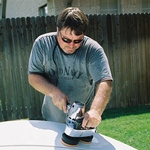
Kind of hard to tell what kind of actual paint correction was done without seeing the afters in the full sun. 
BTW, if you want the "Zaino" look without helping keep Sal Zaino driving exotics, get Duragloss products. Same stuff without the higher price.
BTW, if you want the "Zaino" look without helping keep Sal Zaino driving exotics, get Duragloss products. Same stuff without the higher price.


OP, Decent turn out. Agreed on the weekend detailing mentality.
Rochester, can I ask why the Clay Bar between waxes and not before? Also, why the polish after the wax?
I pretty much did the same thing this weekend, shaking off the last 4 months of winter:
All done with new micro-fiber towels and application pads, of course. The finish is showroom new. And I'm happy, as I always am with Mequires products. But I have to ask... Rydicule, what is this "Sealed with Zaino Z2-Pro" you did?
Sealed? That's new to me.
- Hand-washed with Meguiars Gold Class car wash.
- Hand-waxed and cleaned with Mequirex NxT 2.0 liquid.
- Clay-barred with Mequires Detailing Clay.
- Re-waxed with Mequires NxT 2.0
- Polished with Wizard's Mist & Shine
All done with new micro-fiber towels and application pads, of course. The finish is showroom new. And I'm happy, as I always am with Mequires products. But I have to ask... Rydicule, what is this "Sealed with Zaino Z2-Pro" you did?
Sealed? That's new to me.
Love that claybar.
And the polish... I was just babying the car, wiping off dust. Dumb, considering there are railroad tracks near my office that kick up a world of dust, LOL!
I want to know more about sealants.
Thread Starter
Don't you know who I am?
Joined: Feb 2006
Posts: 945
From: East Granby, Connecticut
The NxT 2.0 seems to be a mild cleaner, too. So if I wax once with the NxT, the claybar is effortless, and picks up only the very fine grit that didn't come up with the first wax. And then of course having been barred, I need to wax again... but at this point it's beyond effortless, and the surface is insanely perfect to the touch.
Love that claybar.
And the polish... I was just babying the car, wiping off dust. Dumb, considering there are railroad tracks near my office that kick up a world of dust, LOL!
I want to know more about sealants.
Love that claybar.
And the polish... I was just babying the car, wiping off dust. Dumb, considering there are railroad tracks near my office that kick up a world of dust, LOL!
I want to know more about sealants.
"Sealant" is a polymer based chemical that bonds to the paint in order to protect it. Actually... the NxT you use is a "sealant" in this sense.
The term "Wax" was generally used to describe a Carnuba-based substance that actually sat on top of your paint to make a greasy surface that repels water away from the paint. Meguiars slapped "Wax" on their NxT generation because the term "sealant" scares a lot of prospective buyers that just want an easy wash and wax... and the NxT brand actually does apply identically to how a carnuba would.
The difference between a carnuba wax and a polymer sealant is a slightly different look and a huge difference in durability. Carnuba waxes generally can last 4-6 weeks depending on weather conditions, and polymer sealants anywhere from 5-7 months depending on conditions.
As for your claybar process: while it does seem a neat trick, I would be concerned about sealing an un-clayed surface, as it wasn't design to lift microscopic particles out of the paint as much as it is designed to push them into it. While the surface may feel smoother (as it would), it's probably only due to the fact that it's evening out the surface rather than pulling anything out of it. A rougher surface is how to tell that it needs to be clayed, and when it's been successfully cleaned. The surface should be difficult to work with at the start, and then easier at the finish. I don't want to make any recommendations, do what works best for you. I would just urge you to give a shot the other way too for a proper comparison.
Thread Starter
Don't you know who I am?
Joined: Feb 2006
Posts: 945
From: East Granby, Connecticut
1.) I know. Unfortunately, it isn't my car and I had to use what cameras I had available at the times... so it isn't an apples-apples comparison.
2.) Interesting... they're chemically equivalent? I'll definitely have to look into that... thanks for the tip!
"Sealant" is a polymer based chemical that bonds to the paint in order to protect it. Actually... the NxT you use is a "sealant" in this sense.
The term "Wax" was generally used to describe a Carnuba-based substance that actually sat on top of your paint to make a greasy surface that repels water away from the paint. Meguiars slapped "Wax" on their NxT generation because the term "sealant" scares a lot of prospective buyers that just want an easy wash and wax... and the NxT brand actually does apply identically to how a carnuba would.
The difference between a carnuba wax and a polymer sealant is a slightly different look and a huge difference in durability. Carnuba waxes generally can last 4-6 weeks depending on weather conditions, and polymer sealants anywhere from 5-7 months depending on conditions.
As for your claybar process: while it does seem a neat trick, I would be concerned about sealing an un-clayed surface, as it wasn't design to lift microscopic particles out of the paint as much as it is designed to push them into it. While the surface may feel smoother (as it would), it's probably only due to the fact that it's evening out the surface rather than pulling anything out of it. A rougher surface is how to tell that it needs to be clayed, and when it's been successfully cleaned. The surface should be difficult to work with at the start, and then easier at the finish. I don't want to make any recommendations, do what works best for you. I would just urge you to give a shot the other way too for a proper comparison.
The term "Wax" was generally used to describe a Carnuba-based substance that actually sat on top of your paint to make a greasy surface that repels water away from the paint. Meguiars slapped "Wax" on their NxT generation because the term "sealant" scares a lot of prospective buyers that just want an easy wash and wax... and the NxT brand actually does apply identically to how a carnuba would.
The difference between a carnuba wax and a polymer sealant is a slightly different look and a huge difference in durability. Carnuba waxes generally can last 4-6 weeks depending on weather conditions, and polymer sealants anywhere from 5-7 months depending on conditions.
As for your claybar process: while it does seem a neat trick, I would be concerned about sealing an un-clayed surface, as it wasn't design to lift microscopic particles out of the paint as much as it is designed to push them into it. While the surface may feel smoother (as it would), it's probably only due to the fact that it's evening out the surface rather than pulling anything out of it. A rougher surface is how to tell that it needs to be clayed, and when it's been successfully cleaned. The surface should be difficult to work with at the start, and then easier at the finish. I don't want to make any recommendations, do what works best for you. I would just urge you to give a shot the other way too for a proper comparison.

After using it a few times since this time last year, I've found the NxT only lasts a few months, tops. I like it a whole lot, but it doesn't last an entire season. Not like the Collenite 476S I used to use.
However, I'm going to research this further for the next time I do a full-weekend with the paint, which probably won't be until mid-summer now. Thanks for the good advice, Rydicule.
Last edited by Rochester; Apr 12, 2011 at 05:27 AM.
2. Not just chemically equivalent, Zaino is relabeled Duragloss. 101 = ZAIO, Aqua Wax = Z8 (used to have the same smell until posts started showing up about it), 105 = Z5, Duragloss leather conditioner smells exactly the same as Z-10, same bottle too, but black instead of white. Used both product lines (have since moved on) and they apply, remove, look and last the same. Oh yeah, both product lines do contain silicones, including Clear Seal (which Duragloss sells under their own label out of the US). It may be Duragloss slighty tweaks some of the products they package for Zaino so they aren't exactly 100% the same (color/scent) but they do make Zaino's stuff. Sal doesn't have his own manufacturing plant.
NXT does actually contain some paraffin wax, thats what gives it decent depth for a sealant.
BTW, most carnaubas last a lot longer than 4-6 weeks, carnaubas are blended with ingredients that greatly increase the temperatures they would normally melt at (sort of like how coolant raises the boiling point of water), plus the chemical reaction that occurs as a product dries and cures also affects how it reacts to heat. It is true that typically a sealant will stay on the paint longer (durability) but it is also true that a carnauba tends to be more resistant to bird bombs and other environmental factors (protection). You just have to apply them more often. Carnaubas tend to have a deeper, richer look and sealants tend to have a higher gloss and reflectivity.
What I would suggest when it comes to whatever sealant or wax you are going to use is to not worry about layering or topping (sealant first, allow to cure then wax over it) but to find the product you think looks the best and then use it as often as necessary. Everyone gets so caught up in the waxes or sealants when they should concentrate on the claying and polishing, thats where the real improvement comes from. The main purpose of the wax or sealant is to protect the paint.

...BTW, most carnaubas last a lot longer than 4-6 weeks, carnaubas are blended with ingredients that greatly increase the temperatures they would normally melt at (sort of like how coolant raises the boiling point of water), plus the chemical reaction that occurs as a product dries and cures also affects how it reacts to heat...
Thread Starter
Don't you know who I am?
Joined: Feb 2006
Posts: 945
From: East Granby, Connecticut
2. Not just chemically equivalent, Zaino is relabeled Duragloss. 101 = ZAIO, Aqua Wax = Z8 (used to have the same smell until posts started showing up about it), 105 = Z5, Duragloss leather conditioner smells exactly the same as Z-10, same bottle too, but black instead of white. Used both product lines (have since moved on) and they apply, remove, look and last the same. Oh yeah, both product lines do contain silicones, including Clear Seal (which Duragloss sells under their own label out of the US). It may be Duragloss slighty tweaks some of the products they package for Zaino so they aren't exactly 100% the same (color/scent) but they do make Zaino's stuff. Sal doesn't have his own manufacturing plant.
[QUOTE=Scottwax;8008567]
BTW, most carnaubas last a lot longer than 4-6 weeks, carnaubas are blended with ingredients that greatly increase the temperatures they would normally melt at (sort of like how coolant raises the boiling point of water), plus the chemical reaction that occurs as a product dries and cures also affects how it reacts to heat. It is true that typically a sealant will stay on the paint longer (durability) but it is also true that a carnauba tends to be more resistant to bird bombs and other environmental factors (protection). You just have to apply them more often. Carnaubas tend to have a deeper, richer look and sealants tend to have a higher gloss and reflectivity.
[\QUOTE]
Agreed, I tend to say 4-6 weeks for Carnuba because while it is still doing its job, I honestly don't get the same feel or look from it post 6 weeks that I do pre 4 weeks. I didn't mean to take anything away from using Carnubas by saying they don't last as long, just figured for the average wash/wax Joe Schmo that the differences in appearance would be too subtle to weigh in.
What I would suggest when it comes to whatever sealant or wax you are going to use is to not worry about layering or topping (sealant first, allow to cure then wax over it) but to find the product you think looks the best and then use it as often as necessary. Everyone gets so caught up in the waxes or sealants when they should concentrate on the claying and polishing, thats where the real improvement comes from. The main purpose of the wax or sealant is to protect the paint.
The reason your detailer says every 4-5 weeks is partly because he makes more money that way and partly because any wax or sealant is a sacrificial barrier that slowly wears away. If whatever he is using lasts 3 months or so, at 4-5 weeks, it is now down to 60% of the original thickness and there is less of a barrier to protect against bird bombs, sap, etc. Not sure what wax he is using, that could have something to do with it, but then again, he should use something that lasts beyond 4-5 weeks if it is truly dead by then.


There's many good compounds that can work, some better than others. A good rubbing compound with a medium to light cut is what you need. A good buffer preferrably something like a Porter Cable would be best suited but it can be done by hand. I recommend going to your local O'Reilly's or similar to looking for Meguiar's M105. That's the heavy cut compound for serious oxidation and paint correction. You can also pickup the Medium or Light cut which is more likely to be stocked as I have a very hard time finding the m105 in retail auto parts stores.

Thread Starter
Don't you know who I am?
Joined: Feb 2006
Posts: 945
From: East Granby, Connecticut
The proper way is to get automotive sandpaper... 1500 and 2000 grit. For severely damaged lenses, I've heard of people going to 1200 or even 1000, but I wouldn't recommend doing this if it isn't necessary.
You can use either a spray bottle or just a bucket if you want... I've used a bucket of soapy water in the past. You spray water on the lenses, and then dip your 1500 grit paper in the soapy water, and then scrub your lights with it. This will make them look a whole lot worse... that's normal.
Once they're scrubbed good and well, you do the same exact thing with the 2000 grit paper. This should show some improvement... leaving a much smoother, though very hazy headlight. Now comes the tough part:
You need to polish the haze out. The PlastX should work for this, but I warn you... I've heard of a number of people that have had a very difficult time doing this by hand... some of which said it was impossible and some of which said they only got their lenses cleared after a tremendous amount of scrubbing. My recommendation for this part... if you don't own a random orbital buffer... buy a Mother's Powerball (should be about 20 bucks at Target/WalMart) and put it on a drill. Squeeze a couple lines of PlastX (or other light polish) onto the lens and rub it around with the powerball (off) to spread it evenly (this will help reduce splatter). once you've done that, go ahead and rev the powerball up with the drill, and rub it into the lenses. Then wipe away the excess with a terry cloth or a microfiber towel. You should see vast improvement... though you may want to repeat the powerball process until you get your desired results.
However, what I did with the headlights in the pictures was take a shortcut. I didn't have the paper on hand, so I used a Porter Cable buffer with a white cutting pad and Menzerna Intensive Polish to polish the yellow out. I did this twice to each light and then turned to PlastX with a black finishing pad to remove the very slight remaining haze. The results are not ideal... the lights should still be wetsanding... but the owner of the car didn't care if they were perfect... just wanted them to look normal and have more functionality.
I hope this helps.


It should also be noted that with the proper procedures and tools, you can effectively clear up 99.9% of oxidation, hazing, etc from clear plastics such as headlights, blinkers, taillights, etc. However, in some cases you will see the plastics themselves have a slightly yellowed tint to them in comparison to how they look when brand new. This is the case on my Maxima as the drivers side headlight was replaced with an OEM several years ago just before I purchased it. The passenger side is the original and although I periodically remove any light hazing to make sure they're both crystal clear, the passenger side is permanently stained a yellowish hue from the heat and UV of the sun. I don't believe this is something you can fix without simply replacing the plastic itself.

Great job, i have just tried using maguire's headlight kit and it improved the clearlity of my headlight however, it didnt do near the great job you had done!

Thread
Thread Starter
Forum
Replies
Last Post
kjlouis
4th Generation Maxima (1995-1999)
11
Nov 24, 2018 06:09 AM
Goffery2uned
4th Generation Maxima (1995-1999)
9
Aug 21, 2015 09:50 PM
julian888
7th Generation Classifieds (2009-2015)
0
Aug 6, 2015 04:39 AM