


Overheating - Temperature Spike


Thread Starter
Senior Member
Joined: May 2008
Posts: 347
Overheating - Temperature Spike
I went to get my son from school last night when he noticed steam coming out from under the hood of the car. When I opened the hood, I had coolant all over the top of the engine and the radiator cap was making a loud hissing noise. My reservoir was at the max mark so I thought I could make it the 3 miles home. I didn’t make it a mile until the temp gauge spiked and I had to pull over and turn the car off. I cut it back on after 10 sec and the temp had dropped to norm. I made it the rest of the home before the temp gauge spiked again.
When I got in the garage, I popped the hood and heard the same hissing noise coming from the radiator cap. I assume that is where all the coolant came from judging by the dryness of the hoses and the spray all over the top of the engine. The reservoir is still full, but I had to put almost two gallons in the radiator.
I let the car idle in the garage for 30 minutes and the temp never spiked. I did notice that the radiator and upper hose were too hot to touch as where I could pretty much hold the lower hose as long as I wanted to. Both fans are also coming on as they should.
I took a couple quick drives down the street. Any time the temp gauge would spike, all I would have to do is pull-over and turn the car off for a few seconds. When I restart the car, the temp gauge would read normal for another mile or two before it would spike again. Any ideas?
When I got in the garage, I popped the hood and heard the same hissing noise coming from the radiator cap. I assume that is where all the coolant came from judging by the dryness of the hoses and the spray all over the top of the engine. The reservoir is still full, but I had to put almost two gallons in the radiator.
I let the car idle in the garage for 30 minutes and the temp never spiked. I did notice that the radiator and upper hose were too hot to touch as where I could pretty much hold the lower hose as long as I wanted to. Both fans are also coming on as they should.
I took a couple quick drives down the street. Any time the temp gauge would spike, all I would have to do is pull-over and turn the car off for a few seconds. When I restart the car, the temp gauge would read normal for another mile or two before it would spike again. Any ideas?

you need a new radiator and cap. Your radiator's plastic top tank is cracked. that plus you are low on coolant. Go in the group deal section radiators are FS there for $105, i have 2 of them.


Senior Member

Joined: Sep 2010
Posts: 10,344
From: Jacksonville, FL

oh gawd.....dont give him ideas. The damn top tanks crack all the time. usually it means your radiator cap has gone sour.
Senior Member
Joined: Sep 2010
Posts: 10,344
From: Jacksonville, FL
It's a temporary fix until I replace the radiator. I also removed some coolant from the radiator to keep it from pressurizing. Older cars that didn't have expansion/overflow tanks used to run an inch or two below the radiator cap to keep it from spewing out.

Same **** happened to me I had coolant in the reservoir as well but the radiator was clogged and needed a new radiator, they said the previous owner was probably my just adding water to the radiator.....instead of coolant.....GL.....
Thread Starter
Senior Member
Joined: May 2008
Posts: 347
Hmm, I'll have to check for cracks when I get home. Doesn't look like too much of a big deal to replace the radiator if I have to do that. That being said, the hissing noise I heard could have been coming from a crack and not the radiator cap.
I already replaced the t-stat earlier this year.
I already replaced the t-stat earlier this year.

When I got in the garage, I popped the hood and heard the same hissing noise coming from the radiator cap. I assume that is where all the coolant came from judging by the dryness of the hoses and the spray all over the top of the engine. The reservoir is still full, but I had to put almost two gallons in the radiator.
Depending on how bad the radiator leak is, you should have seen the coolant seeping out of the radiator along the bottom edge of the plastic tank where it mounts on the aluminum core. The most common spot for the radiator to leak at is at the upper radiator hose, but a leak could happen anywhere. It probably took days for enough coolant to leak out and cause the overheating.

Member
Joined: May 2011
Posts: 72
From: Suffolk, Long Island
I had this problem and it got coolant all over my engine bay. If looking at the engine from the front of the car, the crack was hard to see but it was on the right side of the radiator, right by the top hose. It was in one of the indents on the left side of the hose. I replaced the radiator and thermostat and been fine ever since.

I didn't read that anyone addressed the gauge readings, so I'll throw something in right here. The temperature readings are based on coolant temperature. Without coolant, your sensor is not going to read correctly. Also, a water pump is not going to push air efficiently enough to do any relevant kind of heat transfer. You need some kind of coolant as a medium. Temperature spike, steam, coolant smell, and a low radiator? Park the car. I won't delve into the thermodynamic differences between steam and liquid, because it's not necessary to operate your car correctly. However, every driver should know the importance of the warning gauges.
I once assumed drivers were educated on the basic care of their vehicles. A few posts lately seem to prove otherwise. If you have a temperature spike, stop the car. You have to make the assumption that the car is overheating, unless you find otherwise after educated diagnoses. Turning off the car for 10 seconds? What purpose did that serve exactly? A relatively huge mass of aluminum is not going to cool down 50-100°F in a matter of seconds in any of our climates. Pay for the tow. In the end, you're potentially gambling hundreds of dollars for the sake of getting home on time and saving 50 bucks.
I'm sorry for the brusque response, but it needs to be said. If you've got the mechanical knowledge to assess and act on an abnormal condition, proceed. Otherwise, err on caution and let someone that has the expertise save you coin and headache.
I once assumed drivers were educated on the basic care of their vehicles. A few posts lately seem to prove otherwise. If you have a temperature spike, stop the car. You have to make the assumption that the car is overheating, unless you find otherwise after educated diagnoses. Turning off the car for 10 seconds? What purpose did that serve exactly? A relatively huge mass of aluminum is not going to cool down 50-100°F in a matter of seconds in any of our climates. Pay for the tow. In the end, you're potentially gambling hundreds of dollars for the sake of getting home on time and saving 50 bucks.
I'm sorry for the brusque response, but it needs to be said. If you've got the mechanical knowledge to assess and act on an abnormal condition, proceed. Otherwise, err on caution and let someone that has the expertise save you coin and headache.
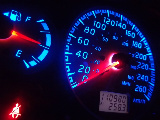
I didn't read that anyone addressed the gauge readings, so I'll throw something in right here. The temperature readings are based on coolant temperature. Without coolant, your sensor is not going to read correctly. Also, a water pump is not going to push air efficiently enough to do any relevant kind of heat transfer. You need some kind of coolant as a medium. Temperature spike, steam, coolant smell, and a low radiator? Park the car. I won't delve into the thermodynamic differences between steam and liquid, because it's not necessary to operate your car correctly. However, every driver should know the importance of the warning gauges.
I once assumed drivers were educated on the basic care of their vehicles. A few posts lately seem to prove otherwise. If you have a temperature spike, stop the car. You have to make the assumption that the car is overheating, unless you find otherwise after educated diagnoses. Turning off the car for 10 seconds? What purpose did that serve exactly? A relatively huge mass of aluminum is not going to cool down 50-100°F in a matter of seconds in any of our climates. Pay for the tow. In the end, you're potentially gambling hundreds of dollars for the sake of getting home on time and saving 50 bucks.
I'm sorry for the brusque response, but it needs to be said. If you've got the mechanical knowledge to assess and act on an abnormal condition, proceed. Otherwise, err on caution and let someone that has the expertise save you coin and headache.
I once assumed drivers were educated on the basic care of their vehicles. A few posts lately seem to prove otherwise. If you have a temperature spike, stop the car. You have to make the assumption that the car is overheating, unless you find otherwise after educated diagnoses. Turning off the car for 10 seconds? What purpose did that serve exactly? A relatively huge mass of aluminum is not going to cool down 50-100°F in a matter of seconds in any of our climates. Pay for the tow. In the end, you're potentially gambling hundreds of dollars for the sake of getting home on time and saving 50 bucks.
I'm sorry for the brusque response, but it needs to be said. If you've got the mechanical knowledge to assess and act on an abnormal condition, proceed. Otherwise, err on caution and let someone that has the expertise save you coin and headache.
It's easy for eveyone to say its the rad. Because they're famous for leaking at the top tank seal and causing spray. But the proper way to find out what's wrong is not to throw parts at it, no one has even asked the mileage or climate.
So What climate is the car in, and what is your mileage?
Also, there are certainly more things than a rad or rad cap that this could be, a few off the top:
-Water pump (no flow = increased temperatures causing excessive pressure, which causes coolant to burst out of the rad cap and overflow)
-Headgasket (combustion pressures 'leak' into coolant, causing excessive pressure, same result as above)
-Simple leak, this could be a Rad hose, Radiator assembly (ours aren't repairable they are replaced as a unit), POSSIBLE a bad rad cap, but I doubt it.
In either case, you'll be replacing the rad cap, if it's purged a few times it's junk anyways, it should be replaced alongside the repair necessary.
I recommend following the FSM's diagnostic procedures for Coolant loss/leak.
I'm not saying it's not the rad, IMO, it very likely is, but I would hate to see the OP pay for a new rad only to find out it wasn't the rad at all. Diagnosis is the name of the game, find out what's wrong THEN buy the part.
So What climate is the car in, and what is your mileage?
Also, there are certainly more things than a rad or rad cap that this could be, a few off the top:
-Water pump (no flow = increased temperatures causing excessive pressure, which causes coolant to burst out of the rad cap and overflow)
-Headgasket (combustion pressures 'leak' into coolant, causing excessive pressure, same result as above)
-Simple leak, this could be a Rad hose, Radiator assembly (ours aren't repairable they are replaced as a unit), POSSIBLE a bad rad cap, but I doubt it.
In either case, you'll be replacing the rad cap, if it's purged a few times it's junk anyways, it should be replaced alongside the repair necessary.
I recommend following the FSM's diagnostic procedures for Coolant loss/leak.
I'm not saying it's not the rad, IMO, it very likely is, but I would hate to see the OP pay for a new rad only to find out it wasn't the rad at all. Diagnosis is the name of the game, find out what's wrong THEN buy the part.
Thread Starter
Senior Member
Joined: May 2008
Posts: 347
I didn't read that anyone addressed the gauge readings, so I'll throw something in right here. The temperature readings are based on coolant temperature. Without coolant, your sensor is not going to read correctly. Also, a water pump is not going to push air efficiently enough to do any relevant kind of heat transfer. You need some kind of coolant as a medium. Temperature spike, steam, coolant smell, and a low radiator? Park the car. I won't delve into the thermodynamic differences between steam and liquid, because it's not necessary to operate your car correctly. However, every driver should know the importance of the warning gauges.
I once assumed drivers were educated on the basic care of their vehicles. A few posts lately seem to prove otherwise. If you have a temperature spike, stop the car. You have to make the assumption that the car is overheating, unless you find otherwise after educated diagnoses. Turning off the car for 10 seconds? What purpose did that serve exactly? A relatively huge mass of aluminum is not going to cool down 50-100°F in a matter of seconds in any of our climates. Pay for the tow. In the end, you're potentially gambling hundreds of dollars for the sake of getting home on time and saving 50 bucks.
I'm sorry for the brusque response, but it needs to be said. If you've got the mechanical knowledge to assess and act on an abnormal condition, proceed. Otherwise, err on caution and let someone that has the expertise save you coin and headache.
I once assumed drivers were educated on the basic care of their vehicles. A few posts lately seem to prove otherwise. If you have a temperature spike, stop the car. You have to make the assumption that the car is overheating, unless you find otherwise after educated diagnoses. Turning off the car for 10 seconds? What purpose did that serve exactly? A relatively huge mass of aluminum is not going to cool down 50-100°F in a matter of seconds in any of our climates. Pay for the tow. In the end, you're potentially gambling hundreds of dollars for the sake of getting home on time and saving 50 bucks.
I'm sorry for the brusque response, but it needs to be said. If you've got the mechanical knowledge to assess and act on an abnormal condition, proceed. Otherwise, err on caution and let someone that has the expertise save you coin and headache.
Anyway, yes, the tempurature did spike, but it was still within safe range.
After further inspection, I found a 4-5 inch crack on the top of the radiator, under the intake tube. The radiator costs $110 and I've got twice that in AutoZone Rewards dollars so it's paid for. I was already replacing the high pressure PS hose and the throw out bearing this weekend. I guess I'll add this to the list. Sheesh, it all seems to happen at once.
 It certainly could have happened here as well. My bad.
...he noticed steam coming out from under the hood of the car. When I opened the hood, I had coolant all over the top of the engine and the radiator cap was making a loud hissing noise. My reservoir was at the max mark so I thought I could make it the 3 miles home. I didn’t make it a mile until the temp gauge spiked and I had to pull over and turn the car off. I cut it back on after 10 sec and the temp had dropped to norm. I made it the rest of the home before the temp gauge spiked again...
 Steady state would be the operating temperature of the thermostat. A spike would be a large, sudden increase in that temperature. AKA: unsafe temperature range.

Thread
Thread Starter
Forum
Replies
Last Post
doctorpullit
8th Generation Maxima (2016-)
21
Oct 28, 2019 10:58 PM
RWCreative
4th Generation Maxima (1995-1999)
9
Sep 21, 2015 11:01 AM