When you click on links to various merchants on this site and make a purchase, this can result in this site earning a commission. Affiliate programs and affiliations include, but are not limited to, the eBay Partner Network.
Famous P0445 and P1448 - I tried but I need some advice
Hi,
I know we all have these 2 codes. Trust me, I searched for these problems before I posted this thread .
I guess we face these codes differently so here is my situation.
I have P0455 and P1448 on my Nissan Maxima 2003.
I know it was because of the Canister Valve that's stuck open, gas cap and canister's problems.
I order a genuine gas cap from Nissan.
Costs around 30 CAD, I'm in Montreal, Quebec.
I ordered the valve from Dorman (product number: 911-052).
Costs around 80 CAD.
Replaced the gas cap.
Then I crawled under the car to replace the canister valve.
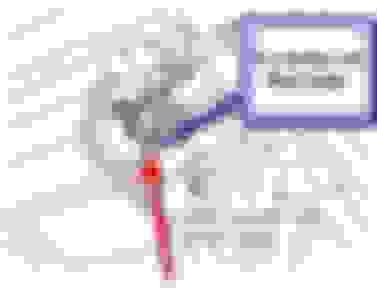
As I was removing the famous rusted bolts at the old valve, I discovered a crack at the joint between the valve and the canister.
Here
I replaced the valve anyway because it was stuck open and rusted inside.
I used WD-40 rust penetrant to clean the old valve and see if I can rescue it.
It's dead now due to rust cancer. Nothing we can do.
After replacing the valve, I reset the SES light using the ignition key and gas pedal method.
Drove for 3-4 days.
Then the light came on again with the same codes (P0455 and P1448).
I've never overfilled gas. I used premium gas as recommended.
I guess it's because of the crack on the canister I mentioned above that causes the issue.
Questions:
Is there anything I can do to fill the crack? Or do I have to change the canister.
And what should I check before deciding to replace the canister?
Replacing the valve is obviously a DIY project. But is replacing the canister a DIY one as well?
UPDATE - October 13, 2015:
I sealed the crack with silicone and left the SES light on.
Ran for about 100-150 km (4~7 on and off cycles or 2-3 days).
The light was gone in the third morning.
That means I've done it right.
You can try using silicone for the crack. Press it into the crack and leave a layer over the crack.
Changing the canister is something you should be able to do. Rusted bolts will be your biggest challenge. Use PB Blaster (much better than WD40) on the bolts a day in advance and again an hour or 2 before you start working on it. Use 6 point sockets to minimize rounding the heads.
I believe all silicone is petroleum friendly but double check any silicone sealant. The label will guide you on what it works with and what it isn't compatible with.
Sorry for the bump but... would this cause our fuel gauge to read incorrectly? My fuel gauge was at 1/4 tank and the DTE was around 100 miles when I ran out of gas.. Happened twice actually.
Sorry for the bump but... would this cause our fuel gauge to read incorrectly? My fuel gauge was at 1/4 tank and the DTE was around 100 miles when I ran out of gas.. Happened twice actually.
That's another common issue. The fuel sending unit arm/contacts go to **** and either it reads wrong, doesn't work at all or throws a code for dirty signal. Steal some from the junkyard, so you have multiple LOL
I'm not sure what the deal is when the reading is off. I guess you can pull it out and see if it is traveling freely.
Last edited by Child_uv_KoRn; Jun 7, 2016 at 07:24 PM.
There's a little **** making contact on an small board with a several groove as the arm moves signals different voltage values used to dictate level overtime the contact wears and the ecu can no longer read the voltage and it throws a code ....meh wtf here's the video I can't type all that shvt!!different car but same principal,on my 5gen that little piece it's soldered to the floating arm so I couldn't do it like this but idk about the 5.5gen


 .
.