


Drag coef and reality - does it really matter


Drag coef and reality - does it really matter
Is anyone with actual scientific proof not just I ran with and without no if the difference between having the OEM spoiler on the back of the Max really makes it perform better because of the drag reduction. Nissan claims .30 for non-spoiler and .28 with. I really don't like to mess with my clean lines, but if it really makes a diff then I'll do it. Can't see it being a big change though.
Thanks.
Thanks.


Senior Member
Joined: Jun 2003
Posts: 8,143
From: a meadow south of Atlanta
If you do most of your driving at legal speeds, you should notice no difference in the behavior of your car or gas mileage between those two drag coefficients.
If you live in very rural Montana and spend lots of time above 100 mph, then such things as drag coefficients might enter the equation.
If you live in very rural Montana and spend lots of time above 100 mph, then such things as drag coefficients might enter the equation.

Senior Member
Joined: Feb 2005
Posts: 3,590
From: Bartlett, IL
Originally Posted by Nietzsche
I'm sure the figures are correct, my question is whether it makes a real world difference on my performance.
Senior Member
Joined: Jun 2003
Posts: 8,143
From: a meadow south of Atlanta
Nietzsche - I'm a Comfort Inn kinda guy, so did not stay in a Holiday Inn Express last night. So this is a WAG (wild a-- guess):
I have always felt the speed at which spoilers become really effective at holding the rear of the car down against the pavement is somewhere around 130 mph. This, of course, would vary by car and by conditions, and ESPECIALLY by spoiler size, shape, and mounting position.
I am sure some spoilers have some effect at speeds under 100 mph, perhaps even as low as 75, and a more clearly pronounced effect at speeds between 100 and 125.
But I find I am almost never in a situation where I would gain much in either holding the rear end down or smoothing the airflow with a spoiler.
But they can make your car look faster, and that is the more common usage.
I have always felt the speed at which spoilers become really effective at holding the rear of the car down against the pavement is somewhere around 130 mph. This, of course, would vary by car and by conditions, and ESPECIALLY by spoiler size, shape, and mounting position.
I am sure some spoilers have some effect at speeds under 100 mph, perhaps even as low as 75, and a more clearly pronounced effect at speeds between 100 and 125.
But I find I am almost never in a situation where I would gain much in either holding the rear end down or smoothing the airflow with a spoiler.
But they can make your car look faster, and that is the more common usage.



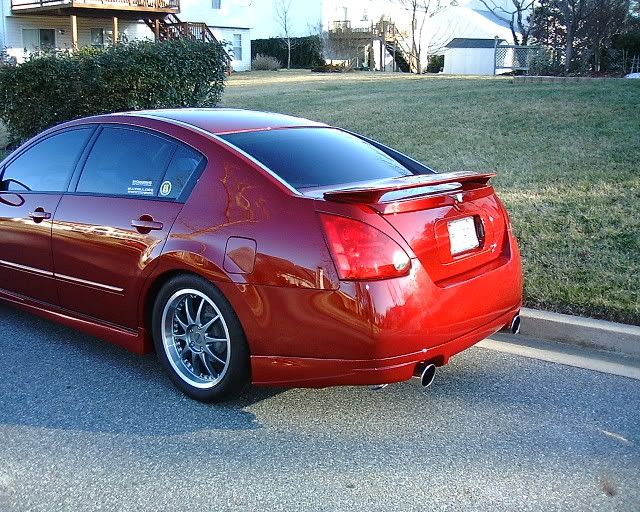
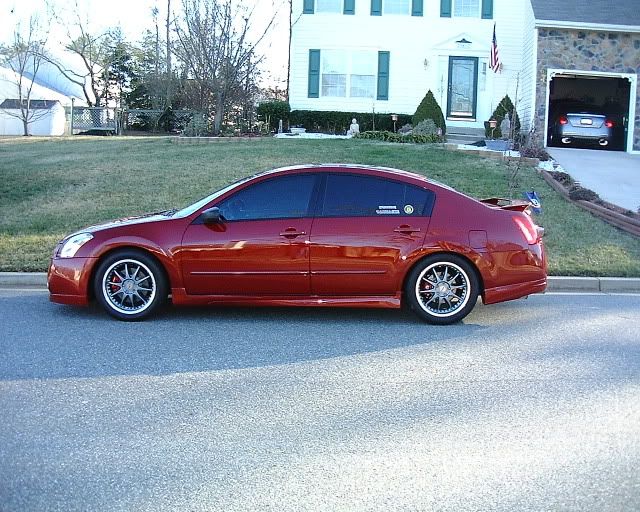

Member
Joined: May 2006
Posts: 51
I'm guessing any difference at normal speeds would be hard to show any significant difference.As far as what speeds aero devices have any effect it would depend on the overall shape of a particular car to a large degree and the size of the 'spoiler'. If you look at the 'auto deployed' spoilers Porsche and Crossfires use I think they pop up in the 60 mph range.They probably do have an effect as there bigger than our lip spoilers and they sit higher up in the airflow that comes over the roof.
Some folks make their cars worse nowdays with the big wings that are ricer approved,there big enuf to create significant amounts of drag and downforce and make high speed driving worse.Throws the whole balance of the car off if you don't have something keeping the front down too.
Back in 1972 I had a 240 Z and the difference W/WO the front spoiler at speeds over 100 mph was huge, way less scary without it!
Some folks make their cars worse nowdays with the big wings that are ricer approved,there big enuf to create significant amounts of drag and downforce and make high speed driving worse.Throws the whole balance of the car off if you don't have something keeping the front down too.
Back in 1972 I had a 240 Z and the difference W/WO the front spoiler at speeds over 100 mph was huge, way less scary without it!

yea achually from wuh i learned they are achually suppoed to kick in around the 65MPH and + levels...it begins to hold rear to ground and less floatyness...lolxz buh i have a friend who went extra far and put in a spoiler in the rear of his car and a freakin Wing on the roof of his car...that was over kill...lolxz

yea it was...for exactly that reason did you ever see how that thing looked and was designed...just think about it in a physics point of veiw...yea you need a spoiler on that thing...for the basis of science...and just because it looked weird without one! lolxz IMO

I think the car looks great with nothing back there. I debadged the whole thing and it's super clean. I'm not looking for a better look. I just wanted to make sure I wasn't making a diff in terms of perf/mileage. I would never put any old spoiler on a car because as Jim C pointed out it very often make handling worse. I have seen some people cause lift by adding crappy pieces of fiberglass and plastic to the backs of their cars.

Newbie just Registered

Joined: May 2005
Posts: 2,795
From: LA/OC, CA
Originally Posted by Nietzsche
I think the car looks great with nothing back there. I debadged the whole thing and it's super clean. I'm not looking for a better look. I just wanted to make sure I wasn't making a diff in terms of perf/mileage. I would never put any old spoiler on a car because as Jim C pointed out it very often make handling worse. I have seen some people cause lift by adding crappy pieces of fiberglass and plastic to the backs of their cars.

Member
Joined: May 2006
Posts: 112
From: Edmonton, AB, Canada
just a lil tid bit of info about drag ... I was kinda surprised to know that an F1 car has more drag than our cars due to the massive downforce they are trying to achieve
http://www.cd-adapco.com/press_room/...imulation.html
Riaz Sanatian, Automotive sector manager, CD-adapco
From the missile shaped design of the modern F1 Grand Prix racing car to the brick-like structure of a heavy truck, aerodynamics plays a crucial role in how well they behave on the road and how efficiently they perform the tasks they are designed for.
For all vehicles, ranging from small passenger vehicles to commercial buses and trucks, reducing air drag is one of the most efficient ways of improving fuel economy. For example, a 5% improvement in drag for a typical diesel engine heavy tuck, which can simply be achieved by improving the design of the wing mirrors, can result in fuel savings of around 500-1000 litres/year for a typical 150,000 km annual highway driving. On the other end of the scale, in motor racing fuel saving might not be the number one priority, but reaching very high speeds certainly is. To propel a typical Class 1 ITC racing car at 300km/h, around 30 kW of additional power is required for a car with drag coefficient of 0.40, compared to one with 0.36. And when you are operating at the limit of your engine, this can make the difference between winning or losing.
Optimum aerodynamic design
But there is a lot more to external aerodynamics design than simply reducing the air drag. It might come as a surprise to most motor racing enthusiasts that a typical modern F1 Grand Prix car has a higher drag coefficient than the average family saloon we go shopping in, or that an ITC racing car has a much higher drag coefficient than the production vehicle it is based on! Nevertheless this should not come as a big surprise, especially when we look at all the aerodynamic components and features that are there to keep racing vehicles stable and drivable at high speeds, effectively preventing them from flying off the ground. Components such as front wings, diffuser shapedunderbody, brake cooling ducts, engine intake and rear wings are there to improve the car stability and down force, which can be of the order of a tonne at maximum speed for an F1 racing car, but at the same time can add to the drag of the vehicle. Therefore the optimum aerodynamic design has to produce the best balance of low drag and high down force that allows the car to be stable and drivable at very high speeds.
Courtesy of Renault F1, CD-adapco is a Renault F1 team supplier
Passenger and commercial vehicles also have other aerodynamic requirements. Here, high levels of down force are not usually required, but undesirable lift, which can result in unstable handling, should also be avoided. For passenger vehicles the visual effect of aerodynamic components, such as rear spoilers can also play a major role in the vehicle’s final design. With quieter power trains, wind noise and aeroacoustics are also becoming an important consideration in the aerodynamic design. With high-sided vehicles, such as large commercial trucks and buses, there are further safety issues relating to wind loading. Effective management of rain, snow and dirt around the vehicle is also greatly influenced by its aerodynamic design.
Furthermore, we should not forget the influence of external aerodynamics on cabin ventilation, underhood thermal management and brake cooling, to name but a few.
To satisfy the many, and sometimes contradictory, vehicle aerodynamics design requirements there is a need for detailed information about the behaviour of air flow around the vehicle, and here numerical simulation techniques have been making a significant contribution to the aerodynamics design of modern vehicles.
Numerical and experimental approaches
At present, wind tunnel testing and CFD simulation are the two major techniques used to obtain aerodynamic data around a vehicle. Nowadays the choice is not to use one technique or the other, but to combine the capabilities of both techniques to obtain the best set of results for the analysis of airflow around the vehicle.
From the missile shaped design of the modern F1 Grand Prix racing car to the brick-like structure of a heavy truck, aerodynamics plays a crucial role in how well they behave on the road and how efficiently they perform the tasks they are designed for.
For all vehicles, ranging from small passenger vehicles to commercial buses and trucks, reducing air drag is one of the most efficient ways of improving fuel economy. For example, a 5% improvement in drag for a typical diesel engine heavy tuck, which can simply be achieved by improving the design of the wing mirrors, can result in fuel savings of around 500-1000 litres/year for a typical 150,000 km annual highway driving. On the other end of the scale, in motor racing fuel saving might not be the number one priority, but reaching very high speeds certainly is. To propel a typical Class 1 ITC racing car at 300km/h, around 30 kW of additional power is required for a car with drag coefficient of 0.40, compared to one with 0.36. And when you are operating at the limit of your engine, this can make the difference between winning or losing.
Optimum aerodynamic design
But there is a lot more to external aerodynamics design than simply reducing the air drag. It might come as a surprise to most motor racing enthusiasts that a typical modern F1 Grand Prix car has a higher drag coefficient than the average family saloon we go shopping in, or that an ITC racing car has a much higher drag coefficient than the production vehicle it is based on! Nevertheless this should not come as a big surprise, especially when we look at all the aerodynamic components and features that are there to keep racing vehicles stable and drivable at high speeds, effectively preventing them from flying off the ground. Components such as front wings, diffuser shapedunderbody, brake cooling ducts, engine intake and rear wings are there to improve the car stability and down force, which can be of the order of a tonne at maximum speed for an F1 racing car, but at the same time can add to the drag of the vehicle. Therefore the optimum aerodynamic design has to produce the best balance of low drag and high down force that allows the car to be stable and drivable at very high speeds.
Courtesy of Renault F1, CD-adapco is a Renault F1 team supplier
Passenger and commercial vehicles also have other aerodynamic requirements. Here, high levels of down force are not usually required, but undesirable lift, which can result in unstable handling, should also be avoided. For passenger vehicles the visual effect of aerodynamic components, such as rear spoilers can also play a major role in the vehicle’s final design. With quieter power trains, wind noise and aeroacoustics are also becoming an important consideration in the aerodynamic design. With high-sided vehicles, such as large commercial trucks and buses, there are further safety issues relating to wind loading. Effective management of rain, snow and dirt around the vehicle is also greatly influenced by its aerodynamic design.
Furthermore, we should not forget the influence of external aerodynamics on cabin ventilation, underhood thermal management and brake cooling, to name but a few.
To satisfy the many, and sometimes contradictory, vehicle aerodynamics design requirements there is a need for detailed information about the behaviour of air flow around the vehicle, and here numerical simulation techniques have been making a significant contribution to the aerodynamics design of modern vehicles.
Numerical and experimental approaches
At present, wind tunnel testing and CFD simulation are the two major techniques used to obtain aerodynamic data around a vehicle. Nowadays the choice is not to use one technique or the other, but to combine the capabilities of both techniques to obtain the best set of results for the analysis of airflow around the vehicle.


Thread
Thread Starter
Forum
Replies
Last Post
hez8813
5th Generation Maxima (2000-2003)
11
Mar 12, 2020 12:06 AM
mkaresh
8th Generation Maxima (2016-)
21
Mar 12, 2018 06:48 PM
Omar Abdurrahman Siddiqi
5th Generation Maxima (2000-2003)
33
Aug 26, 2016 05:18 PM
MannyMonroe
7th Generation Maxima (2009-2015)
16
Sep 25, 2015 12:38 PM