


Brake Squeal - Random and Only at 20mph?


Thread Starter
Junior Member
Joined: Sep 2012
Posts: 77
Brake Squeal - Random and Only at 20mph?
I have noticed random brake squealing on my '10 Maxima SV. It doesn't happen every time, and when it does happen, it happens when I am decelerated at 25mph to 20mph. The squealing stops once I am around 15mph to 5mph.
Also, the squealing doesn't happen at higher speeds (e.g. decelerating at 55mph).
Also, the squealing doesn't happen at higher speeds (e.g. decelerating at 55mph).
- At last check about a month ago, I still had quite a bit of brake pad life, so I don't believe the pads need replacing.
- From the Driver's Seat, I can't tell which brake this noise is coming from.
- Since the squeal is at a very particular speed, is this a brake caliper issue?
- Is this something that is an easy fix (e.g. lubrication)?

Member
Joined: Jul 2013
Posts: 156
From: Fair Lawn NJ
Is there any kind of rust build up on the rotors? Here in the north east that problem is abundant. Rust builds a lip on the rotor and typically hear squeal at low speeds. It could be a brake pad hardware issue as well, lack of lubrication? You need to really check over the brakes.

Senior Member
Joined: May 2012
Posts: 441
From: Dallas
Is there any kind of rust build up on the rotors? Here in the north east that problem is abundant. Rust builds a lip on the rotor and typically hear squeal at low speeds. It could be a brake pad hardware issue as well, lack of lubrication? You need to really check over the brakes.
What would I be looking for when I check the brakes? this sound makes me not wanna drive my car....EVER!
Member
Joined: Jul 2013
Posts: 156
From: Fair Lawn NJ
1. Pull off a wheel
2. Remove the lower caliper retainer bolt and swing up the caliper
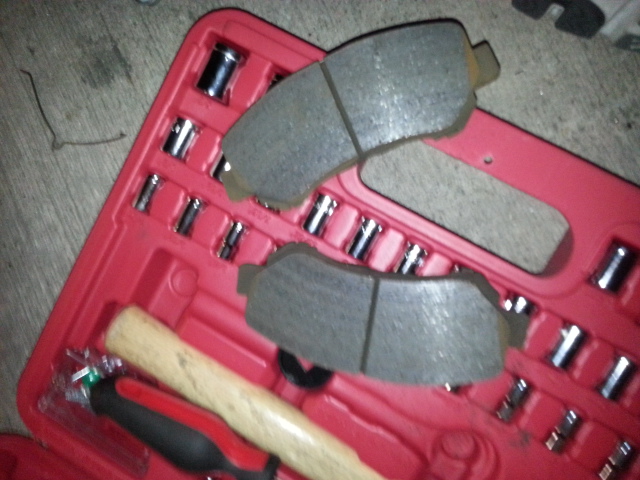
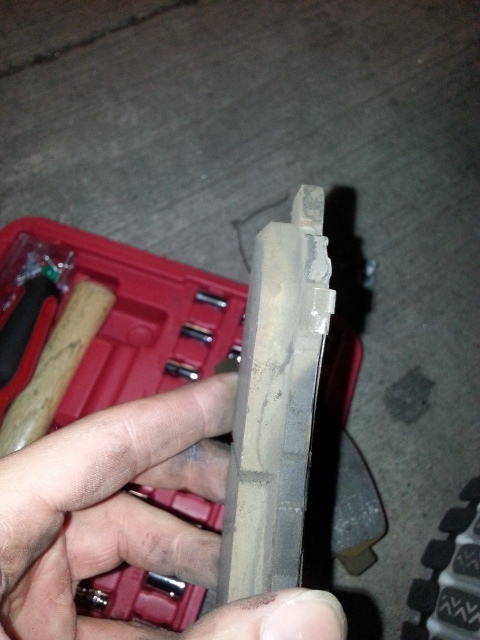
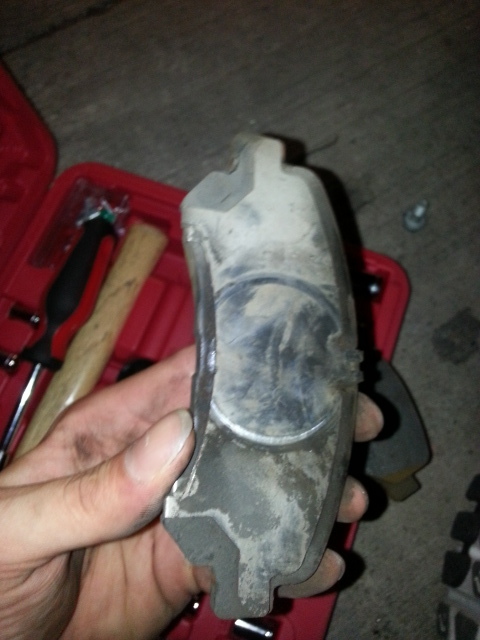
3. Remove the brake pad and see if there are any cracks? any chipped off pieces, any uneven wear?
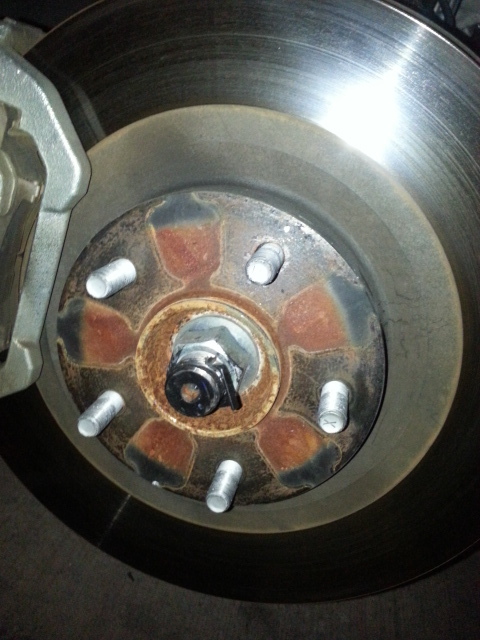
4. Check both inner and outside of the rotor for rust build up on the edges and around the hat(center section of the rotor).
5. Check to see if the brake pad hardware in the caliper bracket have any lubrication on them.
6. Check to see if the hardware itself is rusty or bent or dinged up.
All of those things can and will cause noise. Very thorough check while only removing one bolt.
Good luck!
2. Remove the lower caliper retainer bolt and swing up the caliper
3. Remove the brake pad and see if there are any cracks? any chipped off pieces, any uneven wear?
4. Check both inner and outside of the rotor for rust build up on the edges and around the hat(center section of the rotor).
5. Check to see if the brake pad hardware in the caliper bracket have any lubrication on them.
6. Check to see if the hardware itself is rusty or bent or dinged up.
All of those things can and will cause noise. Very thorough check while only removing one bolt.
Good luck!
Senior Member
Joined: May 2012
Posts: 441
From: Dallas
1. Pull off a wheel
2. Remove the lower caliper retainer bolt and swing up the caliper
3. Remove the brake pad and see if there are any cracks? any chipped off pieces, any uneven wear?
4. Check both inner and outside of the rotor for rust build up on the edges and around the hat(center section of the rotor).
5. Check to see if the brake pad hardware in the caliper bracket have any lubrication on them.
6. Check to see if the hardware itself is rusty or bent or dinged up.
All of those things can and will cause noise. Very thorough check while only removing one bolt.
Good luck!
2. Remove the lower caliper retainer bolt and swing up the caliper
3. Remove the brake pad and see if there are any cracks? any chipped off pieces, any uneven wear?
4. Check both inner and outside of the rotor for rust build up on the edges and around the hat(center section of the rotor).
5. Check to see if the brake pad hardware in the caliper bracket have any lubrication on them.
6. Check to see if the hardware itself is rusty or bent or dinged up.
All of those things can and will cause noise. Very thorough check while only removing one bolt.
Good luck!
Member
Joined: Jul 2013
Posts: 156
From: Fair Lawn NJ
Brake pulsation is caused by warped rotors. this commonly happens from overheated rotors. Worn or Chinese rotors are most common to have this occur. This is why most shops don't encourage machining rotors. The reasoning behind that is the rotors are now thinner and therefore more susceptible to heat and warpage . it does feel like out of balance wheels except it only occurs when you depress the pedal.
Senior Member
Joined: May 2012
Posts: 441
From: Dallas
Brake pulsation is caused by warped rotors. this commonly happens from overheated rotors. Worn or Chinese rotors are most common to have this occur. This is why most shops don't encourage machining rotors. The reasoning behind that is the rotors are now thinner and therefore more susceptible to heat and warpage . it does feel like out of balance wheels except it only occurs when you depress the pedal.
Member
Joined: Jul 2013
Posts: 156
From: Fair Lawn NJ
You cannot look at a rotor and say it looks fine. A Micrometer tells you its fine. you need to take measurements from at least 3-5 locations and depths on the rotor. Visual appearance is no indicator.
Member
Joined: Jul 2013
Posts: 156
From: Fair Lawn NJ


Member
Joined: Jul 2013
Posts: 156
From: Fair Lawn NJ
go aggressive. Id use like a 400 or 600 grit. You want to hold the backing plate of the brake pad and do roughly 10-15 strokes left and right and the same up and down. Thatll give it a good uniform finish. make sure to knock down any rusty edges on the rotor. Good luck, let me know how you make out.

Thread
Thread Starter
Forum
Replies
Last Post
BPuff57
Advanced Suspension, Chassis, and Braking
33
Apr 16, 2020 05:15 AM
My Coffee
New Member Introductions
15
Jun 6, 2017 02:01 PM
HerpDerp1919
3rd Generation Maxima (1989-1994)
2
Sep 29, 2015 02:02 PM