


cleaning headlights


Thread Starter
Supporting Maxima.org Member

Joined: Jun 2004
Posts: 254
From: bayonne, nj
cleaning headlights
hi guys there was a post about cleaning faded headlights. can u guys direct me there cause i can t find it. i know there is something on the stickies but there was one thread with pics and very detailed. if you guys can point me to that one. i can t find it. thanks


I second the Meguiar's clear plastic polish. They also have a plastic cleaner that you use first, then the polish. I've used it on headlight covers, plastic convertible windows, motorcycle windscreens, etc. Good stuff!

Senior Member
Joined: Oct 2001
Posts: 865
If all you're looking to do is remove yellowing from plastic lenses, Mother's Mag and Aluminum is simply amazing. If you have scratches, pits, and such, a dedicated abrasive polish will be needed. And if they're bad enough, wetsanding is the way to go. I did a write-up on wetsanding them a while back.
Dave
Dave

Got Penguin?
Joined: Oct 2005
Posts: 196
http://www.autogeek.net/3mplascleanp.html
I used those and it did a wonder for any plastic thats scratched/faded and over crappy looking....
I used those and it did a wonder for any plastic thats scratched/faded and over crappy looking....


When doing detailing for a body shop- and replacing one headlight while the other is the oem and aged/yellowed- the color was obviously off substantially. The way that I cleaned up the headlights was to wetsand them with 1000/1500 grit paper- then used 3m rubbing compond (liquid) (will take some time/elbow grease). Following this process 2 or 3 times depending on how much residue was on the light- I finished it off with headlight (plastic) polish- Just an idea- but it turned out great! 

Senior Member
Joined: Oct 2001
Posts: 865
The plastic oxidizes. Personally, I use a polymer sealant on mine to prevent them from turning yellow. I don't think a carnauba based wax lasts as long on headlights, probably due to the heat making the carnauba evaporate away quicker. Polymers don't have this problem.
Once you get them cleaned up, treat them just like your paint, even though it is a different material. They'll maintain their clean appearance for much longer.
Dave
Once you get them cleaned up, treat them just like your paint, even though it is a different material. They'll maintain their clean appearance for much longer.
Dave

Senior Member
Joined: Oct 2001
Posts: 865
3M rubbing compound will work, but will leave hazing because of the aggressiveness of the compound (I used it for removing wetsanding marks when I did a writeup on here). This hazing can be removed by using a finer polish. If your headlights aren't that bad, try some Mothers Mag and Aluminum to remove yellowing (it works wonders for yellowing, but won't remove scratches). If they're hazy from scratches and swirls, a polish will be needed. If you have it, a paint polish will work effectively on plastics.
If you have bugs that simply won't come off, are you sure they haven't etched in to the surface? If they've etched the surface, wet sanding is the only way to remove the marks. If they're just baked on, you can pre-treat bugs with car wash shampoo full strength, and see if that helps. You could use a clay bar to remove them, but you'll probably have to use a polish afterwards. A straight polish is also a good way to remove them. As for plastic polishes available to you locally, Meguiars has PlastiX, which has gotten really good reviews from those who've used it (including pros on autopia.org). I personally haven't; I use their pro line #10, #17, and #18. I also use Novus #2 and #3. But if I didn't have the other products all ready, I wouldn't hesitate to use Meg's PlastiX (I all ready had my plastic care products before Meg's came out with PlastiX. Could've saved me some space if I only had to have one product instead of 5). It is a consumer level plastic polish with a fair amount of "bubba-proofing", meaning the average consumer can't really mess up their surface with it. But I also think this "bubba-proofing" diminishes the effectiveness when compared to the pro series products, depending on usage. There are other plastic polishes available, so see what's available locally.
Dave
If you have bugs that simply won't come off, are you sure they haven't etched in to the surface? If they've etched the surface, wet sanding is the only way to remove the marks. If they're just baked on, you can pre-treat bugs with car wash shampoo full strength, and see if that helps. You could use a clay bar to remove them, but you'll probably have to use a polish afterwards. A straight polish is also a good way to remove them. As for plastic polishes available to you locally, Meguiars has PlastiX, which has gotten really good reviews from those who've used it (including pros on autopia.org). I personally haven't; I use their pro line #10, #17, and #18. I also use Novus #2 and #3. But if I didn't have the other products all ready, I wouldn't hesitate to use Meg's PlastiX (I all ready had my plastic care products before Meg's came out with PlastiX. Could've saved me some space if I only had to have one product instead of 5). It is a consumer level plastic polish with a fair amount of "bubba-proofing", meaning the average consumer can't really mess up their surface with it. But I also think this "bubba-proofing" diminishes the effectiveness when compared to the pro series products, depending on usage. There are other plastic polishes available, so see what's available locally.
Dave
Well I used plastic cleaner and polish on my headlight. Turned out pretty good but there is alot of small chips in them and I dont totally feel comfortable doing the wetsanding is there any other option? If I did the wetsanding would the plastic cleaner and polish remove the scratches left by wetsanding?
Senior Member
Joined: Oct 2001
Posts: 865
Mxrider52,
The only way to get rid of the pitting is to abrade the rest of the surface down to the lowest part of the pits. In other words, wet-sanding. If you take your time, and pay attention to what you're doing, it isn't that hard. Here's a write up I did on it awhile back: http://forums.maxima.org/showthread.php?t=375480 . If you notice the before pics, the tops parts of my headlights were pitted pretty bad. I have since done mine again, but this time with the lights removed from the car, and while sitting in my living room watching TV. Much easier that way. And when something is easier, you'll tend to do a more thorough job....
What plastic cleaner and polish did you get? Most are not overly abrasive, so they would take awhile to remove the sanding marks from wet-sanding. Keep in mind that a paint polish is equally effective on plastic, in my experience. In the write up, I used 3M rubbing compound (#03900), and Meg's DACP (#83) and Swirl Free Polish (#82). When I did them in my living room, I skipped the 3M RC and went straight to DACP by PC. I also used Meg's Speed Glaze (#80) instead of #82 for my final polish. The #80 has now become my favorite polish because it starts out more aggressive than #82 (for greater defect removal), but then breaks down to a very fine polish that gives a flawless finish. My polishing is done by PC, but could be done by hand. The PC is just so much faster and more effective. Also keep in mind the paper you use will really affect the outcome. I would suggest starting with a 1500 grit, and going up from there. I stopped at a 200 grit only because I didn't have any finer, but if I do it again, I may get some 3000 grit (which is harder to find). The finer the paper, the shallower the sanding marks you'll need to remove.
Anyways, wet-sanding is not rocket science. But it can be somewhat time-consuming and tedious to get good results. Get the necessary supplies before you start and take your time. I think the results are well worth it.
Dave
The only way to get rid of the pitting is to abrade the rest of the surface down to the lowest part of the pits. In other words, wet-sanding. If you take your time, and pay attention to what you're doing, it isn't that hard. Here's a write up I did on it awhile back: http://forums.maxima.org/showthread.php?t=375480 . If you notice the before pics, the tops parts of my headlights were pitted pretty bad. I have since done mine again, but this time with the lights removed from the car, and while sitting in my living room watching TV. Much easier that way. And when something is easier, you'll tend to do a more thorough job....
What plastic cleaner and polish did you get? Most are not overly abrasive, so they would take awhile to remove the sanding marks from wet-sanding. Keep in mind that a paint polish is equally effective on plastic, in my experience. In the write up, I used 3M rubbing compound (#03900), and Meg's DACP (#83) and Swirl Free Polish (#82). When I did them in my living room, I skipped the 3M RC and went straight to DACP by PC. I also used Meg's Speed Glaze (#80) instead of #82 for my final polish. The #80 has now become my favorite polish because it starts out more aggressive than #82 (for greater defect removal), but then breaks down to a very fine polish that gives a flawless finish. My polishing is done by PC, but could be done by hand. The PC is just so much faster and more effective. Also keep in mind the paper you use will really affect the outcome. I would suggest starting with a 1500 grit, and going up from there. I stopped at a 200 grit only because I didn't have any finer, but if I do it again, I may get some 3000 grit (which is harder to find). The finer the paper, the shallower the sanding marks you'll need to remove.
Anyways, wet-sanding is not rocket science. But it can be somewhat time-consuming and tedious to get good results. Get the necessary supplies before you start and take your time. I think the results are well worth it.
Dave
Dave,
I used Mequir's Mirror Glaze Cleaner #17 and Polish #10. I think it old stuff but it does it job.
I just don't wanna do all the wetsanding and then figure out the cleaner I have won't remove the swirls left by the wetsanding which wouldn't be the best thing to happen to me.
I also have 3M rubbing compound.
If I do this I wanna be sure the items I have will get the job done and not leave swirl marks or cloudy headlights.
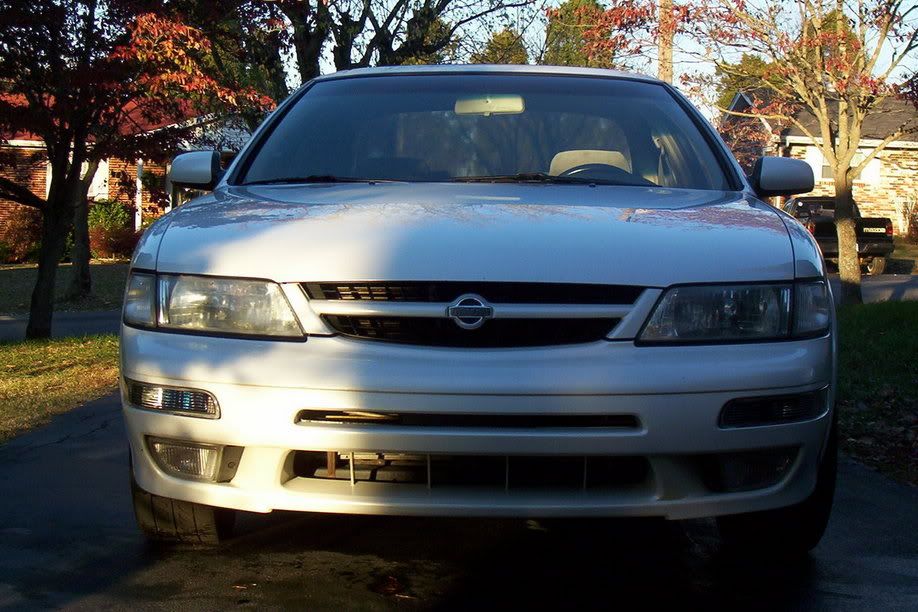
Also here is a picture of before I done the cleaning. They aren't that bad now but the chips in them. I will try to take a picture of what they look like now later. Click to enlarge.

-Brad
I used Mequir's Mirror Glaze Cleaner #17 and Polish #10. I think it old stuff but it does it job.
I just don't wanna do all the wetsanding and then figure out the cleaner I have won't remove the swirls left by the wetsanding which wouldn't be the best thing to happen to me.
I also have 3M rubbing compound.
If I do this I wanna be sure the items I have will get the job done and not leave swirl marks or cloudy headlights.
Also here is a picture of before I done the cleaning. They aren't that bad now but the chips in them. I will try to take a picture of what they look like now later. Click to enlarge.
-Brad
Senior Member
Joined: Oct 2001
Posts: 865
Mxrider52,
What you currently have on hand (3M Rubbing Compound, and the Meg's #10 & 17) will do the job. After wetsanding, the 3M RC will remove 1500 grit and finer sanding marks pretty well. If you start with 1500 grit paper, work through 2000 grit, you'll be fine. And if you can get 3000 grit, there'll be even less sanding marks to remove, which means even less time. After the 3M RC, use the Meg's #17 Clear Plastic Cleaner to remove hazing from the RC (on a side note, it also works well on non-clear plastics such as tails). The Meg's #10 Clear Plastic Polish is non-abrasive, so it isn't very effective on sanding marks (but it actually cleans plastic very well). Meg's named these products different than what most people would think (the cleaner polishes and the polish cleans).
With only using the 3M RC and Meg's #17, and doing it by hand, your results will become more dependent on how much time you're willing to invest. A PC really sped the process up for me (along with using Meg's DACP-#83). I did use the 3M RC by hand to check my progress with wetsanding, so it will work throughout the process. And I've used the Meg's #17 by hand many times on various projects (gauge cluster plastic, clock, tails, etc).
After you get your lenses polished to your satisfaction, you can apply a coat of a good polymer sealant to prevent them from yellowing again (Meg's NXT, 4 Star Ultimate Paint Protection, Klasse, etc all work well). A sealant makes future cleanings a breeze, too. Carnauba based waxes don't last near as long on headlights, but they will work. And after polishing with the #17, no further cleaning should be necessary, as the act of polishing the lens will remove any discoloration on the outside of the light. A good sealant won't protect from future pitting, but I've noticed that increasing my following distance at speed really helps.
Hope this helps.
Dave
What you currently have on hand (3M Rubbing Compound, and the Meg's #10 & 17) will do the job. After wetsanding, the 3M RC will remove 1500 grit and finer sanding marks pretty well. If you start with 1500 grit paper, work through 2000 grit, you'll be fine. And if you can get 3000 grit, there'll be even less sanding marks to remove, which means even less time. After the 3M RC, use the Meg's #17 Clear Plastic Cleaner to remove hazing from the RC (on a side note, it also works well on non-clear plastics such as tails). The Meg's #10 Clear Plastic Polish is non-abrasive, so it isn't very effective on sanding marks (but it actually cleans plastic very well). Meg's named these products different than what most people would think (the cleaner polishes and the polish cleans).
With only using the 3M RC and Meg's #17, and doing it by hand, your results will become more dependent on how much time you're willing to invest. A PC really sped the process up for me (along with using Meg's DACP-#83). I did use the 3M RC by hand to check my progress with wetsanding, so it will work throughout the process. And I've used the Meg's #17 by hand many times on various projects (gauge cluster plastic, clock, tails, etc).
After you get your lenses polished to your satisfaction, you can apply a coat of a good polymer sealant to prevent them from yellowing again (Meg's NXT, 4 Star Ultimate Paint Protection, Klasse, etc all work well). A sealant makes future cleanings a breeze, too. Carnauba based waxes don't last near as long on headlights, but they will work. And after polishing with the #17, no further cleaning should be necessary, as the act of polishing the lens will remove any discoloration on the outside of the light. A good sealant won't protect from future pitting, but I've noticed that increasing my following distance at speed really helps.
Hope this helps.
Dave

Thread
Thread Starter
Forum
Replies
Last Post
AaronL
5th Generation Maxima (2000-2003)
15
Nov 15, 2020 11:52 AM
sdotcarter
6th Generation Maxima (2004-2008)
2
Sep 2, 2015 09:53 PM