


Is my ECM toast?


Thread Starter
Newbie - Just Registered
Joined: Nov 2013
Posts: 8
Is my ECM toast?
Alright. First off I'm a long time lurker but I'm having an issue and hoping someone could help me out. I'd also like to say that I'm not another kid working on his first car. I'm 31 and been working on cars as a paid profession since I was 18. Just wanted to get that out of the way. I have a 95 Maxima with 213xxx miles. It is the obd II ecm. Cylinder 4 has been giving some issues off and on for a while now. I've check static and running compression, new spark plugs (ngk's), new coil (nissan), new injector (you guessed it nissan). It was fine for a few thousand miles but it's acting up again. I checked voltage at the signal wire on the injector and got a voltage reading all over but never hit battery voltage. I checked the other injectors for reference and got full voltage. I checked voltage coming out of the ecm and same thing. I guess my question is should I consider myself in the market for a new ecm? Common sense tells me yes but I've read some posts from some damn smart people on here and figure I'd ask before spending the money. Thanks for your time everyone.
Last edited by SovereignDragon; Jun 10, 2014 at 07:06 PM. Reason: Missing Information

You have the electrical part of the fuel injector circuit a little mixed up. Fuel injectors get a constant 12 volts on the red wire when the ignition is on. The other wire that goes to the ECM gets grounded by the ECM in order to make the injector fire. Voltage does not come FROM the ECM, voltage is grounded out by the ECM.
Since the time duration that the fuel injector is grounded is very short, thousandths of a second, reading it with a voltmeter set to DC volts is grossly unreliable and inaccurate. The reading will be all over the place. You need an oscilloscope for an accurate reading.
A way to cheat is to set the voltmeter on AC volts to read a pulse type signal such as on the fuel injector, ignition coils, crankshaft sensors, VSS, etc. It won't be accurate but you will get a steady reading that you can compare with another injector. The quality of your voltmeter plays a part in what ever reading you get.
That being said, I'm sure you have probably gotten into the right area. ECMs have a very low failure rate. The wiring at the fuel injector connector has a higher failure rate.
I would suggest trying the AC voltage reading trick first, comparing it with other cylinders. If cylinder 4 is still messed up (I assume it will be), you could try running a wire from the ECM to the fuel injector. Don't do anything to the original wire, just piggy-back it.
I have some doubts in my mind about that new fuel injector. If the engine ran OK at first and then started messing up again, that raises questions. Would you consider swapping the fuel injector on cylinder 4 with another cylinder. You should get new o-rings for the other fuel injector, though.
There are repair services for ECMs. The prices vary, you would probably be paying $200 - $250 and the car would be down for several days. A junkyard ECM is probably cheaper.
Since the time duration that the fuel injector is grounded is very short, thousandths of a second, reading it with a voltmeter set to DC volts is grossly unreliable and inaccurate. The reading will be all over the place. You need an oscilloscope for an accurate reading.
A way to cheat is to set the voltmeter on AC volts to read a pulse type signal such as on the fuel injector, ignition coils, crankshaft sensors, VSS, etc. It won't be accurate but you will get a steady reading that you can compare with another injector. The quality of your voltmeter plays a part in what ever reading you get.
That being said, I'm sure you have probably gotten into the right area. ECMs have a very low failure rate. The wiring at the fuel injector connector has a higher failure rate.
I would suggest trying the AC voltage reading trick first, comparing it with other cylinders. If cylinder 4 is still messed up (I assume it will be), you could try running a wire from the ECM to the fuel injector. Don't do anything to the original wire, just piggy-back it.
I have some doubts in my mind about that new fuel injector. If the engine ran OK at first and then started messing up again, that raises questions. Would you consider swapping the fuel injector on cylinder 4 with another cylinder. You should get new o-rings for the other fuel injector, though.
There are repair services for ECMs. The prices vary, you would probably be paying $200 - $250 and the car would be down for several days. A junkyard ECM is probably cheaper.

Senior Member
Joined: Sep 2012
Posts: 451
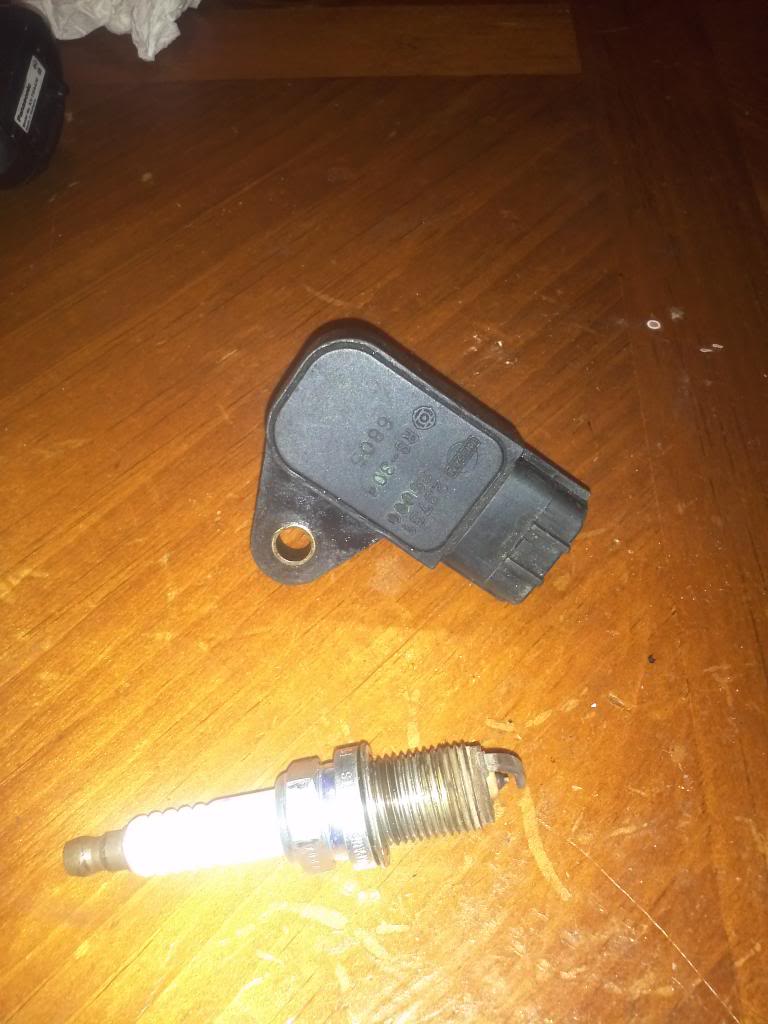
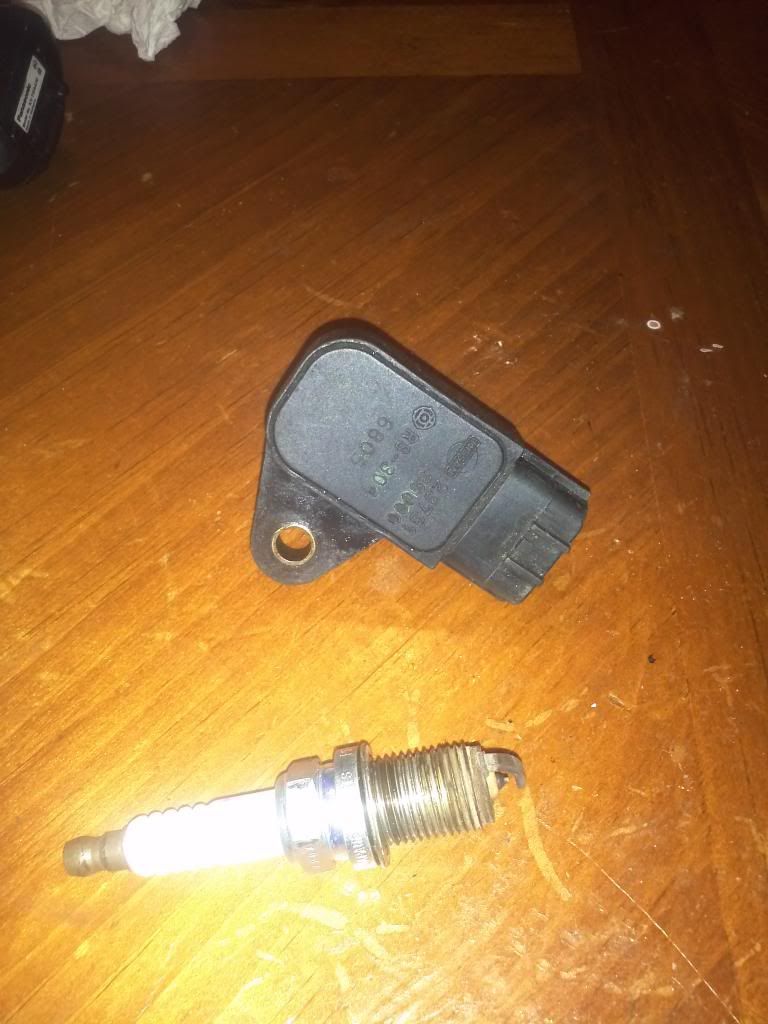
Quick fix for P0303 I changed this sensor when I had a cylinder code that wouldn't go away which was p0305. Your ecu might not be bad and might be this sensor which tells which cylinder how to fire. Here's how I fixed my cylinder misfire. I changed the crankshaft position sensor that hooked up to the transmission and the spark plug for cylinder 3 that only had 4,000 miles on it which was double plat ngk. One year ago I had a cylinder 5 misfire code and it wouldn't go away and I changed the crankshaft sensor on the tranny and it was gone. The misfire only occurred when changing gears and at highway speeds but not at idle and I even changed the maf and that didn't help and the coils were all oem Nissan brand new from about 5,000 miles ago. So the conclusion here is that its not always a bad coil, maf or etc. it could be tiny little things like the crankshaft sensor or a spark plug that could be new but still bad some how. Since the crankshaft sensor is responsible for engine timing, the driver may experience engine backfire or irregular rpm function, if the vehicle starts at all.
Read more: http://www.ehow.com/about_5860665_ba...#ixzz2zTIZR81N
Read more: http://www.ehow.com/about_5860665_ba...#ixzz2zTIZR81N
Last edited by Maxima 97 SE; Jun 10, 2014 at 11:02 PM.
Thread Starter
Newbie - Just Registered
Joined: Nov 2013
Posts: 8
I didn't even think of the crank position sensor. Of course now that you mention it I remember every once in a while it will crank for a few seconds and not fire. Stop cranking and count to 5 and try again and it'll fire right up. As for the scope part I wish I had one. So much better for electrical diagnosis for watching dwell times and checking electrical motors for little glitches. Does anyone know the spec on the crank sensors?




Don't know about the crank sensor but you should replace your FPR too. Those longish starts are symptoms of a tired one. May as well replace the PCV too if its needed because they are pretty much right next to each other.

Senior Member
Joined: Jan 2011
Posts: 3,037
From: Central AR
To support our members' earlier posts, I recently did a full engine harness clean up, check out, and rewrap to find and cure any potential problems. The front crankshaft sensor wiring was oil and dirt soaked. I did find some breaks in the old insulation that I cured with the rewrap.
Since the front crankshaft sensor is often oil soaked the electrical connections did not corrode. However, I found the rear CKPS (the one that doesn't normally catch a lot of oil) to have slightly corroded electrical contacts. When I removed the sensor, I found tiny metal shavings that I later traced to damaged points on the starter drive gear that must have collected around the sensor magnet.
Cleaning CKPS sensors and curing any potential wiring harness breaks with a good rewrap is a way I have found to head off potentially hard to solve problems.
Since the front crankshaft sensor is often oil soaked the electrical connections did not corrode. However, I found the rear CKPS (the one that doesn't normally catch a lot of oil) to have slightly corroded electrical contacts. When I removed the sensor, I found tiny metal shavings that I later traced to damaged points on the starter drive gear that must have collected around the sensor magnet.
Cleaning CKPS sensors and curing any potential wiring harness breaks with a good rewrap is a way I have found to head off potentially hard to solve problems.
Last edited by CS_AR; Jun 12, 2014 at 05:39 AM.
...However, I found the rear CKPS (the one that doesn't normally catch a lot of oil) to have slightly corroded electrical contacts. When I removed the sensor, I found tiny metal shavings that I later traced to damaged points on the starter drive gear that must have collected around the sensor magnet.....
Now THAT observation is golden. Thanks for that
 Next time i clean the throttlebody or do any work near the starter, I'm gonna clean the CKPS too. Awesome
Thread Starter
Newbie - Just Registered
Joined: Nov 2013
Posts: 8
Alright here is a quick update. I was cleaning the shop at work and found an old scope. I snagged it for the evening and watched my injectors. The others were functioning like they should but number 4 was opening slow and slamming shut hence the no fuel caused misfire. I tossed in another real quick and watched the data again. Perfect. I've honestly not played with a scope to much but I might need to break down and get one. I just wonder why my cat is going through injectors like this. This is the fourth one and it's always number 4.
Senior Member
Joined: Jan 2011
Posts: 3,037
From: Central AR
Alright here is a quick update. I was cleaning the shop at work and found an old scope. I snagged it for the evening and watched my injectors. The others were functioning like they should but number 4 was opening slow and slamming shut hence the no fuel caused misfire. I tossed in another real quick and watched the data again. Perfect. I've honestly not played with a scope to much but I might need to break down and get one. I just wonder why my cat is going through injectors like this. This is the fourth one and it's always number 4.
Could be your gas. Today's fuels, while being more environmentally friendly, lose some capabilities, like keeping the fuel pump and injectors lubricated. Look into tcw3. There's a big thread on here. Tcw3 addresses that problem. 3 or 4 ounces per tankful. It may just bring your injector back to life. Also, you should change your fpr too. There may be some fuel pressure issues in the rail.
Last edited by dwapenyi; Jun 13, 2014 at 06:44 AM.

Thread
Thread Starter
Forum
Replies
Last Post