


Octane ratings and altitude...I am stuck


Thread Starter
Senior Member
Joined: Dec 2003
Posts: 446
Octane ratings and altitude...I am stuck
Six months ago, I moved from NC to CO, or in other words, from sea level to mile high. I used to buy 93 octane gas while in NC, but on my way to Denver, octane ratings gradually went to 92 around St. Louis and to 91 closer to Denver.
Conventional wisdom (a.k.a. Super Street magazine ) suggests that the thinner mountain air at high altitudes improves combustion efficiency. My question is this: Are the SS guys full of it? Because I feel like I have lesser torque now. Does rare air lower gasoline's knock point? The only reason I can think of for the octane disparity between altitudes is that 91 acts as 93 up here. As soon as one drives over the Rockies, octane ratings go back up at the pumps.
What is going on?
Conventional wisdom (a.k.a. Super Street magazine
) suggests that the thinner mountain air at high altitudes improves combustion efficiency. My question is this: Are the SS guys full of it? Because I feel like I have lesser torque now. Does rare air lower gasoline's knock point? The only reason I can think of for the octane disparity between altitudes is that 91 acts as 93 up here. As soon as one drives over the Rockies, octane ratings go back up at the pumps.What is going on?

Originally Posted by usmanasif
Six months ago, I moved from NC to CO, or in other words, from sea level to mile high. I used to buy 93 octane gas while in NC, but on my way to Denver, octane ratings gradually went to 92 around St. Louis and to 91 closer to Denver.
Conventional wisdom (a.k.a. Super Street magazine) suggests that the thinner mountain air at high altitudes improves combustion efficiency. My question is this: Are the SS guys full of it? Because I feel like I have lesser torque now. Does rare air lower gasoline's knock point? The only reason I can think of for the octane disparity between altitudes is that 91 acts as 93 up here. As soon as one drives over the Rockies, octane ratings go back up at the pumps.
What is going on?
Conventional wisdom (a.k.a. Super Street magazine
) suggests that the thinner mountain air at high altitudes improves combustion efficiency. My question is this: Are the SS guys full of it? Because I feel like I have lesser torque now. Does rare air lower gasoline's knock point? The only reason I can think of for the octane disparity between altitudes is that 91 acts as 93 up here. As soon as one drives over the Rockies, octane ratings go back up at the pumps.What is going on?
'Altitude - The higher the altitude above sea level, the lower the octane requirement. Modern computer-controlled engines adjust spark timing and air-fuel ratio to compensate for changes in barometric pressure, and thus the effect of altitude on octane requirement is smaller in these vehicles.'
'Most places that sell gasoline offer three octane grades of unleaded gasoline--regular at 87 (R+M)/2, midgrade at 89 (R+M)/2, and premium at 93 (R+M)/2. In high-altitude areas such as the Rocky Mountain Region of the U.S., the (R+M)/2 number may be lower by one or two numbers'
also http://www.valvoline.com/carcare/art...cid=3&scccid=3
'For example, high altitude doesn't require as high of an octane rating, which is why many Rocky Mountain states offer 85-grade gas.'
IIRC from my 00 GLE owners Manual, Nissan recommends at least an octane rating of 85 for owners in higher altitude area's. I don't have an owners manual for my 93, but Nissan seems to recognize higher altitude owners.
Thread Starter
Senior Member
Joined: Dec 2003
Posts: 446
To you sir, I say  times 10. To the two Google inventors I say times 100.
Thanks much! Yeah, the three octane ratings available here are 85, 87, and 91, but the screwballs charge the same as superior grades in the rest of the country. Transportation costs are no different, but I guess anti-gray market policies have to be blamed for this.
times 10. To the two Google inventors I say times 100. Thanks much! Yeah, the three octane ratings available here are 85, 87, and 91, but the screwballs charge the same as superior grades in the rest of the country. Transportation costs are no different, but I guess anti-gray market policies have to be blamed for this.
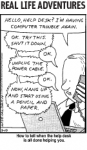

hahaha I thought it was funny.
I guess SS could be right about the thinner mountain air improving combustion efficiency. If memory serves, it should have a lower NOx because of a more complete burn (so more technically efficient) however you just wont have the same power as you will with denser sea-level air (the kind of part of the whole thing). You might notice better mileage, but there are alot of factors with that.
I guess SS could be right about the thinner mountain air improving combustion efficiency. If memory serves, it should have a lower NOx because of a more complete burn (so more technically efficient) however you just wont have the same power as you will with denser sea-level air (the kind of part of the whole thing). You might notice better mileage, but there are alot of factors with that.

yup, that is true once you've past the west of the Miss. river, it becomes harder and harder to find 93 and higher octane ratings. that's from my experience when I drove from SC to LA. I don't know if the 'altitude' has anything to do with combustion cuz the vast majority of southern california are below sea level and they still don't serve anything beyond 91 octance and still they're charging 25% higher than national avg. one thing I do know for sure that is beneficial for combustion is oxygen.
-Ban
-Ban

Senior Member
Joined: Jun 2001
Posts: 497
From: Colorado Springs
The worst thing about high altitude is the major loss of power. You guys at sea level don't know how lucky you are. I read somewhere that the loss is about 3% for every 1,000 feet increase. After just getting back from Arizona I'd say that is about right. My car feels like a dog at 6,500 feet.

Thread
Thread Starter
Forum
Replies
Last Post
tarun900
4th Generation Maxima (1995-1999)
19
Dec 20, 2021 06:57 PM
05RLS2
7th Generation Maxima (2009-2015)
4
Apr 14, 2016 11:49 AM
RealityCheck
4th Generation Maxima (1995-1999)
7
Oct 2, 2015 06:34 PM
HerpDerp1919
3rd Generation Maxima (1989-1994)
2
Sep 29, 2015 02:02 PM

