


14" wheels with stock size rotors/calipers


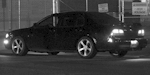


I don't think you'd be able to fit a 14" wheel on the car. I've got 4 different sets of 15" wheels, stock SE sawblades, steelies, 15" aftermarket wheels, and millenia wheels, and none of them have more than about 1/4" clearance between the caliper and wheel.
Thanks guys-
I just need to bite the bullet and get a 15x7 or 15x7.5 lightweight rim for the track. I think my light 15x6.5 rims are not working out that great on the track with 225/50/15 tires. I dunno but I guess it warrants a separate thread which I will post on the autocross/track forum. Cheers
I just need to bite the bullet and get a 15x7 or 15x7.5 lightweight rim for the track. I think my light 15x6.5 rims are not working out that great on the track with 225/50/15 tires. I dunno but I guess it warrants a separate thread which I will post on the autocross/track forum. Cheers
The wisdom that I have heard is for a/x and even track- the smaller the rim the better handling the car. It comes down to physics-
1) it takes more energy (i.e. robs HP) to rotate a large wheel (of same mass) compared to small.
2) Also (I havent heard this but it makes sense to me) a larger, more massive wheel would act more as a gyroscope and tend to keep momentum rather than turn.
re: 1) same principle when ice skaters are spinning in place and pull arms and legs toward center then spin alot faster (rotational energy stays the same). Also like when you are spinning on a chair and kick your legs in/out you turn faster or slower.
...But there is the fact that a larger wheel has better steering response and a (somewhat) bigger patch on the surface.. Ive heard the ideal would be big super light wheels.
1) it takes more energy (i.e. robs HP) to rotate a large wheel (of same mass) compared to small.
2) Also (I havent heard this but it makes sense to me) a larger, more massive wheel would act more as a gyroscope and tend to keep momentum rather than turn.
re: 1) same principle when ice skaters are spinning in place and pull arms and legs toward center then spin alot faster (rotational energy stays the same). Also like when you are spinning on a chair and kick your legs in/out you turn faster or slower.
...But there is the fact that a larger wheel has better steering response and a (somewhat) bigger patch on the surface.. Ive heard the ideal would be big super light wheels.

None of that matters much if your running the same OD. Tire weighs something too you know. Smaller/lighter rim = bigger heavier tire. Obviously the inverse is true. Super light 17's is best IMO. I have no proof. Just gut feeling.
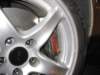
I don't think a 14" wheel will clear the brakes. It's been my experience that the overwhelming factor in auto-x is driver skill. Improving this would be the fastest way into quicker times. Much more than finding small ways to get the car to perform.
Originally Posted by Spaniard
Anyone know if this is even possible?
Originally Posted by Broaner
None of that matters much if your running the same OD.
Wheels are heavier than tires. If you ran a 15" rim that weighed 20 pounds and a 19" rim that weighed 20 pounds, the 19" car would be slower.
The more mass that is located farther from the axis, the harder it is to rotate.
Actually, wheels are often lighter than tires. My 17x8 Evos are not lightweight wheels by any standard at 22.5 pounds each, yet my Kumho Ecsta Supras in 235/45/R17 are 25 pounds, which is a pretty average tire weight in that size....
It is generally true that, given an OD, a smaller wheel + bigger-sidewall tire combo will have less static mass and rotational mass than a larger wheel + smaller-sidewall tire combo. The bigger the rim, the farther out most of the mass is from the center. So even though the tires on a 14" rim might weigh more than the tires on a 17" rim (I'm not even sure this is true because low-profile tires weigh more per unit of area), the 14" wheel/tire combo would be lighter for practical purposes.
It is generally true that, given an OD, a smaller wheel + bigger-sidewall tire combo will have less static mass and rotational mass than a larger wheel + smaller-sidewall tire combo. The bigger the rim, the farther out most of the mass is from the center. So even though the tires on a 14" rim might weigh more than the tires on a 17" rim (I'm not even sure this is true because low-profile tires weigh more per unit of area), the 14" wheel/tire combo would be lighter for practical purposes.
Originally Posted by mzmtg
Wheels are heavier than tires. If you ran a 15" rim that weighed 20 pounds and a 19" rim that weighed 20 pounds, the 19" car would be slower.
The more mass that is located farther from the axis, the harder it is to rotate.
The more mass that is located farther from the axis, the harder it is to rotate.
The second part of your statement is very true. We all know this to be true. Yet modern race cars run the largest diameter possible. Why? Because it has been proven time and time again that the handling advantage that the lower profile tire gives the car is superior to the weight advantage which was lost.
Spanaird, back to your original question. I don't know what the your class rules are but I'd venture that you should go with the largest(Up to 18"?) and widest(Up to 9") possible combo you can find. We all know that you are not into this for straight line performance. The vids and pics I've seen to you screem to me "Roll-over city." With a tire so tall rollover is inevitable. The tire is not designed to be grippy on its sidewall. Some tires have tread that go up the sidewall a bit but that is mostly for look. If you stay on high profile/small rim you should compensate by using a tire which has a very strong sidewall. These differences in construction are present in the industry. Kumho is a perfect example. The 712 has an incredibly strong sidewall. It weighs 29Ibs in 235/45/17. The MX has a softer sidewall. It weighs 20Ibs in the same size. Each tire has its own intended application. This difference will negate any inertia gain that would be had with the smaller rim. At the minimum I think you should run a 16". But I'm not your mother.
Well, I guess its fair to say that MOST wheels are heavier than tires- There are alot of wheels out there that are way over 20 lbs. I assume that a majority of the buying public only care about looks... Not so us Max max performance people.
A point that I should have made- I have no problem going with smaller than standard OD. Ive been enjoying the smaller OD with a 225/50/15 tire- noticable handling improvment over 225/60/15.
In an ideal world, I guess I would have SSR C 16x7.5 wheels (12.8 lbs) paired with Toyo T1-S 225/40/16 (19 lbs). Problem there is - its $1850 before shipping.
A point that I should have made- I have no problem going with smaller than standard OD. Ive been enjoying the smaller OD with a 225/50/15 tire- noticable handling improvment over 225/60/15.
In an ideal world, I guess I would have SSR C 16x7.5 wheels (12.8 lbs) paired with Toyo T1-S 225/40/16 (19 lbs). Problem there is - its $1850 before shipping.
Yea, 15 is the way to go for performance, if not looks. Tirerack doesnt have really light wheels in 15 tho.
Since no one has responded to my other post, what do you all think about the performance gains with a 15x7 vs 15x6.5 rim? I like 225 width tires.
Since no one has responded to my other post, what do you all think about the performance gains with a 15x7 vs 15x6.5 rim? I like 225 width tires.

Not DAVEB the parts guy

Joined: Aug 2000
Posts: 8,549
Originally Posted by Broaner
Yet modern race cars run the largest diameter possible. Why? Because it has been proven time and time again that the handling advantage that the lower profile tire gives the car is superior to the weight advantage which was lost.
Come on Dave. F1 is in an entire different arena. I do find that very interesting though. So, they run those setups for weight or gradual breakaway or something else? I can't imagine breakaway being the driving reason because once you realize your losing traction in an F1 your already in the wall. Fine, all non-F1 race cars use the largest diameter possibile. If street based race cars need big brakes why do they run larger than 17+?
Spanaird, I was going to suggest a smaller OD. What type of tracks do you run on primarily? The setup your running now makes better gearing at the price of top speed. What is your top speed with that setup? FYI, tirerack ships for free on orders that big.
Spanaird, I was going to suggest a smaller OD. What type of tracks do you run on primarily? The setup your running now makes better gearing at the price of top speed. What is your top speed with that setup? FYI, tirerack ships for free on orders that big.
F1 cars run such small wheels to limit the brake size actually. Street cars that use large wheels generally do so for looks not performance, except when you get up into the Porsche/Ferrari ranks.
Originally Posted by Spaniard
Yea, 15 is the way to go for performance, if not looks. Tirerack doesnt have really light wheels in 15 tho.
Since no one has responded to my other post, what do you all think about the performance gains with a 15x7 vs 15x6.5 rim? I like 225 width tires.
Since no one has responded to my other post, what do you all think about the performance gains with a 15x7 vs 15x6.5 rim? I like 225 width tires.

check this article out http://www.progressauto.com/delsol/hondaarticle3.html
Originally Posted by deezo
The name of the game is traction so go for the 15x7 rim. Why not go with Rota Subzeros? They do come in 15's.
Anyone know of an affordable light 15x7 in 5x114.3?
I just did an unrelated Google search for "nissan part number trailing arm bushing maxima" and found a thread on an engineer's board that may be of interest to people in this thread. It talks about the advantages and disadvantages of larger rims and low-profile tires. Interesting stuff.
http://www.eng-tips.com/viewthread.cfm?qid=56923
Note this point: Another point here is the type of suspenion being connected too. The camber control on some vehicles is good and they can keep low profile tires square to the road. Good old solid (beam, live, etc) axles do this well.
Cars with strut + lower a-arm or trailing arm don't do well at all! You need to play with the camber so when the car is loaded in a turn the tire is square to the road. Old vehicles generally have lots of slack in the bushings too (just popping poly bushes in can show how bad some inaccurate some geometries/manufacturers are)
Score another one for the 4th and 5th gens' multi-link beam .
.
http://www.eng-tips.com/viewthread.cfm?qid=56923
Note this point: Another point here is the type of suspenion being connected too. The camber control on some vehicles is good and they can keep low profile tires square to the road. Good old solid (beam, live, etc) axles do this well.
Cars with strut + lower a-arm or trailing arm don't do well at all! You need to play with the camber so when the car is loaded in a turn the tire is square to the road. Old vehicles generally have lots of slack in the bushings too (just popping poly bushes in can show how bad some inaccurate some geometries/manufacturers are)
Score another one for the 4th and 5th gens' multi-link beam
.
Originally Posted by VQuick
Score another one for the 4th and 5th gens' multi-link beam
.Independent rear suspension setup for racing will have a lot of camber added making the tires sit like this / \ . So when the car is taking a hard turn, the tire will square up with the track.
A Del Sol weighs 2800Ibs? Wow! My whole perception of that car just changed in an instant. I thought they were slow because of the engine but now I know they are slow because of the engine and being fat. It must be an iron block and a lot of heavy metals.
But while the IRS car isn't turing its chewing up the tire which makes it much more suited for short races.
Spanaird, when you throw affordable into the request it becomes extremely difficult to fufill. Kosei Racing rims on tire rack are very affordable, very light and 15x7 in our bolt pattern. If I recall correctly they are right around $100/rim. I've never seen them in a non-drag situation so I would question their strength.
But while the IRS car isn't turing its chewing up the tire which makes it much more suited for short races.
Spanaird, when you throw affordable into the request it becomes extremely difficult to fufill. Kosei Racing rims on tire rack are very affordable, very light and 15x7 in our bolt pattern. If I recall correctly they are right around $100/rim. I've never seen them in a non-drag situation so I would question their strength.
Originally Posted by Broaner
Spanaird, when you throw affordable into the request it becomes extremely difficult to fufill. Kosei Racing rims on tire rack are very affordable, very light and 15x7 in our bolt pattern. If I recall correctly they are right around $100/rim. I've never seen them in a non-drag situation so I would question their strength.

3 14 inch rims is running on the side theyr riding on the side? lol so if i am correct, if i want to race, the best thing to do is to stick with 15s and get some good tires? i really dont care about how my rims look, the max is turning from a slow beauty into a fast beast so i was just making sure that smaller (lighter) rims would be ideal for a racing situation.

Thread
Thread Starter
Forum
Replies
Last Post
The Frye
7th Generation Maxima (2009-2015)
6
Sep 2, 2021 11:03 AM
Justin Kroll
5th Generation Maxima (2000-2003)
7
Sep 2, 2015 11:06 AM