


Power steering fluid in my gas tank


Senior Member
Joined: Oct 2001
Posts: 865
A quick point about our fuel and power steering systems. Go look at the rubber lines on your power steering reservoir. They are the same petroleum resistant "fuel" lines as our fuel systems. They are manufactured with materials to handle constant contact with petroleum products.
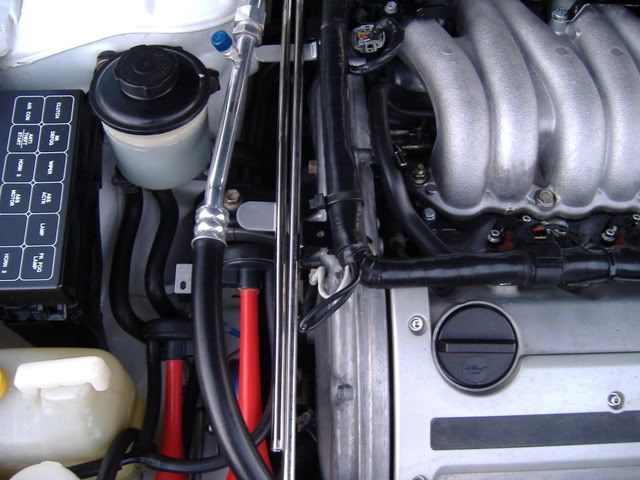
Ordinary rubber (as used in some of our bushings and even most tires) is not able to withstand prolonged contact with petroleum. But "fuel line" is not plain rubber. That's why it is used where it is. No theory involved here. The above systems are in constant contact with their respective fluids. In my Maxima's case, the same lines for 12 years, and my old '78 Camaro's case, for 23 years. If those lines ever need replaced, the replacement lines must be rated for contact with petroleum products, such as the reinforced petroleum resistant 3/8" fuel line (or the metric equivalent if you prefer) available at most auto parts stores for about $.99 a foot (last time I bought some several years ago).
Dave
Ordinary rubber (as used in some of our bushings and even most tires) is not able to withstand prolonged contact with petroleum. But "fuel line" is not plain rubber. That's why it is used where it is. No theory involved here. The above systems are in constant contact with their respective fluids. In my Maxima's case, the same lines for 12 years, and my old '78 Camaro's case, for 23 years. If those lines ever need replaced, the replacement lines must be rated for contact with petroleum products, such as the reinforced petroleum resistant 3/8" fuel line (or the metric equivalent if you prefer) available at most auto parts stores for about $.99 a foot (last time I bought some several years ago).
Dave




Newbie - Just Registered
Joined: Feb 2009
Posts: 3
From: Middle Tennessee & East Tennessee
Congradulations, you just added some top cylinder lubricant. Drive and don't worry about it.
At worst you added a quart, 32 oz.
The tank is roughly 20 gallons
You are looking at about 1.2% oil in your gas.
FUEL LINES:
Last time I checked we have SAE 30R9 fuel injector rated fuel lines in our cars. http://www.gates.com/common/download...chTipsForm.pdf
They are Flouroelastomer lined (think Viton), and laugh at 100% power steering fluid. You have 1% power steering fluid in your gasoline.
You won't start having trouble with it until you get contamination levels above 5-10% or so. Even then, it will be contaminated engine oil and fouled O2 sensors that you will need to worry about.
Drive and don't worry.
-Jim
At worst you added a quart, 32 oz.
The tank is roughly 20 gallons
You are looking at about 1.2% oil in your gas.
FUEL LINES:
Last time I checked we have SAE 30R9 fuel injector rated fuel lines in our cars. http://www.gates.com/common/download...chTipsForm.pdf
They are Flouroelastomer lined (think Viton), and laugh at 100% power steering fluid. You have 1% power steering fluid in your gasoline.
You won't start having trouble with it until you get contamination levels above 5-10% or so. Even then, it will be contaminated engine oil and fouled O2 sensors that you will need to worry about.
Drive and don't worry.
-Jim
Last edited by Jadavis; Feb 24, 2009 at 12:55 PM.

Congradulations, you just added some top cylinder lubricant. Drive and don't worry about it.
At worst you added a quart, 32 oz.
The tank is roughly 20 gallons
You are looking at about 1.2% oil in your gas.
FUEL LINES:
Last time I checked we have SAE 30R9 fuel injector rated fuel lines in our cars. http://www.gates.com/common/download...chTipsForm.pdf
They are Flouroelastomer lined (think Viton), and laugh at 100% power steering fluid. You have 1% power steering fluid in your gasoline.
You won't start having trouble with it until you get contamination levels above 5-10% or so. Even then, it will be contaminated engine oil and fouled O2 sensors that you will need to worry about.
Drive and don't worry.
-Jim
At worst you added a quart, 32 oz.
The tank is roughly 20 gallons
You are looking at about 1.2% oil in your gas.
FUEL LINES:
Last time I checked we have SAE 30R9 fuel injector rated fuel lines in our cars. http://www.gates.com/common/download...chTipsForm.pdf
They are Flouroelastomer lined (think Viton), and laugh at 100% power steering fluid. You have 1% power steering fluid in your gasoline.
You won't start having trouble with it until you get contamination levels above 5-10% or so. Even then, it will be contaminated engine oil and fouled O2 sensors that you will need to worry about.
Drive and don't worry.
-Jim
i was just doing the math when i realized there was another page to this.
There's 128oz to a gallon..
One of those small bottles is what..12 oz?
so not even on a full take of gas you have 1oz (PSF) to every gallon? take a gallon of gas and drop 1 oz of PS and i bet you wont even see a discoloration or any difference in gas. Heck i bet we put more crap through our tanks getten gas at AM/PM then that...


Car starts when cold, but then dies few minutes later and won't restart
Can this thread close? I've burned a whole tank of gas in my Max since it was started, so if it was my car the question would be long gone.
Dave
Dave
Not when the problems are only now beginning.
I siphoned out about 8 oz. of fluid and gas mixture through the filler neck a few days after I started this thread.
I decided to take the "keep topping it off" suggestion, and that worked...until now.
About a month ago, I got a P1400 code on the EGR system. Last year, I had a P0400 that came on, and then went off three weeks later, never to return.
When I was sitting at a stop light, the engine started to hunt, or however one describes the up and down surging of the engine, and then it stalled.
It would not restart. I keep the starter going for what seemed like 30 seconds, and it restarted. It worked fine for about a week: no stalling or surging.
And then, it happened again. The car started fine and I headed over to the gas station across the street to fill up. When I was done filling, and tried to restart it, it wouldn't, and it did take me almost a minute to restart it.
This is the way it's been for the past several weeks: runs when cold; doesn't restart when warm after turning it off; and letting it cool off brings me back to being able to restart it.
Also, when the engine is cool and restarts, I don't smell anything out of the ordinary; but, five minutes later, when the engine has warmed and turned off, the engine will not start without keeping the starter going, and I also smell something really obnoxious.
In retrospect, I should have had the tank cleaned rather than being a rolling car experiment.
If there was still PS fluid in the tank, then I would think the car would not start at all, regardless of the engine temp.
Other than O2 sensors, IAT, and EGR valve, what others components are offline (open circuit) when the engine is cold?
If this restart problem is only present when the engine is warm, is there a connection that I can open to prevent that from happening and I can get to my mechanic without fear of stalling out on the open road?
I really need people's assistance here.
Last edited by dr-rjp; Jul 22, 2009 at 12:36 PM. Reason: type
What I would do:
Drive the car as is, but top off the fuel tank every 50 miles or so. This will gradually dilute the gas/PS fluid mixture to a harmless percentage in a shorter time. My opinion is that the fuel hoses and pump simply coming in contact with PS fluid for a short time will not have any long term affects.
It's an opinion, your results may vary.
That's what I had been doing until the problems started now.


in my experience(and it is documented) you sir are about to find your self on the corner of fuched and up!
drop the tank and get ready for some serious replacements.
what you will replace: the fuel pump and filter screen, the fuel filter, and possibly injectors, your car will run fine now, but give it a few days and watch what happens.
pull the intake manifold off(dont forget the 4 bolts on the back) and check your injectors, seperate your fuel rail to make sure you dont have any crap in there.
or
just leave it alone and curse yourself for following the advice of thoes who have not experienced this kind of problem.
drop the tank and get ready for some serious replacements.
what you will replace: the fuel pump and filter screen, the fuel filter, and possibly injectors, your car will run fine now, but give it a few days and watch what happens.
pull the intake manifold off(dont forget the 4 bolts on the back) and check your injectors, seperate your fuel rail to make sure you dont have any crap in there.
or
just leave it alone and curse yourself for following the advice of thoes who have not experienced this kind of problem.
Sorry, Dave, but I just can't do that.
Not when the problems are only now beginning.
I siphoned out about 8 oz. of fluid and gas mixture through the filler neck a few days after I started this thread.
I decided to take the "keep topping it off" suggestion, and that worked...until now.
About a month ago, I got a P1400 code on the EGR system. Last year, I had a P0400 that came on, and then went off three weeks later, never to return.
When I was sitting at a stop light, the engine started to hunt, or however one describes the up and down surging of the engine, and then it stalled.
It would not restart. I keep the starter going for what seemed like 30 seconds, and it restarted. It worked fine for about a week: no stalling or surging.
And then, it happened again. The car started fine and I headed over to the gas station across the street to fill up. When I was done filling, and tried to restart it, it wouldn't, and it did take me almost a minute to restart it.
This is the way it's been for the past several weeks: runs when cold; doesn't restart when warm after turning it off; and letting it cool off brings me back to being able to restart it.
Also, when the engine is cool and restarts, I don't smell anything out of the ordinary; but, five minutes later, when the engine has warmed and turned off, the engine will not start without keeping the starter going, and I also smell something really obnoxious.
In retrospect, I should have had the tank cleaned rather than being a rolling car experiment.
If there was still PS fluid in the tank, then I would think the car would not start at all, regardless of the engine temp.
Other than O2 sensors, IAT, and EGR valve, what others components are offline (open circuit) when the engine is cold?
If this restart problem is only present when the engine is warm, is there a connection that I can open to prevent that from happening and I can get to my mechanic without fear of stalling out on the open road?
I really need people's assistance here.
Not when the problems are only now beginning.
I siphoned out about 8 oz. of fluid and gas mixture through the filler neck a few days after I started this thread.
I decided to take the "keep topping it off" suggestion, and that worked...until now.
About a month ago, I got a P1400 code on the EGR system. Last year, I had a P0400 that came on, and then went off three weeks later, never to return.
When I was sitting at a stop light, the engine started to hunt, or however one describes the up and down surging of the engine, and then it stalled.
It would not restart. I keep the starter going for what seemed like 30 seconds, and it restarted. It worked fine for about a week: no stalling or surging.
And then, it happened again. The car started fine and I headed over to the gas station across the street to fill up. When I was done filling, and tried to restart it, it wouldn't, and it did take me almost a minute to restart it.
This is the way it's been for the past several weeks: runs when cold; doesn't restart when warm after turning it off; and letting it cool off brings me back to being able to restart it.
Also, when the engine is cool and restarts, I don't smell anything out of the ordinary; but, five minutes later, when the engine has warmed and turned off, the engine will not start without keeping the starter going, and I also smell something really obnoxious.
In retrospect, I should have had the tank cleaned rather than being a rolling car experiment.
If there was still PS fluid in the tank, then I would think the car would not start at all, regardless of the engine temp.
Other than O2 sensors, IAT, and EGR valve, what others components are offline (open circuit) when the engine is cold?
If this restart problem is only present when the engine is warm, is there a connection that I can open to prevent that from happening and I can get to my mechanic without fear of stalling out on the open road?
I really need people's assistance here.
This is not just a long shot, its most likely the culprit...
I would have changed it by now.
I am not going to make any claims, since i have no experience putting PS fluid anywhere other than the PS reservoir
But i would start off with the simple stuff LIKE the Fuel Filter...
Maybe hit up one of the guys on the classifieds and c if you can get the whole evap system on the cheap? Make sure you get the right one…I know on my 95 I don’t have electronic EVAP its all mechanical…so you def don’t want mine…u want something specific to your model…
OR check www.car-part.com and make some calls....
I really doubt anything got messed up regarding the motor/injectors etc....however, the EVAP system COULD VERY LIKELY be one of the major things to fail with the contaminants involved, but like I said take it slow and replace the easiest stuff first…Live and learn I guess….
I would have changed it by now.
I am not going to make any claims, since i have no experience putting PS fluid anywhere other than the PS reservoir
But i would start off with the simple stuff LIKE the Fuel Filter...
Maybe hit up one of the guys on the classifieds and c if you can get the whole evap system on the cheap? Make sure you get the right one…I know on my 95 I don’t have electronic EVAP its all mechanical…so you def don’t want mine…u want something specific to your model…
OR check www.car-part.com and make some calls....
I really doubt anything got messed up regarding the motor/injectors etc....however, the EVAP system COULD VERY LIKELY be one of the major things to fail with the contaminants involved, but like I said take it slow and replace the easiest stuff first…Live and learn I guess….
My guesses are pointing in this direction as well...but u never know...Coinsidences like this are NOT unheard of...lol
Haha I was going to say the same thing. It seems to be unrelated because of how long it took to happen and how often the same thing happens to other people with the same car who didn't dump PS fluid in their gas tank... but, it could be a series of events that lead up to this happening. Like the PS fluid in the tank started a chain and that final link caused the symptoms.
NOT-SO-BAD News vs. Worse News?
Yes, I remember everyone who told me so, for what it's worth to YOU.
But, I also remember everyone who told me it's no biggie.
Now, I hear that it may be unrelated.
This isn't about awarding props to whomever got it right the first time. This is about providing the steps that I need to do now, but at a time when I don't have much money to spend.
For example, I have to sell a set of H&R sport springs that I never put on my car. I'll take $150 for them, plus shipping, if anyone is interested.
Now, a few corrections.
When I said that the engine runs when it's cold, I meant to say that it will run for less than 10 minutes at a time, depending on the ambient temperature.
In the afternoon, when it's in the mid 90's, I'm lucky if I can keep the engine going for three minutes.
For example, it started yesterday morning around 10am, as it usually does, and I took it for a five minute ride before it started to surge and act like it was not getting enough fuel (so a cloged fuel filter makes sense).
I park it in my garage, and try to restart it. No luck. It justs keeps on turning.
I go back out around 2pm in the hot afternoon, start it and drive it for a about two minutes, and after pulling it into my garage, it dies.
As I mentioned, the engine dying is accompanied by an awful and totally unusual smell: it does not smell like gasoline or power steering fluid. It smells closer to burning rubber than to a liquid petroleum product.
My tank is about 3/4 full.
So what I would like to do are the things that I can do by myself, keeping in mind have chronic neck and shoulder pain from an old accident, and that I am physically limited for doing something that's a ***** to take off and clean or replace, like the EGR tube.
I can change the fuel filter. I'll then open up the old filter to see if it's clogged with PS fluid. That would, at least, confirm or deny that the PS fluid made it that far.
I can check my spark plugs for fouling, and change them if needed.
I can test for vacuum leaks. I can test the EGR valve. I can test the circuitry if I can get to it.
What I discover and how I fix it will be of use for others on the forum because so many people had such conflicting ideas and suggestions, indicating that this is not your usual, run-of-the-mill problems
If I had the money, I'd do a 3.5 swap. But, I am at the other end of the spectrum where i'm a victim of this crappy economy and buying a fuel filter is a major purchase for me.
Yes, I screwed up my car and I feel as badly as any one of you. not having the use of my car for more than a month is not a lot of fun.
Thanks, and I appreciate everything you said and everyone who said it - whether I wanted to hear it or not.
But, I also remember everyone who told me it's no biggie.
Now, I hear that it may be unrelated.
This isn't about awarding props to whomever got it right the first time. This is about providing the steps that I need to do now, but at a time when I don't have much money to spend.
For example, I have to sell a set of H&R sport springs that I never put on my car. I'll take $150 for them, plus shipping, if anyone is interested.
Now, a few corrections.
When I said that the engine runs when it's cold, I meant to say that it will run for less than 10 minutes at a time, depending on the ambient temperature.
In the afternoon, when it's in the mid 90's, I'm lucky if I can keep the engine going for three minutes.
For example, it started yesterday morning around 10am, as it usually does, and I took it for a five minute ride before it started to surge and act like it was not getting enough fuel (so a cloged fuel filter makes sense).
I park it in my garage, and try to restart it. No luck. It justs keeps on turning.
I go back out around 2pm in the hot afternoon, start it and drive it for a about two minutes, and after pulling it into my garage, it dies.
As I mentioned, the engine dying is accompanied by an awful and totally unusual smell: it does not smell like gasoline or power steering fluid. It smells closer to burning rubber than to a liquid petroleum product.
My tank is about 3/4 full.
So what I would like to do are the things that I can do by myself, keeping in mind have chronic neck and shoulder pain from an old accident, and that I am physically limited for doing something that's a ***** to take off and clean or replace, like the EGR tube.
I can change the fuel filter. I'll then open up the old filter to see if it's clogged with PS fluid. That would, at least, confirm or deny that the PS fluid made it that far.
I can check my spark plugs for fouling, and change them if needed.
I can test for vacuum leaks. I can test the EGR valve. I can test the circuitry if I can get to it.
What I discover and how I fix it will be of use for others on the forum because so many people had such conflicting ideas and suggestions, indicating that this is not your usual, run-of-the-mill problems
If I had the money, I'd do a 3.5 swap. But, I am at the other end of the spectrum where i'm a victim of this crappy economy and buying a fuel filter is a major purchase for me.
Yes, I screwed up my car and I feel as badly as any one of you. not having the use of my car for more than a month is not a lot of fun.
Thanks, and I appreciate everything you said and everyone who said it - whether I wanted to hear it or not.
Yes, I remember everyone who told me so, for what it's worth to YOU.
But, I also remember everyone who told me it's no biggie.
Now, I hear that it may be unrelated.
This isn't about awarding props to whomever got it right the first time. This is about providing the steps that I need to do now, but at a time when I don't have much money to spend.
For example, I have to sell a set of H&R sport springs that I never put on my car. I'll take $150 for them, plus shipping, if anyone is interested.
Now, a few corrections.
When I said that the engine runs when it's cold, I meant to say that it will run for less than 10 minutes at a time, depending on the ambient temperature.
In the afternoon, when it's in the mid 90's, I'm lucky if I can keep the engine going for three minutes.
For example, it started yesterday morning around 10am, as it usually does, and I took it for a five minute ride before it started to surge and act like it was not getting enough fuel (so a cloged fuel filter makes sense).
I park it in my garage, and try to restart it. No luck. It justs keeps on turning.
I go back out around 2pm in the hot afternoon, start it and drive it for a about two minutes, and after pulling it into my garage, it dies.
As I mentioned, the engine dying is accompanied by an awful and totally unusual smell: it does not smell like gasoline or power steering fluid. It smells closer to burning rubber than to a liquid petroleum product.
My tank is about 3/4 full.
So what I would like to do are the things that I can do by myself, keeping in mind have chronic neck and shoulder pain from an old accident, and that I am physically limited for doing something that's a ***** to take off and clean or replace, like the EGR tube.
I can change the fuel filter. I'll then open up the old filter to see if it's clogged with PS fluid. That would, at least, confirm or deny that the PS fluid made it that far.
I can check my spark plugs for fouling, and change them if needed.
I can test for vacuum leaks. I can test the EGR valve. I can test the circuitry if I can get to it.
What I discover and how I fix it will be of use for others on the forum because so many people had such conflicting ideas and suggestions, indicating that this is not your usual, run-of-the-mill problems
If I had the money, I'd do a 3.5 swap. But, I am at the other end of the spectrum where i'm a victim of this crappy economy and buying a fuel filter is a major purchase for me.
Yes, I screwed up my car and I feel as badly as any one of you. not having the use of my car for more than a month is not a lot of fun.
Thanks, and I appreciate everything you said and everyone who said it - whether I wanted to hear it or not.
But, I also remember everyone who told me it's no biggie.
Now, I hear that it may be unrelated.
This isn't about awarding props to whomever got it right the first time. This is about providing the steps that I need to do now, but at a time when I don't have much money to spend.
For example, I have to sell a set of H&R sport springs that I never put on my car. I'll take $150 for them, plus shipping, if anyone is interested.
Now, a few corrections.
When I said that the engine runs when it's cold, I meant to say that it will run for less than 10 minutes at a time, depending on the ambient temperature.
In the afternoon, when it's in the mid 90's, I'm lucky if I can keep the engine going for three minutes.
For example, it started yesterday morning around 10am, as it usually does, and I took it for a five minute ride before it started to surge and act like it was not getting enough fuel (so a cloged fuel filter makes sense).
I park it in my garage, and try to restart it. No luck. It justs keeps on turning.
I go back out around 2pm in the hot afternoon, start it and drive it for a about two minutes, and after pulling it into my garage, it dies.
As I mentioned, the engine dying is accompanied by an awful and totally unusual smell: it does not smell like gasoline or power steering fluid. It smells closer to burning rubber than to a liquid petroleum product.
My tank is about 3/4 full.
So what I would like to do are the things that I can do by myself, keeping in mind have chronic neck and shoulder pain from an old accident, and that I am physically limited for doing something that's a ***** to take off and clean or replace, like the EGR tube.
I can change the fuel filter. I'll then open up the old filter to see if it's clogged with PS fluid. That would, at least, confirm or deny that the PS fluid made it that far.
I can check my spark plugs for fouling, and change them if needed.
I can test for vacuum leaks. I can test the EGR valve. I can test the circuitry if I can get to it.
What I discover and how I fix it will be of use for others on the forum because so many people had such conflicting ideas and suggestions, indicating that this is not your usual, run-of-the-mill problems
If I had the money, I'd do a 3.5 swap. But, I am at the other end of the spectrum where i'm a victim of this crappy economy and buying a fuel filter is a major purchase for me.
Yes, I screwed up my car and I feel as badly as any one of you. not having the use of my car for more than a month is not a lot of fun.
Thanks, and I appreciate everything you said and everyone who said it - whether I wanted to hear it or not.

Do you have a photo of where it's located, or is it easy to spot
I've pulled the filter out and away from the firewall clamp, but I cannot raise it or twist it any better than that.
i did find a post where someone recommended cutting both the top and bottom rubber lines, removing the filter with the cut lines, and then replacing both ends with new rubber hose.
Sounds reasonable, but I cannot see where the fuel line from the tank connects to the inlet of the filter.
After searching all through the previous advice, you would think that someone added a photo or two of these.
But, no such luck. It's not shown in my manual, either.
Had Nissan made the inlet hose about 2" longer, it would be no problem.
Senior Member
Joined: Oct 2001
Posts: 865
Do you have ABS that is blocking your view down the firewall? It connects near the bottom of the firewall, towards the driver's wheel side. ABS system may block the view. The fuel lines come from under the car (driver's side), then bend up the firewall. Have you checked access from under the car?
It's a PITA with the stock hoses, even without ABS. I highly recommend just replacing the hoses with new fuel hose. I know that advice kinda sucks right now, but with stock hoses on there, there aren't too many options.
It's a PITA with the stock hoses, even without ABS. I highly recommend just replacing the hoses with new fuel hose. I know that advice kinda sucks right now, but with stock hoses on there, there aren't too many options.


Member
Joined: Oct 2008
Posts: 53
A quick point about our fuel and power steering systems. Go look at the rubber lines on your power steering reservoir. They are the same petroleum resistant "fuel" lines as our fuel systems. They are manufactured with materials to handle constant contact with petroleum products.
Ordinary rubber (as used in some of our bushings and even most tires) is not able to withstand prolonged contact with petroleum. But "fuel line" is not plain rubber. That's why it is used where it is. No theory involved here. The above systems are in constant contact with their respective fluids. In my Maxima's case, the same lines for 12 years, and my old '78 Camaro's case, for 23 years. If those lines ever need replaced, the replacement lines must be rated for contact with petroleum products, such as the reinforced petroleum resistant 3/8" fuel line (or the metric equivalent if you prefer) available at most auto parts stores for about $.99 a foot (last time I bought some several years ago).
Dave
Ordinary rubber (as used in some of our bushings and even most tires) is not able to withstand prolonged contact with petroleum. But "fuel line" is not plain rubber. That's why it is used where it is. No theory involved here. The above systems are in constant contact with their respective fluids. In my Maxima's case, the same lines for 12 years, and my old '78 Camaro's case, for 23 years. If those lines ever need replaced, the replacement lines must be rated for contact with petroleum products, such as the reinforced petroleum resistant 3/8" fuel line (or the metric equivalent if you prefer) available at most auto parts stores for about $.99 a foot (last time I bought some several years ago).
Dave

I finally replaced the fuel filter and it runs!!
Taking out the old fuel filter and putting in a new one was THE hardest thing I have ever done. I don't care how easy it was for anyone else's car: mine was nearly impossible.
I could not get to it from under the car.
I could not get to it through the front left wheel well.
I could not get to it from above...but that was the only approach route.
The ABS tubing was a problem.
The fact that I had used a 300ZX fuel filter that's fatter than OEM was a problem.
The fact that I had no way to get at the top clamp on the filter outlet was a problem.
What I finally did was to take off the clamp where the outlet hose hooks up to the throttle body. There is a 10mm hex head screw on the clamp that made it a whole lot easier to take off than trying to wiggle a Phillips screwdriver down into an impossible position...that was like perpendicular to the road.
Once I got the clamp off the TB, taking off the hose was another b*tch.
There really was no room to pull off the hose. I used a flat-head screwdriver to loosen the hose and move it slightly away from the inlet tube. Then, it took a combination of twisting, pulling, and turning until the hose came off.
Just when I thought I was past the fluting on the inlet tube, I ran into another one. Nissan made this sucker double-fluted so that it would be harder to come off when driving.
It certainly was harder to come off when replacing it.
After thoroughly tattoing my hand and arm from all the sharp corners, I got it off.
Now, came the problem with the lower clamp.
There was no alternate clamp to remove: it was the Phillips-head or nothing.
Once I got it loosened, it kept spinning around when I tried to open it wider than the fluting. (I also had this problem when trying to put the clamp back on the new filter).
Any way, to make a long story short, the filter finally came off.
When I tipped it towards the outlet end, nothing but clean gas came out.
When I tipped it towards the inlet end, nothing but power steering fluid came out.
So, this is what happened.
When I let the fuel level drop low enough for the PS fluid floating on top of the gas in the tank to flow through the lines, the fuel filter became saturated with it.
Even so, it filtered enough gas to start the car, but it quickly clogged up and essentially cut off the gas supply to the engine.
Kudos to the OEM filter and bricks to myself for mistakenly pouring it in the tank in the first place.
I'm filling the tank when it gets to the halfway point until I can find a reputable mechanic to drop and clean out the tank for a reasonable price.
Thanks to everyone who offered help, support, and opinions.
I could not get to it from under the car.
I could not get to it through the front left wheel well.
I could not get to it from above...but that was the only approach route.
The ABS tubing was a problem.
The fact that I had used a 300ZX fuel filter that's fatter than OEM was a problem.
The fact that I had no way to get at the top clamp on the filter outlet was a problem.
What I finally did was to take off the clamp where the outlet hose hooks up to the throttle body. There is a 10mm hex head screw on the clamp that made it a whole lot easier to take off than trying to wiggle a Phillips screwdriver down into an impossible position...that was like perpendicular to the road.
Once I got the clamp off the TB, taking off the hose was another b*tch.
There really was no room to pull off the hose. I used a flat-head screwdriver to loosen the hose and move it slightly away from the inlet tube. Then, it took a combination of twisting, pulling, and turning until the hose came off.
Just when I thought I was past the fluting on the inlet tube, I ran into another one. Nissan made this sucker double-fluted so that it would be harder to come off when driving.
It certainly was harder to come off when replacing it.
After thoroughly tattoing my hand and arm from all the sharp corners, I got it off.
Now, came the problem with the lower clamp.
There was no alternate clamp to remove: it was the Phillips-head or nothing.
Once I got it loosened, it kept spinning around when I tried to open it wider than the fluting. (I also had this problem when trying to put the clamp back on the new filter).
Any way, to make a long story short, the filter finally came off.
When I tipped it towards the outlet end, nothing but clean gas came out.
When I tipped it towards the inlet end, nothing but power steering fluid came out.
So, this is what happened.
When I let the fuel level drop low enough for the PS fluid floating on top of the gas in the tank to flow through the lines, the fuel filter became saturated with it.
Even so, it filtered enough gas to start the car, but it quickly clogged up and essentially cut off the gas supply to the engine.
Kudos to the OEM filter and bricks to myself for mistakenly pouring it in the tank in the first place.
I'm filling the tank when it gets to the halfway point until I can find a reputable mechanic to drop and clean out the tank for a reasonable price.
Thanks to everyone who offered help, support, and opinions.

When I tipped it towards the outlet end, nothing but clean gas came out.
When I tipped it towards the inlet end, nothing but power steering fluid came out.
So, this is what happened.
When I let the fuel level drop low enough for the PS fluid floating on top of the gas in the tank to flow through the lines, the fuel filter became saturated with it.
Go mix a gallon of gas with an ounce of PS fluid and tell me if you can still see the unseparated PS fluid the next day, after shaking it up for a bit.
Maybe you got some bad gas, but your problem was not PS fluid.

Thread
Thread Starter
Forum
Replies
Last Post
lowpost99
1st & 2nd Generation Maxima (1981-1984 and 1985-1988)
9
Oct 26, 2025 06:53 PM
The Frye
7th Generation Maxima (2009-2015)
6
Sep 2, 2021 11:03 AM
sdotcarter
6th Generation Maxima (2004-2008)
2
Sep 2, 2015 09:53 PM
Mrbizness1
6th Generation Maxima (2004-2008)
4
Aug 18, 2015 08:43 PM