


Cattman Performance looking for 00/01 Max y-pipe customers in SoCal...


Cattman Performance looking for 00/01 Max y-pipe customers in SoCal...
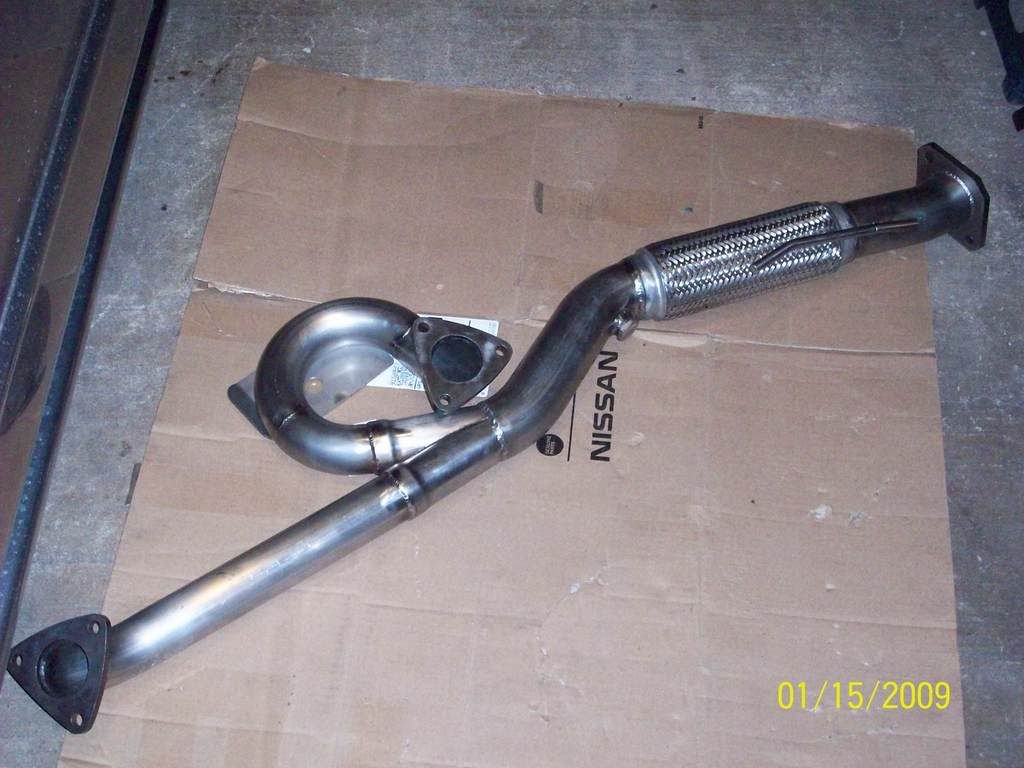
I'd like to find a couple southern California customers interested in the newly re-introduced Cattman Performance y-pipes for 95-01 Maximas - one version covers 1995-98 (+ 99/00 Fed-specs if there are any in CA) and the other covers Calli-spec 1999-00 and all 2001s. Give us a call at 800.759.9920 (open 8-4 PST, M-F) to find out more about arrangements and prices/discounts.
These are the first gen 4/5 y-pipes we've produced in almost 4 years!

These are superior products, made in the US from S/S tubing and the highest quality components (especially the vulnerable flex section). Design features, build quality, materials and of course performance set this y-pipe above anything else on the market. I'll point out the racing-grade 2-1 merge collector, oversize US-made flex section, and 3/8" plate flanges
We look forward to hearing from you.
Brian C Catts
Cattman Performance
These are the first gen 4/5 y-pipes we've produced in almost 4 years!
These are superior products, made in the US from S/S tubing and the highest quality components (especially the vulnerable flex section). Design features, build quality, materials and of course performance set this y-pipe above anything else on the market. I'll point out the racing-grade 2-1 merge collector, oversize US-made flex section, and 3/8" plate flanges
We look forward to hearing from you.
Brian C Catts
Cattman Performance


We sold out of 5th gen b-pipes and mufflers during our December end-of-year sale last month, but it hasn't been discontinued. We'll make more this spring after we accumulate a few more backorders. Give us a call, we'll set you up with our backorder discount! No payment due at time of order.
Brian
Brian
Actually, the decision to manufacture these y-pipes again was made quite a while ago, everything's ready for production now. These are the first parts off of the two new production fixtures, and they need to be installed to make sure everything's perfect before manufacturing a dozen of each.
Any fitment issue would be a suprise, but I want to be certain. I'd like to find customers in southern California, so my exhaust partner could look at anything that needed his attention.
The "re-introductory price" for the first batch or two is $349.99 (including installation kit) and after that the retail price will be $379.99 for the Cali version and $389.99 for the Fed version (Max.org member prices will be $360 and $370). We're taking backorders for that production now, give us a call if interested. As soon as we confirm the fit of these "first pieces", we'll put the rest together and get them shipped to backorders and into inventory.
Brian
Any fitment issue would be a suprise, but I want to be certain. I'd like to find customers in southern California, so my exhaust partner could look at anything that needed his attention.
The "re-introductory price" for the first batch or two is $349.99 (including installation kit) and after that the retail price will be $379.99 for the Cali version and $389.99 for the Fed version (Max.org member prices will be $360 and $370). We're taking backorders for that production now, give us a call if interested. As soon as we confirm the fit of these "first pieces", we'll put the rest together and get them shipped to backorders and into inventory.
Brian

That's all the same for 00-03!!!
But Brian is there a way you could manufacture the rear mufflers slightly different than previously do? I've played with several and I notice most auto mfg use this same practice to ensure good exhaust velocity and linear throttle response by decreasing the muffler plumbing in minor steps for example:
1. 2.5" mufflers would have a 2.5" inlet, 2.5" internal and reduced to (2) 2.25" pipes that are fitted with twin 3" tips
2. Even doing more severe reductions 2.5" inlet, 2.25" internal, and (2) 2" outlet pipes...
I think you would get a way better throttle response with your already awesome catback....I would pay you to build me one with 2.5" inlet and (2) 2.25" outlet pipes fitted with twin 3" tips....$$$$ pretty please $$$$!!! One off production....
Is this the racing style merger you used on your header's ypipe?
But Brian is there a way you could manufacture the rear mufflers slightly different than previously do? I've played with several and I notice most auto mfg use this same practice to ensure good exhaust velocity and linear throttle response by decreasing the muffler plumbing in minor steps for example:
1. 2.5" mufflers would have a 2.5" inlet, 2.5" internal and reduced to (2) 2.25" pipes that are fitted with twin 3" tips
2. Even doing more severe reductions 2.5" inlet, 2.25" internal, and (2) 2" outlet pipes...
I think you would get a way better throttle response with your already awesome catback....I would pay you to build me one with 2.5" inlet and (2) 2.25" outlet pipes fitted with twin 3" tips....$$$$ pretty please $$$$!!! One off production....
Is this the racing style merger you used on your header's ypipe?
Last edited by CMax03; Jan 22, 2010 at 11:46 PM.

I'll have to check with my exhaust partner to confirm the internal dimensions, but what you're suggesting is pretty close to the way we make them now. Rear section comes in as a 2.5 tube, and splits into two smaller tubes within the muffler and the tips are around 80mm (roughly 3").
There are different schools of thought on exhaust design and many are contradictory... You are promoting the theory that some backpressure at the end of the exhaust system is desirable for performance, but I'll stop and point out that what you're suggesting won't accomplish that. The cross-sectional area of two 2" diameter tubes is still substantially greater (much of that difference is offset by increased friction along a much greater tube wall area, so its about a wash back pressure-wise) than one 2.5" tube, so there is no increase in restriction/backpressure.
Doing what you suggest would be better accomplished by creating a reduction from 2.5" to 2.25" in the diameter of the rear section just before it enters the muffler. I'm not agreeing that would make more power, but its a more effective way to create a restriction if that's the objective.
I've always subscribed to opposite theory - start a bit restrictive and open up as you go back (which is the way that Nissan designs some of their stock catback systems). The ideas you raise would be interesting to test, but to be honest, I'd have to see the evidence before I'd be a believer.
Its not unusual for an exhaust designer to follow a similar strategy to the one you suggest, but the motivation is typically sound management rather than performance. Creating a restriction in or near the muffler can minimize drone and resonance, particularly in dual muffler systems.
Give me a call sometime (800.759.9920, open 9-5 MST, M-F) and we'll discuss exactly how we could set something up - as long as my exhaust partner says its possible, we could do it as a one-off order the next time we run a batch of 5th gen catbacks.
Almost forgot, yes, the 2-1 collector in the header y-pipe picture is a merge-style collector, and more efficient than the "swaged collectors" that are most common because they are a LOT less expensive to fabricate. A swaged collector involves stretching a larger section of thick-walled tubing into an oval, then welding the two incoming tubes into the opening and fill in the gaps with welding. Merge collectors are made by doing a mitre-cut of the two incoming pipes - very exacting and a lot of labor - or by using a more complex pre-formed merge collector as we've been doing lately.
The merge collector creates a much smoother integration of the two exhaust streams and a better performance result; swaged collectors cause more turbulance, which limits performance.
Brian
There are different schools of thought on exhaust design and many are contradictory... You are promoting the theory that some backpressure at the end of the exhaust system is desirable for performance, but I'll stop and point out that what you're suggesting won't accomplish that. The cross-sectional area of two 2" diameter tubes is still substantially greater (much of that difference is offset by increased friction along a much greater tube wall area, so its about a wash back pressure-wise) than one 2.5" tube, so there is no increase in restriction/backpressure.
Doing what you suggest would be better accomplished by creating a reduction from 2.5" to 2.25" in the diameter of the rear section just before it enters the muffler. I'm not agreeing that would make more power, but its a more effective way to create a restriction if that's the objective.
I've always subscribed to opposite theory - start a bit restrictive and open up as you go back (which is the way that Nissan designs some of their stock catback systems). The ideas you raise would be interesting to test, but to be honest, I'd have to see the evidence before I'd be a believer.
Its not unusual for an exhaust designer to follow a similar strategy to the one you suggest, but the motivation is typically sound management rather than performance. Creating a restriction in or near the muffler can minimize drone and resonance, particularly in dual muffler systems.
Give me a call sometime (800.759.9920, open 9-5 MST, M-F) and we'll discuss exactly how we could set something up - as long as my exhaust partner says its possible, we could do it as a one-off order the next time we run a batch of 5th gen catbacks.
Almost forgot, yes, the 2-1 collector in the header y-pipe picture is a merge-style collector, and more efficient than the "swaged collectors" that are most common because they are a LOT less expensive to fabricate. A swaged collector involves stretching a larger section of thick-walled tubing into an oval, then welding the two incoming tubes into the opening and fill in the gaps with welding. Merge collectors are made by doing a mitre-cut of the two incoming pipes - very exacting and a lot of labor - or by using a more complex pre-formed merge collector as we've been doing lately.
The merge collector creates a much smoother integration of the two exhaust streams and a better performance result; swaged collectors cause more turbulance, which limits performance.
Brian
That's all the same for 00-03!!!
But Brian is there a way you could manufacture the rear mufflers slightly different than previously do? I've played with several and I notice most auto mfg use this same practice to ensure good exhaust velocity and linear throttle response by decreasing the muffler plumbing in minor steps for example:
1. 2.5" mufflers would have a 2.5" inlet, 2.5" internal and reduced to (2) 2.25" pipes that are fitted with twin 3" tips
2. Even doing more severe reductions 2.5" inlet, 2.25" internal, and (2) 2" outlet pipes...
I think you would get a way better throttle response with your already awesome catback....I would pay you to build me one with 2.5" inlet and (2) 2.25" outlet pipes fitted with twin 3" tips....$$$$ pretty please $$$$!!! One off production....
Is this the racing style merger you used on your header's ypipe?
But Brian is there a way you could manufacture the rear mufflers slightly different than previously do? I've played with several and I notice most auto mfg use this same practice to ensure good exhaust velocity and linear throttle response by decreasing the muffler plumbing in minor steps for example:
1. 2.5" mufflers would have a 2.5" inlet, 2.5" internal and reduced to (2) 2.25" pipes that are fitted with twin 3" tips
2. Even doing more severe reductions 2.5" inlet, 2.25" internal, and (2) 2" outlet pipes...
I think you would get a way better throttle response with your already awesome catback....I would pay you to build me one with 2.5" inlet and (2) 2.25" outlet pipes fitted with twin 3" tips....$$$$ pretty please $$$$!!! One off production....
Is this the racing style merger you used on your header's ypipe?
Last edited by Cattman; Jan 25, 2010 at 03:50 PM.

Brian,
I know that your Cattman rear muffler inlet is 2.5"> the internal perforated tube is 2.5" and the last 3-4" it splits into (2) 2.5" outlet with 3" tips....Very beautiful work and it's really quiet for the ypipe setup....I'm running your headers and I'm not into the exhaust volume it produces....So that's why I'm curious if you do a one off design for me....and I'll pay for a new rear section with a 2.5" inlet> 2.25 internal perforated tubing, twin 3"(80mm) tips....The only difference is the smaller dia. internal perforated tubing ( Bernoulli's principle)>-----<.......
I know that your Cattman rear muffler inlet is 2.5"> the internal perforated tube is 2.5" and the last 3-4" it splits into (2) 2.5" outlet with 3" tips....Very beautiful work and it's really quiet for the ypipe setup....I'm running your headers and I'm not into the exhaust volume it produces....So that's why I'm curious if you do a one off design for me....and I'll pay for a new rear section with a 2.5" inlet> 2.25 internal perforated tubing, twin 3"(80mm) tips....The only difference is the smaller dia. internal perforated tubing ( Bernoulli's principle)>-----<.......
Brian
Brian,
I know that your Cattman rear muffler inlet is 2.5"> the internal perforated tube is 2.5" and the last 3-4" it splits into (2) 2.5" outlet with 3" tips....Very beautiful work and it's really quiet for the ypipe setup....I'm running your headers and I'm not into the exhaust volume it produces....So that's why I'm curious if you do a one off design for me....and I'll pay for a new rear section with a 2.5" inlet> 2.25 internal perforated tubing, twin 3"(80mm) tips....The only difference is the smaller dia. internal perforated tubing ( Bernoulli's principle)>-----<.......
I know that your Cattman rear muffler inlet is 2.5"> the internal perforated tube is 2.5" and the last 3-4" it splits into (2) 2.5" outlet with 3" tips....Very beautiful work and it's really quiet for the ypipe setup....I'm running your headers and I'm not into the exhaust volume it produces....So that's why I'm curious if you do a one off design for me....and I'll pay for a new rear section with a 2.5" inlet> 2.25 internal perforated tubing, twin 3"(80mm) tips....The only difference is the smaller dia. internal perforated tubing ( Bernoulli's principle)>-----<.......
To illustrate, the cross sectional area of a 2.5" tube is approximately 4.9 sq inches. If that tube is going to split into two tubes and still create backpressure, the cross-sectional area of each tube can be no larger than roughly 2.5 sq in. (yes, 2.5 sq in x 2 is slightly over 4.9 sq in but the increased tube wall area causes enough friction to create a backpressure
difference). So, to create backpressure the diameter of the split tubes can be o more than about 1.8" (or less) to create backpressure.
Brian
Very nice, but do you also have a gains of your header, sorry to sound demanding but iam really torn between buying obx headers or cattman, learning the gains will make my decision easier.

I understand what you're after (and I'll restate that I don't necessarily agree with the outcome you expect), but what you're describing will not have that effect. At the point where the 2.5" tube splits into two tubes, the only way to increase backpressure is for the combined cross-sectional area of the two tubes to be effectively less than the cross-sectional area of the single 2.5" tube. Since we're talking about the last few inches of the entire exhaust system, the split tubes could be 2.0", 2.5" or just chop off the last few inches of the muffler to the tube ends right there - won't make any difference unless there is actually a reduction in flow.
To illustrate, the cross sectional area of a 2.5" tube is approximately 4.9 sq inches. If that tube is going to split into two tubes and still create backpressure, the cross-sectional area of each tube can be no larger than roughly 2.5 sq in. (yes, 2.5 sq in x 2 is slightly over 4.9 sq in but the increased tube wall area causes enough friction to create a backpressure
difference). So, to create backpressure the diameter of the split tubes can be o more than about 1.8" (or less) to create backpressure.
Brian
To illustrate, the cross sectional area of a 2.5" tube is approximately 4.9 sq inches. If that tube is going to split into two tubes and still create backpressure, the cross-sectional area of each tube can be no larger than roughly 2.5 sq in. (yes, 2.5 sq in x 2 is slightly over 4.9 sq in but the increased tube wall area causes enough friction to create a backpressure
difference). So, to create backpressure the diameter of the split tubes can be o more than about 1.8" (or less) to create backpressure.
Brian

Thread
Thread Starter
Forum
Replies
Last Post
carid
Group Deals / Sponsors Forum
0
Sep 9, 2015 05:06 AM