


Airflow: Fluid Dynamics Question


Airflow: Fluid Dynamics Question
Basically.. I would like to know if airflow in a closed system rotates in a specific direction (clockwise/counterclockwise). For example, air in an intake system, would this travel in one set direction, or sort of erratically?
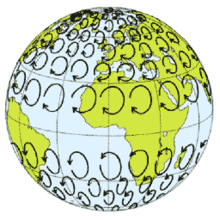
I tried looking into my old physics book for the answer but it didn't go too far into depth on the subject of fluid dynamics. For lack of a better analogy, would airflow follow the same principles as flushing a toilet? Resulting in clockwise rotation above the equator, and counterclockwise below the equator? Yea I'm a little all over the place, but I'm just looking for which way the air will rotate in the intake piping. Thanks anybody!
I tried looking into my old physics book for the answer but it didn't go too far into depth on the subject of fluid dynamics. For lack of a better analogy, would airflow follow the same principles as flushing a toilet? Resulting in clockwise rotation above the equator, and counterclockwise below the equator? Yea I'm a little all over the place, but I'm just looking for which way the air will rotate in the intake piping.
Thanks anybody!

I believe it would simply follow the path of least resistance. Once this is found you could manipulate the path to encourage a certain flow characteristic but ultimately it goes where it can with the least amount of effort required


I think you were very clear. Before I read your toilette comment, that is exactly where I went. I also considered what I've learned from watching tornado chasers. There are some tornados called "elephant trunks" that hit ground, but at a certain elevation travel horizontally. As I recall, they circle clockwise as well in the continental US (above the equator).

 ?
?

You've got your work cut out for you. Fluid flow is dependent on multiple variables. There is no easy calculation. Viscosity, shear, surface roughness, pressure, velocity, diameter, reynolds number, etc. can make the equations quite nasty. What are you trying to do/determine? In short, you should probably not predict a vortex.
Last edited by nelledge; Jun 11, 2012 at 10:27 AM.

 higher velocity then would love to see that on mine..
I believe the best way to have an effective and efficient intake is to use a high flow filter, bellmouth, and then a straight and non-turbulent intake tube.
Curious to see where this is going though.
Curious to see where this is going though.
Thanks for the input everybody. What I'm trying to accomplish is to create a cyclone of air through the intake tube, which will maximize air density. (I'm trying to squeeze every last drop of power N/A). But, without knowing the direction of rotation, I would not want to make the mistake and create a helix bore at the TB in the wrong direction and create possibly a massive amount of turbulence through the intake manifolds. Basically, what I was planning on doing, was to port out the inlet of the TB with 1" 45* sort of runners, 3-4 of them.. but idk which direction would promote the best flow.
Since I'm definitely explaining this bad, imagine at the inlet 3 grooves at 45 degree angles. Does anybody think this will do some good? The way I see it, the stock TB (next to the stock MAF housing) is the most restrictive part of the intake system. I think by making this restriction more efficient, it could potentially create a pretty decent amount of power.
Additional info: I also have the stock helmholtz in place as well as stock ribbed coupler before the TB, and I'm almost certain that this box would promote a circulation in the air at this point of the system. What I'm not sure of is the direction in which the air will flow... Any ideas on how to find this out? Or any theories on which way rotation of air would travel with the helmoltz resonator in place?
At least I'll have a 50/50 shot of predicting the direction of flow... haha insert "flow" joke
Since I'm definitely explaining this bad, imagine at the inlet 3 grooves at 45 degree angles. Does anybody think this will do some good? The way I see it, the stock TB (next to the stock MAF housing) is the most restrictive part of the intake system. I think by making this restriction more efficient, it could potentially create a pretty decent amount of power.
Additional info: I also have the stock helmholtz in place as well as stock ribbed coupler before the TB, and I'm almost certain that this box would promote a circulation in the air at this point of the system. What I'm not sure of is the direction in which the air will flow... Any ideas on how to find this out? Or any theories on which way rotation of air would travel with the helmoltz resonator in place?
At least I'll have a 50/50 shot of predicting the direction of flow... haha insert "flow" joke
This isn't going to work. It sounds like you're under the assumption that if you induce a vortex it will remain constant through the intake path. The reason you won't find the information you are seeking in a physics book is because it is not a basic concept. If you're determined to alter your intake stream by true fluid mechanics concepts, you are going to have to put in the time to study it. There aren't a couple equations I can give you that will lead to an epiphany moment without further understanding of foundational concepts. Let me know if you would like some references to learn these. Let me warn you though, it's not an intuitive field despite all the supposed flow concepts that are thrown around on an elementary level in internet car forums.
I'll share a concept that may have no basis. But, in agreement with nelledge, I don't believe you can forcibly accomplish your goal.
Thinking about this simply in terms of air movement, we should know that in order to affect air, greater surface area is required given lower speeds. At higher speeds, less area is required to do the same amount of work. At higher speeds, actually greater surface area creates drag and increase turbulence.
We see this very concept in terms of the retractable wing fighters (Top Gun). The jets need the wings speed for lift at low speeds but to reach fill velocity, wings must retract. We also see this on cars that use flex fans. Their geometry changes at higher speeds and do the same amount of work efficiently. Even here though, we know at some point fans, even flex fans get in their own way and actually restrict more air than they move.
My whole point is that you would have to design a system that is adaptable to the velocity/speed of incoming air to accomplish a forced vortex while avoiding the pitfall of getting in the way of the air at certain velocities.
The best method, as far as I know to accomplish this would be to illuminate as many sources of disturbance to the airflow. Inherently, this is part of what a bellmouth does, it helps to stabilize incoming air. That's part of how it increases velocity. Without it, you got the same size piping, but the incoming air is disorganized and turbulent.
So whatever fin system you were planning, it will either create turbalance or become restrictive or both given the range of intake velocities which occur during normal driving conditions (idle- full throttle).
And I have also just proven nelledges point about throwing around elementary concepts! LOL!!
Thinking about this simply in terms of air movement, we should know that in order to affect air, greater surface area is required given lower speeds. At higher speeds, less area is required to do the same amount of work. At higher speeds, actually greater surface area creates drag and increase turbulence.
We see this very concept in terms of the retractable wing fighters (Top Gun). The jets need the wings speed for lift at low speeds but to reach fill velocity, wings must retract. We also see this on cars that use flex fans. Their geometry changes at higher speeds and do the same amount of work efficiently. Even here though, we know at some point fans, even flex fans get in their own way and actually restrict more air than they move.
My whole point is that you would have to design a system that is adaptable to the velocity/speed of incoming air to accomplish a forced vortex while avoiding the pitfall of getting in the way of the air at certain velocities.
The best method, as far as I know to accomplish this would be to illuminate as many sources of disturbance to the airflow. Inherently, this is part of what a bellmouth does, it helps to stabilize incoming air. That's part of how it increases velocity. Without it, you got the same size piping, but the incoming air is disorganized and turbulent.
So whatever fin system you were planning, it will either create turbalance or become restrictive or both given the range of intake velocities which occur during normal driving conditions (idle- full throttle).
And I have also just proven nelledges point about throwing around elementary concepts! LOL!!
nelledge: This isn't going to work. It sounds like you're under the assumption that if you induce a vortex it will remain constant through the intake path. The reason you won't find the information you are seeking in a physics book is because it is not a basic concept. If you're determined to alter your intake stream by true fluid mechanics concepts, you are going to have to put in the time to study it. There aren't a couple equations I can give you that will lead to an epiphany moment without further understanding of foundational concepts. Let me know if you would like some references to learn these. Let me warn you though, it's not an intuitive field despite all the supposed flow concepts that are thrown around on an elementary level in internet car forums.
Chris Gregg: The best method, as far as I know to accomplish this would be to illuminate as many sources of disturbance to the airflow. Inherently, this is part of what a bellmouth does, it helps to stabilize incoming air. That's part of how it increases velocity. Without it, you got the same size piping, but the incoming air is disorganized and turbulent.
So whatever fin system you were planning, it will either create turbalance or become restrictive or both given the range of intake velocities which occur during normal driving conditions (idle- full throttle).
And I have also just proven nelledges point about throwing around elementary concepts! LOL!!
So whatever fin system you were planning, it will either create turbalance or become restrictive or both given the range of intake velocities which occur during normal driving conditions (idle- full throttle).
And I have also just proven nelledges point about throwing around elementary concepts! LOL!!


Sounds like your trying to get that "tornado" effect. I see what you're trying to get at but it won't work for an application such as this. The fact that the engine is pulling the air in will disrupt the vortex you are trying to create in the intake path. A larger unmolested intake path with no restrictions will do a lot more for power. The only other way to get air in more effectively is to create positive pressure. (introducing a compressor into the equation)

Thread
Thread Starter
Forum
Replies
Last Post
hez8813
5th Generation Maxima (2000-2003)
11
Mar 12, 2020 12:06 AM