


bad alternator


Thread Starter
Junior Member
Joined: Jun 2003
Posts: 27
bad alternator
i think my alternator is shot..... that sucks... so i was lookin and see that its all the way at the bottom of the engine.. are these hard to get at??? i have done many in the past but they have always been on the top of the engine or close to that... any help?
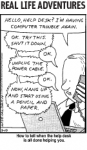

Yeah, get a lift and do it from the bottom.
And don't buy one of those BS lifetime Autozone / pepboys/ (insert major chain name here) units they are junk.
I've had much better luck on units with 2 year warranties or brand new ones from a reputable supplier.
 I'm considered a reputable supplier.
And don't buy one of those BS lifetime Autozone / pepboys/ (insert major chain name here) units they are junk.
I've had much better luck on units with 2 year warranties or brand new ones from a reputable supplier.
I'm considered a reputable supplier.


just to throw it out there.....i have been thinking my alternator has been going bad for a little while....it would cut out on me randomly while driving, and sometimes not start die.
anyways, long story short, i checked the battery terminals (AGAIN, because i had already checked them,) and my positive termal was fairly snug, but movable......and with a bit of corrosion between the post and terminal connector, it seemed to be enough to cut off the voltage in curves, or bumpy roads....
an old trick to test the alternator used to be to unplug the battery and see if the car stays running. if it stayed running, alty was good, and if not, then alty was bad. BUT on most newer (late 80's +) computerized cars, i do believe that this is not always the case. I believe that if you were to unplug the battery, it would shock the system enough to kill the car, or even bog the car down to where the engine kills itself.....thus giving you a bad diagnosis.
any thoughts?
anyways, long story short, i checked the battery terminals (AGAIN, because i had already checked them,) and my positive termal was fairly snug, but movable......and with a bit of corrosion between the post and terminal connector, it seemed to be enough to cut off the voltage in curves, or bumpy roads....
an old trick to test the alternator used to be to unplug the battery and see if the car stays running. if it stayed running, alty was good, and if not, then alty was bad. BUT on most newer (late 80's +) computerized cars, i do believe that this is not always the case. I believe that if you were to unplug the battery, it would shock the system enough to kill the car, or even bog the car down to where the engine kills itself.....thus giving you a bad diagnosis.
any thoughts?

Senior Member
Joined: Oct 2004
Posts: 1,205
From: Pretoria - South Africa
just to throw it out there.....i have been thinking my alternator has been going bad for a little while....it would cut out on me randomly while driving, and sometimes not start die.
anyways, long story short, i checked the battery terminals (AGAIN, because i had already checked them,) and my positive termal was fairly snug, but movable......and with a bit of corrosion between the post and terminal connector, it seemed to be enough to cut off the voltage in curves, or bumpy roads....
an old trick to test the alternator used to be to unplug the battery and see if the car stays running. if it stayed running, alty was good, and if not, then alty was bad. BUT on most newer (late 80's +) computerized cars, i do believe that this is not always the case. I believe that if you were to unplug the battery, it would shock the system enough to kill the car, or even bog the car down to where the engine kills itself.....thus giving you a bad diagnosis.
any thoughts?
anyways, long story short, i checked the battery terminals (AGAIN, because i had already checked them,) and my positive termal was fairly snug, but movable......and with a bit of corrosion between the post and terminal connector, it seemed to be enough to cut off the voltage in curves, or bumpy roads....
an old trick to test the alternator used to be to unplug the battery and see if the car stays running. if it stayed running, alty was good, and if not, then alty was bad. BUT on most newer (late 80's +) computerized cars, i do believe that this is not always the case. I believe that if you were to unplug the battery, it would shock the system enough to kill the car, or even bog the car down to where the engine kills itself.....thus giving you a bad diagnosis.
any thoughts?
One final test before pronouncing the alt OK though - stick a sensitive current meter (about 2mA range) in the line between the batt and the alt's output terminal with the engine and ignition off - you do not want to see any current more than 0.5mA flowing there.
it would shock the system enough to kill the car

In my experiences with many different make/model cars,it does not hurt the electrical systems at all when you disconnect a battery terminal to check for a bad alty...The trick is to never reconnect the terminal back while the car is still running,the spike up in voltage/amperage will be on reconnect,not disconnect..
Originally Posted by LvR
there is no "trick" to measuring the wellbeing of the alt - start the vehicle
Originally Posted by LvR
Mechanically its not able to exert enough torque on the motor to kill it, and if electrically it is able to kill the car (most likely) its evidence enough that it should not be attempted at all.
Originally Posted by mypinkmax94
In my experiences with many different make/model cars,it does not hurt the electrical systems at all when you disconnect a battery terminal to check for a bad alty...The trick is to never reconnect the terminal back while the car is still running,the spike up in voltage/amperage will be on reconnect,not disconnect..

see what i did there?

there are several other items on the motor that can whine as well.
use a stethoscope type device (or a long screwdriver with the handle end at your ear) to touch each piece to hear where the noise is originating.

Senior Member
Joined: Jul 2005
Posts: 162
From: Townsville, Australia
I have had one of the diodes go short in my alternator, surprisingly it still seemed to be working ok (14V on the battery under load at about 2k RPM), but it would struggle to maintain charge at idle.
The symptom was a bad whining noise which varied with engine RPM, sounded exactly like a bad/dry bearing, it was very noticeable, even inside the car. I removed the alternator expecting to replace bearings, but found they were ok. I then went searching and found the shorted diode. I replaced the diode pack and fixed the noise. It now also maintains 13.8V at idle with accessories on.
Easiest way to track down noises like you are having is to remove the drive belts one at a time until the noise goes away. (** don't run the engine too long with the water pump belt removed**).
As for removing the battery cable with the engine running, it *probably* won't cause any major problems to your ECU, car ECUs are a lot more robust than most people give them credit for, but it if does fail, they are $$$ to replace. Therefore it isn't something I would suggest trying. Also, more sensitive items like car stereos may not survive!!
The symptom was a bad whining noise which varied with engine RPM, sounded exactly like a bad/dry bearing, it was very noticeable, even inside the car. I removed the alternator expecting to replace bearings, but found they were ok. I then went searching and found the shorted diode. I replaced the diode pack and fixed the noise. It now also maintains 13.8V at idle with accessories on.
Easiest way to track down noises like you are having is to remove the drive belts one at a time until the noise goes away. (** don't run the engine too long with the water pump belt removed**).
As for removing the battery cable with the engine running, it *probably* won't cause any major problems to your ECU, car ECUs are a lot more robust than most people give them credit for, but it if does fail, they are $$$ to replace. Therefore it isn't something I would suggest trying. Also, more sensitive items like car stereos may not survive!!

Thread
Thread Starter
Forum
Replies
Last Post
TallTom
5th Generation Maxima (2000-2003)
57
Oct 14, 2025 05:16 PM
RealityCheck
4th Generation Maxima (1995-1999)
7
Oct 2, 2015 06:34 PM
Andy29
5th Generation Maxima (2000-2003)
8
Sep 29, 2015 05:32 AM