


HID/Headlight/Foglight combo thread.


Member
Joined: Sep 2006
Posts: 158
Also remember that we we discussing inrush and the 55watts and the 35 watts are RMS levels, not inrush. The ballast will pull higher amps to fire the HID up before leveling out at the 35 watt.
As far as heat goes, an HID buld of the same wattage will put off more heat than the hallogen just as a 55 watt heating element will put off more heat than a 55 watt HID bulb. When compairing two different things you can't decide which puts off more heat just by how many watts it runs RMS.
Last edited by umdpru; Jul 19, 2010 at 08:11 AM.

Senior Member
Joined: Jan 2010
Posts: 780
From: Orlando, FL
What you are claiming is a violation of the laws of physics my friend. If both bulbs consume 55 watts, then they BOTH can't dissipate more than 55W if they are 100% efficient at converting electricity to heat. They can ONLY dissipate a power amount smaller than what they consume. Additionally, a halogen bulb, being a wire element, is thermodynamically 100% efficient at converting electricity to heat.
When you are talking about 55 watt HIDs and 55 watt Halogens they are still apples and oranges. Same thing as why a 55 watt HID is brighter than a 55watt halogen. Even though the same power is consumed, one is brighter than the other.
You can't assume that just because they both consume 55 watts that the heat dissipation is going to be the same. Even though both are bulbs, they are totaly different and cannot be compaired that way. When you are compairing the same exact thing you could use watts as a baseline. Like with old style house bulbs. It is safe to say that 100 watts will be hotter than 60 watts and that two 60 watts will be the same temperature.
HID vs Halogens work in two totally different ways so the heat put off by the same power consumption will natually differ.
Last edited by Flip2cho; Jul 19, 2010 at 10:39 AM.

the power measurements may well be RMS, however, the "inrush" current isn't likely to be very long (milliseconds likely). In fact, I'd suggest that the duration of the "inrush" is so short that the RMS power measurements won't even detect it. Also, the amount of current at startup won't affect the long term temperatures seen by the housing due to the bulbs. A current measurement is still on my list of to-do's. When I install my DDM Tuning kit to replace the one I have, I'll perform the measurements with a current probe.
For HIDs, "inrush current" is a misnomer. What it's actually referring to is the bulb ignition.
HID ballasts power the bulb for 30-60 seconds at 23kV to "ignite" the bulb. This is significantly more than 35w (some have measured it near 100w, iirc) in order to bring it up to operating conditions quickly. Once that has finished, the ballast goes back to 85VAC, 35w operation.
What you are claiming is a violation of the laws of physics my friend. If both bulbs consume 55 watts, then they BOTH can't dissipate more than 55W if they are 100% efficient at converting electricity to heat. They can ONLY dissipate a power amount smaller than what they consume. Additionally, a halogen bulb, being a wire element, is thermodynamically 100% efficient at converting electricity to heat.
Some of the electricity (a small amount - under 10w) actually becomes visible light (1W of photons can produce up to 683 lm if its at 555nm, so a 3200 lm bulb is a bare minimum of 5W of visible light, but more because other wavelengths have less lumens per watt). A more significant portion of the electricity becomes non-visible light - HID bulbs put out a decent amount of UV, which halogens do not. Both put out IR, but the halogen puts out more IR. Whatever energy is not converted to visible and non-visible light is then converted into heating of the bulb, which heats the projector bowl due to convection.
A bright halogen bulb probably converts 5-10% of its energy to visible light, then the remaining 90% is infrared and thermal energy. A HID bulb is somewhere along the lines of 15-20% visible light, with the remainder being UV, IR, and thermal energy.
Member
Joined: Sep 2006
Posts: 158
nalc,
just so we're on the same page, your saying that a halogen will dump more power via thermal energy than a xenon bulb will, right?
I'm beginning to think that "light" (engineering/design of some type) is your professional field.
I'm certainly interested in measuring the amperage being used during ignition when I change out my aftermarket kits.
A three fold increase (35w to 100w) is not insignificant.
I know that a speaker won't be as hot because most of the energy in a speaker coil (600w) in your case is being dissipated by the speaker when it raises the pressure level of the air it's pushing to create sound. In the bulbs case, it's dissipating most of it's power via thermal energy. All bulbs dissipate most of their power via thermal energy, to varying degrees. Comparing the heat dissipation of the two types of bulbs is not apples and oranges - that I can guarantee you. At the end of the day, both put out light and both put out heat.
just so we're on the same page, your saying that a halogen will dump more power via thermal energy than a xenon bulb will, right?
I'm beginning to think that "light" (engineering/design of some type) is your professional field.
I'm certainly interested in measuring the amperage being used during ignition when I change out my aftermarket kits.
A three fold increase (35w to 100w) is not insignificant.
The 55 watt bulb would be way hotter that the 600 watt amplifier even though the amp is 600 watts.
Last edited by umdpru; Jul 21, 2010 at 11:52 AM.
Senior Member
Joined: Jan 2010
Posts: 780
From: Orlando, FL
nalc,
just so we're on the same page, your saying that a halogen will dump more power via thermal energy than a xenon bulb will, right?
I'm beginning to think that "light" (engineering/design of some type) is your professional field.
I'm certainly interested in measuring the amperage being used during ignition when I change out my aftermarket kits.
A three fold increase (35w to 100w) is not insignificant.
I know that a speaker won't be as hot because most of the energy in a speaker coil (600w) in your case is being dissipated by the speaker when it raises the pressure level of the air it's pushing to create sound. In the bulbs case, it's dissipating most of it's power via thermal energy. All bulbs dissipate most of their power via thermal energy, to varying degrees. Comparing the heat dissipation of the two types of bulbs is not apples and oranges - that I can guarantee you. At the end of the day, both put out light and both put out heat.
just so we're on the same page, your saying that a halogen will dump more power via thermal energy than a xenon bulb will, right?
I'm beginning to think that "light" (engineering/design of some type) is your professional field.
I'm certainly interested in measuring the amperage being used during ignition when I change out my aftermarket kits.
A three fold increase (35w to 100w) is not insignificant.
I know that a speaker won't be as hot because most of the energy in a speaker coil (600w) in your case is being dissipated by the speaker when it raises the pressure level of the air it's pushing to create sound. In the bulbs case, it's dissipating most of it's power via thermal energy. All bulbs dissipate most of their power via thermal energy, to varying degrees. Comparing the heat dissipation of the two types of bulbs is not apples and oranges - that I can guarantee you. At the end of the day, both put out light and both put out heat.
Apples and Oranges are both fruit yes but they have far more differences than they do in common.
HIDs and Halogens
They are both Light bulbs but they have far more differences than they in common.
All I am telling you that you cant simply say that 55w HIDs will not be hotter than 55w halogens just because they are both 55w.
It is true however that the 35w HID get less hot than the 55w halogens and still create more light
Ehow.com
http://www.ehow.com/about_5402741_halogen-vs-xenon.html
Halogen Considerations
While halogen bulbs does not have the lifespan or light intensity of xenon versions, they are still much more common, and it is easier and less expensive to replace halogen bulbs. There is also some controversy as to how much better the xenon bulb's light is, if at all, and different bulbs will have different effects. While halogen burns hot, around 3,200 degrees Kelvin, xenon bulbs tend to burn even hotter, up to 12,000 degrees Kelvin, and can pose more of a heat risk.
While halogen bulbs does not have the lifespan or light intensity of xenon versions, they are still much more common, and it is easier and less expensive to replace halogen bulbs. There is also some controversy as to how much better the xenon bulb's light is, if at all, and different bulbs will have different effects. While halogen burns hot, around 3,200 degrees Kelvin, xenon bulbs tend to burn even hotter, up to 12,000 degrees Kelvin, and can pose more of a heat risk.
here is something that i believe Nalc wrote in another forum.
http://www.candlepowerforums.com/vb/...d.php?t=279670
Here is a link he posted in the same thread
http://forums.quattroworld.com/s4/msgs/81622.phtml
here are some images
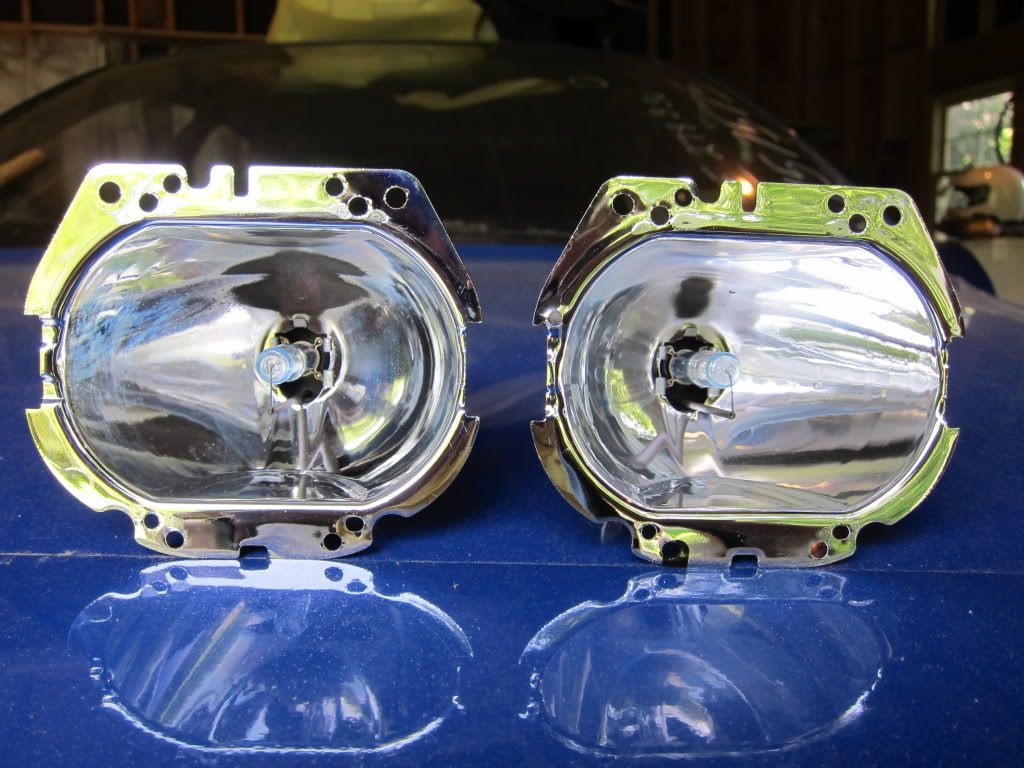
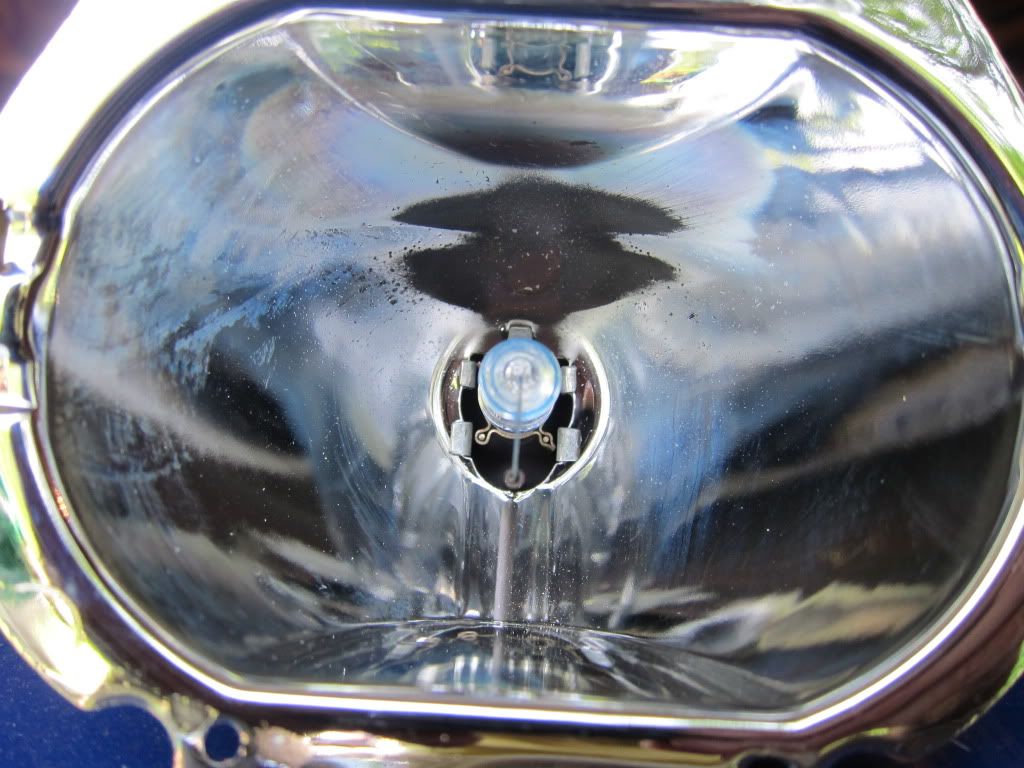
Here are some pics of what happened to a friend of mine


[/color]
http://www.candlepowerforums.com/vb/...d.php?t=279670
There are a few concerns though. Most aftermarket "55w" bulbs are garbage that aren't actually rated for 55w. HIDPlanet members did some temperature mesurements in a HID projector of 35w Philips bulb at 35W, 35W Philips bulb at 55w, and a "55w" aftermarket bulb at 55w. The temperature difference between 35w and 55w on the 35w rated Philips bulb was about ten degrees. The aftermarket "55W" bulb, OTOH, was like 30 or 40 degrees hotter. You also have issue with UV. Again, it's not gonna hurt the glass lens, and it may or may not hurt the aluminum, but it might give you sunburn if you hang out in front of it, and can damage polycarbonate lenses if used in a polycarbonate headlight (although IIRC the front glass covers are actual glass on the Hella 90mm)
http://forums.quattroworld.com/s4/msgs/81622.phtml
here are some images
"I probably won't be using 55w HID kits again"
Here are some pics of what happened to a friend of mine
[/color]
Last edited by Flip2cho; Jul 21, 2010 at 07:56 PM.
Most of the measurements taken by HID retrofitters are just basic temperature measurements, which are limited in accuracy, and may not distinguish between the two types of thermal energy. There is specialized equipment for that, and it is priced out of the realm of most car enthusiasts. I've started doing all of my lighting comparisons with a simple photometer, which is inexpensive and can provide much more accurate results than just beamshot photographs.
I'm beginning to think that "light" (engineering/design of some type) is your professional field.
I'm certainly interested in measuring the amperage being used during ignition when I change out my aftermarket kits.
A three fold increase (35w to 100w) is not insignificant.
A three fold increase (35w to 100w) is not insignificant.
The primary concern of HID ballasts with wires that are too thin is them melting. I don't have any factual data, but it would be my estimate that if the wires are designed for a continuous 55w load for hours on end, then it would take longer than half a minute at 100w before they get hot enough to melt. If I get a chance, I can do some testing and get some numbers this weekend. Would probably clear up a lot of confusion.
I know that a speaker won't be as hot because most of the energy in a speaker coil (600w) in your case is being dissipated by the speaker when it raises the pressure level of the air it's pushing to create sound. In the bulbs case, it's dissipating most of it's power via thermal energy. All bulbs dissipate most of their power via thermal energy, to varying degrees. Comparing the heat dissipation of the two types of bulbs is not apples and oranges - that I can guarantee you. At the end of the day, both put out light and both put out heat.
1. Generally, a "600w" amplifier is not running anywhere near 600w. Sound equipment is notorious for very misleading ratings. What that means is that somewhere, under ideal conditions, an engineer was able to get 600w out of the amplifier for a couple seconds, at a very high total harmonic distortion.
That's the "peak" versus "RMS" readings for amplifiers.
A "600w peak" amplifier is never going to draw 600w. A "600w RMS" amplifier might. However, there are other aspects to consider:
1. Generally, you are not running the amplifier at full volume.
2. The bulb will get hotter for the same amount of energy simply because it is a smaller thermal mass. If you microwave an ounce of cold water for 5 minutes, it will boil, going from ~50 degrees to ~212 degrees. If you microwave a bag of potatoes for 5 minutes, it might go from ~75 degrees to ~80 degrees. Same energy, but it is being used to heat a much larger thermal mass, so the change in temperature is much smaller.
The tiny metal filament inside the bulb, maybe 0.001 pounds of tungsten, which is dissipating 55 watts of power, will reach a temperature that is twice the melting point of steel (that's why they must use Tungsten, which is the metal with the highest melting point).
The gigantic aluminum heatsinks inside a high power amplifier, maybe 30 pounds of aluminum, will be barely warm to the touch while dissipating 55 watts of power.
3. The amp has a much higher overall efficiency. Most amplifiers are above 50% efficient, with certain new designs becoming above 90% efficient. This means that your 600w amplifier is likely sending at least 400w of power to the speakers, and is thus only dissipating 200w of power as heat. A filament bulb can only convert ~10% of its energy into visible light, so a 55w bulb is dissipating 50w of heat (both convective and radiative). A HID bulb is better, but still under 25%.
4. Most power amps can get pretty hot under full load.
All I am telling you that you cant simply say that 55w HIDs will not be hotter than 55w halogens just because they are both 55w.
The way that power is distributed is different. In theory, the HID bulb emits a higher portion of its energy as visibile and ultraviolet light than does a halogen bulb, so it stands to reason that a halogen bulb emits a higher portion of its energy as infrared light and heat than does a HID bulb. However, it is very hard to measure, because the heat also depends very much on the housing. Projectors by nature tend to get hotter than reflectors. Small housings tend to get hotter than bigger housings.
And yes, that is me on CPF.
Senior Member
Joined: Jan 2010
Posts: 780
From: Orlando, FL
Ha, i thought so. Your picture gave it away. Otherwise I would have never know.
My comparing a halogen bulb to a HID was just an extreme example of how you cant compare the amount of heat an electrical load radiates simply by the amount of watts it runs at. I know halogens and HIDs are closer related than a speaker amplifier. Just an EXTREME example of how you cant always compare different types of electrical loads heat simply by comparing power consumption.
a common misconception is that HIDs run cool. This is stemmed from the fact that you can replace a 55w Halogen with a 35w HID because it puts off enough light to take place of the 55w Halogen. The 35w HID runs at almost half the power as the 55w halogen and does produce less heat compared to the 55w Halogen it replaced. As a swap out for comparable light the HID consumes a lot less power and are cooler than what they replace. Replace the Halogen with an HID of equal power consumption and the story appears to be different.
Anyway, im still waiting on some super high powered cluster of CREE leds for a headlight swap out
My comparing a halogen bulb to a HID was just an extreme example of how you cant compare the amount of heat an electrical load radiates simply by the amount of watts it runs at. I know halogens and HIDs are closer related than a speaker amplifier. Just an EXTREME example of how you cant always compare different types of electrical loads heat simply by comparing power consumption.
a common misconception is that HIDs run cool. This is stemmed from the fact that you can replace a 55w Halogen with a 35w HID because it puts off enough light to take place of the 55w Halogen. The 35w HID runs at almost half the power as the 55w halogen and does produce less heat compared to the 55w Halogen it replaced. As a swap out for comparable light the HID consumes a lot less power and are cooler than what they replace. Replace the Halogen with an HID of equal power consumption and the story appears to be different.
Anyway, im still waiting on some super high powered cluster of CREE leds for a headlight swap out
Last edited by Flip2cho; Jul 21, 2010 at 09:13 PM.
Member
Joined: Sep 2006
Posts: 158
LMFAO!!!
Flip, really?
The "degrees Kelvin" DOES NOT refer to any actual thermal temperature. the degrees kelvin refer to the "color temperature" of the light...
While halogen burns hot, around 3,200 degrees Kelvin, xenon bulbs tend to burn even hotter, up to 12,000 degrees Kelvin, and can pose more of a heat risk.
The "degrees Kelvin" DOES NOT refer to any actual thermal temperature. the degrees kelvin refer to the "color temperature" of the light...

Member
Joined: Jun 2009
Posts: 139
Member
Joined: Sep 2006
Posts: 158
the modification has to be the root cause of what ever warranty work you are trying to get repaired. For example, if you install a headlight system and splice the wiring in and do a poor job and your car burns to the ground then your warranty is void
Check out the HID section in this wiki article.
http://en.wikipedia.org/wiki/Headlam..._light_sources
Note that wiki articles are only as good as the sources cited. In this case, the sources all appear to be reputable.
I found the reading to be interesting.
Check out the HID section in this wiki article.
http://en.wikipedia.org/wiki/Headlam..._light_sources
Note that wiki articles are only as good as the sources cited. In this case, the sources all appear to be reputable.
I found the reading to be interesting.
Last edited by umdpru; Jul 22, 2010 at 11:54 AM.
Senior Member
Joined: Jan 2010
Posts: 780
From: Orlando, FL
Thanks for the Info but I'm not a retard Umdpru, who would think that the 14000k bulb gets 1400k? Gold melts at 1337.5801 K. Do you think I thought our lights were made out of dimonds or somthing? I was just copy and pasting off other websites, not my writing, trying to show some small differences in the two lights and didn't mean to copy everything. But thanks for the informations. Glad you seem to enjoy to TRY and correct me every chance you get.
Last edited by Flip2cho; Jul 22, 2010 at 12:02 PM.
Wow I am glad you told me that. I had plans this weekend to pull one of my headlights out and use it to try and melt down some scrap gold I had laying around the house. Thanks for saving me the time. Boy that would have been embarrassing
Thanks for the Info but I'm not a retard Umdpru, who would think that the 14000k bulb gets 1400k? Gold melts at 1337.5801 K. Do you think I thought our lights were made out of dimonds or somthing? I was just copy and pasting off other websites, not my writing, trying to show some small differences in the two lights and didn't mean to copy everything. But thanks for the informations. Glad you seem to enjoy to TRY and correct me every chance you get.
Thanks for the Info but I'm not a retard Umdpru, who would think that the 14000k bulb gets 1400k? Gold melts at 1337.5801 K. Do you think I thought our lights were made out of dimonds or somthing? I was just copy and pasting off other websites, not my writing, trying to show some small differences in the two lights and didn't mean to copy everything. But thanks for the informations. Glad you seem to enjoy to TRY and correct me every chance you get.
Halogen bulb filaments are generally between 2500K and 3600K. Now, don't get misled by the bull**** - HIDs marketed as "3000K" are actually selective yellow. An actual 3000K bulb is a standard white halogen, which is a warm white color, definitely not yellow. HID kits use yellow-tinted bulbs call it "3000K" as a marketing thing.
Now, obviously, it is a tiny piece of metal in a vacuum that gets that hot, so the actual glass envelope is nowhere near 2500K. Probably in the range of 350K, give or take. But, for halogen, this is the real "color temperature", and it is the actual temperature of the filament.
The "color temperature" in HID bulbs is "correlated color temperature"
What that means is that, to the 'standard' human eye, a 4300K HID bulb looks the same as an actual 4300K blackbody. The spectral power distribution is completely different, and the capsule is not heated to 4300K, but it just means it looks like that.


I found that installing the HID fogs was pretty easy. The tough part, if you call it that, is where to mount the ballasts. I chose up on top of the metal beams that connect the metal bumper to the frame. They are a little out of the way, but VERY secure and well away from any possible water source
Member
Joined: Sep 2006
Posts: 158
flip,
that's not my motivation here at all. My motivation here is to inform others. You shouldn't cut and paste from any website without first verifying if the information is accurate. In one post, the information you posted, to prove that HID's 'burned' hotter than halogens was patently false and I pointed it out.
As for you and I, I thought we were having a lively debate as to whether or not the amount of thermal energy put off by one type of ligth bulb differed from the amount put off by another type.
You claimed it was apples and oranges for comparisons sake. I disagreed. I never said it but it's more or less comparing apples to apples, no matter how much you disagree. It's more or less comparing granny smiths to macintosh's. Both types of bulbs put off thermal energy and both put out light in the visible and invisible spectrums.
I'm sorry you feel offended by my postings here.
Glad you seem to enjoy to TRY and correct me every chance you get.
As for you and I, I thought we were having a lively debate as to whether or not the amount of thermal energy put off by one type of ligth bulb differed from the amount put off by another type.
You claimed it was apples and oranges for comparisons sake. I disagreed. I never said it but it's more or less comparing apples to apples, no matter how much you disagree. It's more or less comparing granny smiths to macintosh's. Both types of bulbs put off thermal energy and both put out light in the visible and invisible spectrums.
I'm sorry you feel offended by my postings here.
Senior Member
Joined: Jan 2010
Posts: 780
From: Orlando, FL
You claimed it was apples and oranges for comparisons sake. I disagreed. I never said it but it's more or less comparing apples to apples, no matter how much you disagree. It's more or less comparing granny smiths to macintosh's. Both types of bulbs put off thermal energy and both put out light in the visible and invisible spectrums.
McIntoshs and granny smiths are more like florescent lights and HIDs. Even a neon sign I'd say was closer to an HID than a halogen. Both are lights and both are used in headlights. Pretty much everything else that makes up those two lights are different. They are both lights, you are correct there (I never disagreed with that)
Apples and oranges. Both are fruit and both are sweet. Almost much everything else about each fruit is made up is completely different. Even though They are both fruit though
I'm sorry you feel offended by my postings here.
was patently false and I pointed it out.
Although this has been fun, I am not going to debate with you any longer on this matter. I think that all that has needed to be said, has been. Besides, a wise man once told me that if you argue (or debate) with a fool that from a distance it's hard to tell the two apart and I don't want to put myself in that situation so from here on out I will hold my tongue (or fingers I should say) on the matter. I am not calling you a fool, its just a saying. Lets just enjoys our nice, bright HIDs on our nice car. What do ya say sound good?
Last edited by Flip2cho; Jul 23, 2010 at 06:24 PM.
Member
Joined: Sep 2006
Posts: 158
I had pretty good post all done and posted and gave it a lot of second thoughts and ended up deleting it primarily because I feel that I've done my level best to explain to you in lay terms the finer points regarding the laws of physics dealing with the conservation of energy. I feel it's not worth anymore of my time and effort.
At this point, I don't feel that I can help you anymore to understand them.
I'm content with walking away from this one, however, I will be keeping my open for absolute proof of what I am trying to explain to you.
In fact, I may conduct an experiment for you and document it via video.
 good night.
At this point, I don't feel that I can help you anymore to understand them.
I'm content with walking away from this one, however, I will be keeping my open for absolute proof of what I am trying to explain to you.
In fact, I may conduct an experiment for you and document it via video.
good night.
Last edited by umdpru; Jul 23, 2010 at 07:21 PM.
If it makes any difference, the thread in question did not specify whether they were factory HID or Halogen headlights. Also, some projectors have been known to burn up even with stock wattage bulb. Early 2000s BMW 3-series is notorious for them. Most of their bowls look like those burnt ones in the pics, with factory OEM 35w bulbs and normal usage.
Member
Joined: Sep 2006
Posts: 158
It's simple, if a bulb is emitting more energy (in light, heat and UV) then it is also consuming more than 55w. If a bulb is throwing off more heat or more light then it is also drawing more energy.
here's a good read. Note that I obviously can't verify the sources. Read and comprehend at your own risk
http://www.intellexual.net/hid.html
here's a good read. Note that I obviously can't verify the sources. Read and comprehend at your own risk
http://www.intellexual.net/hid.html
Last edited by umdpru; Jul 24, 2010 at 06:49 AM.

* the wires are already there... BONUS!
* stalk assembly. I got mine from Nissan, was in ~$60 if I remember correctly
* the hardware comes with halogen bulbs.... if you want to enhance them to yellow, I suggest Luminics, they are quality bulbs. Can also get HIDs put in there instead, but be aware that they are not legal (not correct housing; spew light everywhere)
It's simple, if a bulb is emitting more energy (in light, heat and UV) then it is also consuming more than 55w. If a bulb is throwing off more heat or more light then it is also drawing more energy.
here's a good read. Note that I obviously can't verify the sources. Read and comprehend at your own risk
http://www.intellexual.net/hid.html
here's a good read. Note that I obviously can't verify the sources. Read and comprehend at your own risk
http://www.intellexual.net/hid.html
He doesn't mention the halogen cycle, which is the main reason halogen lasts longer than incandescent.
He claims the arc is 25kV, but it is generally a 20-25kV ignition for half a minute, followed by 85 VAC steady state operation.
HID contains less infrared light, but far more ultraviolet, not less. And, AFAIK, there have not been any studies associating either with driver fatigue (UV likes to haze over polycarb headlight lenses tho).
"since blue has the highest energy, it is absorbed last so it goes the farthest" - this isn't correct. It's far more complicated than that, and most of what we know about dispersion is empirical.
"White light is more intense than any single color by itself" is just plain wrong. Monochromatic green light is the most intense color.
DOT/ECE regulate cutoffs and beam patterns, not lenses. There is no such thing as an "E-code lens". Frosted, clear, semi-clear, dimpled, fresnel, or whatever other lenses are fine for use in USA and Rest-Of-World, if the headlight incorporating them meets the right standards.
None of those points are relevant at all to this discussion, I am just nit-picking.
It's probably one of the best HID introduction pages I've read, and would recommend that everyone reads it before considering HIDs in their car
Member
Joined: Sep 2006
Posts: 158
nalc,
I agree. I posted up the disclaimer about not knowing the authors sources. Knowing your background, I picked up on a few of those corrections from our discussions here.
I felt, for the most part, that the article was well written and organized. In fact, it was so easy a cavemen could comprehend it.
I was hoping for a discussion in that article on the heat output of the HID vs. the halogen though. Oh well.
I agree. I posted up the disclaimer about not knowing the authors sources. Knowing your background, I picked up on a few of those corrections from our discussions here.
I felt, for the most part, that the article was well written and organized. In fact, it was so easy a cavemen could comprehend it.
I was hoping for a discussion in that article on the heat output of the HID vs. the halogen though. Oh well.

* fog light hardware (I got mine on eBay for ~$105 per side shipped)
* the wires are already there... BONUS!
* stalk assembly. I got mine from Nissan, was in ~$60 if I remember correctly
* the hardware comes with halogen bulbs.... if you want to enhance them to yellow, I suggest Luminics, they are quality bulbs. Can also get HIDs put in there instead, but be aware that they are not legal (not correct housing; spew light everywhere)
* the wires are already there... BONUS!
* stalk assembly. I got mine from Nissan, was in ~$60 if I remember correctly
* the hardware comes with halogen bulbs.... if you want to enhance them to yellow, I suggest Luminics, they are quality bulbs. Can also get HIDs put in there instead, but be aware that they are not legal (not correct housing; spew light everywhere)
Do the Luminix run at stock wattage? I checked their website and it doesn't say. They also boast some kind of krypton bulb that does not increase the wattage over the original bulb but is bigger or something resulting in more light.
Yea, the Krypton series bulb is huge and does put out considerably more light. The bulb does fit in the stock housing, but it is much tighter getting it in there than a regular sized bulb. Again, I have not tried the krypton bulb in the Maxima yet as I put HIDs in there. If I didn't have HIDs, I would have Luminics Krypton bulbs
hope this helps.....
Krypton yellow fogs in my old Accord (with Silverstar Ultras heads):


Member
Joined: Jul 2010
Posts: 44
I want to get rid of the yellow parking light. I saw someone on this website replaced it with a white parking light but the turn signal was amber it was led. Does they make a non led one? I lease my car and i dont want to install a resistor for the hyper turn signal
I want to get rid of the yellow parking light. I saw someone on this website replaced it with a white parking light but the turn signal was amber it was led. Does they make a non led one? I lease my car and i dont want to install a resistor for the hyper turn signal
Look into the "60-60 led SMT Stealth Ultimate Switchback Bulbs" also. These give you the option of having the the white turn off when signaling. The other one just alternates between white and amber. Expensive yes but looks nice. Had it on my G20 a couple of years ago and worked real nice.
Also, looking for suggestions on whether I should keep the rear signal as amber or switch to red LED?
Last edited by hamzer11; Jul 28, 2010 at 07:30 AM.
Member
Joined: Jul 2010
Posts: 44
Go here and do CTRL+F for "48 Led Switchback". That is the bulb I am getting. It flashes amber when signaling and stays white when parking light is on. You will have no choice but to run the resistors if you want LED. Or replace the flasher relay and put it back when you turn it in. I will be getting these for the front and led for the rear turn signal too.
Look into the "60-60 led SMT Stealth Ultimate Switchback Bulbs" also. These give you the option of having the the white turn off when signaling. The other one just alternates between white and amber. Expensive yes but looks nice. Had it on my G20 a couple of years ago and worked real nice.
Also, looking for suggestions on whether I should keep the rear signal as amber or switch to red LED?
Look into the "60-60 led SMT Stealth Ultimate Switchback Bulbs" also. These give you the option of having the the white turn off when signaling. The other one just alternates between white and amber. Expensive yes but looks nice. Had it on my G20 a couple of years ago and worked real nice.
Also, looking for suggestions on whether I should keep the rear signal as amber or switch to red LED?
Is there any bulbs out there that does the trick that is NOT LED. I dont know how to do the relay and i dont know if its okay to do with a lease car otherwise i would do it in a heartbeat..
Also the red turn signal would look really nice.... Im getting my tail lights tinted today but leaving the clear part stock so it would be a really nice look
http://www.wiringproducts.com/contents/en-us/d266.html
available at radioshack locally
This way you can just remove the resistor and leave this connector in there. Or even if you remove the connector, it does cut the wire, its designed to just splice through the covering and make contact with the wire inside.

I have a question regarding adding HID head/fogs to an SV. Will my auto headlight feature still work? I know HID start up differently than halogen and was wondering. Also, in order for the auto lights to still work, will I need to install any additional relays or harnesses? I will be using regular 35W HIDs.
Thanks.
Thanks.
Member
Joined: Sep 2006
Posts: 158
the auto feature will still work. I'm having issues with one bulb not firing consistently with the auto-on feature turned on. I am 90% sure it's a defective bulb because the other side doesn't do it and I've replaced the ballasts already.
If you haven't already bought your kit, I'd suggest DDMtuning.com. Great prices!
Also, read through the thread because the kits for the 7th gen aren't plug and play. Some are hard splicing the new HID ballasts into the factory wiring. Anino and myself made adapter harnesses.
If you haven't already bought your kit, I'd suggest DDMtuning.com. Great prices!
Also, read through the thread because the kits for the 7th gen aren't plug and play. Some are hard splicing the new HID ballasts into the factory wiring. Anino and myself made adapter harnesses.
the auto feature will still work. I'm having issues with one bulb not firing consistently with the auto-on feature turned on. I am 90% sure it's a defective bulb because the other side doesn't do it and I've replaced the ballasts already.
If you haven't already bought your kit, I'd suggest DDMtuning.com. Great prices!
Also, read through the thread because the kits for the 7th gen aren't plug and play. Some are hard splicing the new HID ballasts into the factory wiring. Anino and myself made adapter harnesses.
If you haven't already bought your kit, I'd suggest DDMtuning.com. Great prices!
Also, read through the thread because the kits for the 7th gen aren't plug and play. Some are hard splicing the new HID ballasts into the factory wiring. Anino and myself made adapter harnesses.