


New v2OBX headers?


- The OBX header welding jig/fixture has been improved and therefore grinding is no longer necessary.
- There is a variance in OBX header jigs/fixtures causing varying installation experiences.

Will I still need to extend the rear primary now since I'm not going to put the rear primary in one of the secondaries?
Good info here fellas...

Senior Member
Joined: Jan 2009
Posts: 430
From: Maryland
No doubt... Just got this done over the weekend in preparation for June 6th install. $25 at my local muffler shop for the rear primary plug/weld and drilling/installing a new O2 sensor bung 90 degrees to the right or passenger side.
Will I still need to extend the rear primary now since I'm not going to put the rear primary in one of the secondaries?
Good info here fellas...
Will I still need to extend the rear primary now since I'm not going to put the rear primary in one of the secondaries?
Good info here fellas...
Did you get this done before or after you had the headers installed? i have mine just hanging with the SES light on still. haven't extended my 02 sensor yet.
Will this crack your headers or make them weaker?
I don't think it should affect the header much since the old bung was plugged with an O2 sensor plug from Summit. It's like it was never there and instead theres a thick ****. The drill and weld of the new O2 sensor bung was clean so I would say it holds up.
I don't think it should be a problem... guess only time will tell.


Senior Member
Joined: Jan 2009
Posts: 430
From: Maryland
I'm set up to install on the 6th of June so I just got this done over the weekend.
I don't think it should affect the header much since the old bung was plugged with an O2 sensor plug from Summit. It's like it was never there and instead theres a thick ****. The drill and weld of the new O2 sensor bung was clean so I would say it holds up.
I don't think it should be a problem... guess only time will tell.
I don't think it should affect the header much since the old bung was plugged with an O2 sensor plug from Summit. It's like it was never there and instead theres a thick ****. The drill and weld of the new O2 sensor bung was clean so I would say it holds up.
I don't think it should be a problem... guess only time will tell.
I see, well i really do hope this works out. Sounds cheaper. You would just have to get this done before installation. Thanks for the inpute.
Yeah i've had these headers in the closet for over 2 months just gathering up as much info as possible before installing em.
After numerous installers pointing out that rear primary location problem I wanted to make sure I had this taken care of before puttin my machine on the lift.

Maybe the improved the design? These 3 installs were done in the past 2-3 months, headers bought within that time frame.
This aspect of the discussion leaves me wondering if one of the two following situations has taken/is taking place
- The OBX header welding jig/fixture has been improved and therefore grinding is no longer necessary.
- There is a variance in OBX header jigs/fixtures causing varying installation experiences.
No doubt... Just got this done over the weekend in preparation for June 6th install. $25 at my local muffler shop for the rear primary plug/weld and drilling/installing a new O2 sensor bung 90 degrees to the right or passenger side.
Will I still need to extend the rear primary now since I'm not going to put the rear primary in one of the secondaries?
Good info here fellas...
Will I still need to extend the rear primary now since I'm not going to put the rear primary in one of the secondaries?
Good info here fellas...
Funny that you should mention that since I never did a 4th gen, but I did a 2000 who eliminated the EGR. He didnt care about the CEL, didnt add a bung, bro. Installation on this for a 4th gen would probably mean the rear section has to be fabbed up. I believe its too short and wouldn't reach the cat.
In reference to extending the O2 sensor wires... you think this product would work?
May be a little more clean and easy...
http://passwordjdm.com/PasswordJDM-O...P1767C320.aspx
or this one...
http://www.2kracing.com/Product/2722.html
May be a little more clean and easy...
http://passwordjdm.com/PasswordJDM-O...P1767C320.aspx
or this one...
http://www.2kracing.com/Product/2722.html
Last edited by C-Young; May 18, 2009 at 01:49 PM.
In reference to extending the O2 sensor wires... you think this product would work?
May be a little more clean and easy...
http://passwordjdm.com/PasswordJDM-O...P1767C320.aspx
or this one...
http://www.2kracing.com/Product/2722.html
May be a little more clean and easy...
http://passwordjdm.com/PasswordJDM-O...P1767C320.aspx
or this one...
http://www.2kracing.com/Product/2722.html


In reference to extending the O2 sensor wires... you think this product would work?
May be a little more clean and easy...
http://passwordjdm.com/PasswordJDM-O...P1767C320.aspx
or this one...
http://www.2kracing.com/Product/2722.html
May be a little more clean and easy...
http://passwordjdm.com/PasswordJDM-O...P1767C320.aspx
or this one...
http://www.2kracing.com/Product/2722.html


I'll post pics of the rear manifold O2 sensor relocation for you guys to see this weekend.
In the meantime I'll see what I can find on the wire extension deal.
Found this O2 extension harness... it says universal:
http://store.summitracing.com/partde...art=CEI-109002
This one has connectors that look more like ours:
http://store.summitracing.com/partde...5&autoview=sku
What do you guys think? The connectors look strange to me... Maybe you guys know more than I do about it though.
http://store.summitracing.com/partde...art=CEI-109002
This one has connectors that look more like ours:
http://store.summitracing.com/partde...5&autoview=sku
What do you guys think? The connectors look strange to me... Maybe you guys know more than I do about it though.
Last edited by C-Young; May 20, 2009 at 09:53 AM.
Found this O2 extension harness... it says universal.
http://store.summitracing.com/partde...art=CEI-109002
What do you guys think? The connectors look strange to me... Maybe you guys know more than I do about it though.
http://store.summitracing.com/partde...art=CEI-109002
What do you guys think? The connectors look strange to me... Maybe you guys know more than I do about it though.
Originally Posted by Summit
Oxygen Sensor Extension Harness, 24 in., 1-Terminal Round Connector,
You could always check with Dave B, a while back he was looking for O2 sensors that are compatible with and longer than the stock Maxima units.
 ?
?
Ok... how about this one? Square connector...
http://store.summitracing.com/partde...5&autoview=sku
I guess I will... Im all about not splicing and cutting wires.
http://store.summitracing.com/partde...5&autoview=sku
I guess I will... Im all about not splicing and cutting wires.
Last edited by C-Young; May 20, 2009 at 10:46 AM.
Ok... how about this one? Square connector...
http://store.summitracing.com/partde...5&autoview=sku
I guess I will... Im all about not splicing and cutting wires.
http://store.summitracing.com/partde...5&autoview=sku
I guess I will... Im all about not splicing and cutting wires.
Weird... try the one in my post a few more down.
Scratch that... here's the link:
http://store.summitracing.com/partde...5&autoview=sku
Scratch that... here's the link:
http://store.summitracing.com/partde...5&autoview=sku
Ah, I see. If you just copy and paste the text, long links don't work; vbulletin puts an ellipses in there to shorten it up.
From a quick look and memory, it uses a different locking tab and pin spacing/size seems to be different.
From a quick look and memory, it uses a different locking tab and pin spacing/size seems to be different.
I emailed Nissan Tech Support today to find out if the connectors on a 2.5 are the same for a 3.5. If so... I think these will work:
http://www.2kracing.com/Product/2722.html
http://www.2kracing.com/Product/2722.html


Senior Member
Joined: Nov 2007
Posts: 217
From: North Coast NSW, Australia
I am going to pipe in here about AFR tuning based on what I read from the last few pages.
There is no 'perfect' AFR that works on every engine or even the same AFR that works on the same series engine but in a different car.
However, it is easier to use LAMBDA or Stoich mixture readings to measure an accurate AFR goal for a base tune. Then adjust the engine from that point to obtain what is known in the industry as BMT, or Best Mean Torque. This involves playing with ignition timing and fuel settings around 10% either side and measuring wheel torque(crank torque is better on an engine dyno!!) until you find a 'range' that is optimal at that rpm range. For example, you may find than 30 degrees of advance at 4000rpm with 12.2 gives x amount of torque but 27 degrees of advance at 12.9 has a similiar torque figure. I would be aiming for the one that uses the least amount of fuel for fuel economy(same amount of torque but less fuel volume means better fuel economy) but giving it a small buffer zone so would be hitting around 12.4 with 27 degrees advance which should allow for a good detonation free engine
Most modern engines will happily run quite lean if the 3D timing map is suitable. Then when you have your WOT timing and fuel tables sorted, the part throttle tables are even more exciting with fuel tables often under control of the O2 sensor but then suddenly dropping out of closed loop A smooth transition makes the engine feel smoother!
This is of course dependant on what fuel your using and how accurately you can control your high and low octane fuel/timing maps, along with KS sensitivity etc.
There is no 'perfect' AFR that works on every engine or even the same AFR that works on the same series engine but in a different car.
However, it is easier to use LAMBDA or Stoich mixture readings to measure an accurate AFR goal for a base tune. Then adjust the engine from that point to obtain what is known in the industry as BMT, or Best Mean Torque. This involves playing with ignition timing and fuel settings around 10% either side and measuring wheel torque(crank torque is better on an engine dyno!!) until you find a 'range' that is optimal at that rpm range. For example, you may find than 30 degrees of advance at 4000rpm with 12.2 gives x amount of torque but 27 degrees of advance at 12.9 has a similiar torque figure. I would be aiming for the one that uses the least amount of fuel for fuel economy(same amount of torque but less fuel volume means better fuel economy) but giving it a small buffer zone so would be hitting around 12.4 with 27 degrees advance which should allow for a good detonation free engine
Most modern engines will happily run quite lean if the 3D timing map is suitable. Then when you have your WOT timing and fuel tables sorted, the part throttle tables are even more exciting with fuel tables often under control of the O2 sensor but then suddenly dropping out of closed loop
A smooth transition makes the engine feel smoother!This is of course dependant on what fuel your using and how accurately you can control your high and low octane fuel/timing maps, along with KS sensitivity etc.

I am going to pipe in here about AFR tuning based on what I read from the last few pages.
There is no 'perfect' AFR that works on every engine or even the same AFR that works on the same series engine but in a different car.
However, it is easier to use LAMBDA or Stoich mixture readings to measure an accurate AFR goal for a base tune. Then adjust the engine from that point to obtain what is known in the industry as BMT, or Best Mean Torque. This involves playing with ignition timing and fuel settings around 10% either side and measuring wheel torque(crank torque is better on an engine dyno!!) until you find a 'range' that is optimal at that rpm range. For example, you may find than 30 degrees of advance at 4000rpm with 12.2 gives x amount of torque but 27 degrees of advance at 12.9 has a similiar torque figure. I would be aiming for the one that uses the least amount of fuel for fuel economy(same amount of torque but less fuel volume means better fuel economy) but giving it a small buffer zone so would be hitting around 12.4 with 27 degrees advance which should allow for a good detonation free engine
Most modern engines will happily run quite lean if the 3D timing map is suitable. Then when you have your WOT timing and fuel tables sorted, the part throttle tables are even more exciting with fuel tables often under control of the O2 sensor but then suddenly dropping out of closed loop A smooth transition makes the engine feel smoother!
This is of course dependant on what fuel your using and how accurately you can control your high and low octane fuel/timing maps, along with KS sensitivity etc.
There is no 'perfect' AFR that works on every engine or even the same AFR that works on the same series engine but in a different car.
However, it is easier to use LAMBDA or Stoich mixture readings to measure an accurate AFR goal for a base tune. Then adjust the engine from that point to obtain what is known in the industry as BMT, or Best Mean Torque. This involves playing with ignition timing and fuel settings around 10% either side and measuring wheel torque(crank torque is better on an engine dyno!!) until you find a 'range' that is optimal at that rpm range. For example, you may find than 30 degrees of advance at 4000rpm with 12.2 gives x amount of torque but 27 degrees of advance at 12.9 has a similiar torque figure. I would be aiming for the one that uses the least amount of fuel for fuel economy(same amount of torque but less fuel volume means better fuel economy) but giving it a small buffer zone so would be hitting around 12.4 with 27 degrees advance which should allow for a good detonation free engine
Most modern engines will happily run quite lean if the 3D timing map is suitable. Then when you have your WOT timing and fuel tables sorted, the part throttle tables are even more exciting with fuel tables often under control of the O2 sensor but then suddenly dropping out of closed loop
A smooth transition makes the engine feel smoother!This is of course dependant on what fuel your using and how accurately you can control your high and low octane fuel/timing maps, along with KS sensitivity etc.

Last edited by diverdown3; May 23, 2009 at 09:00 AM.


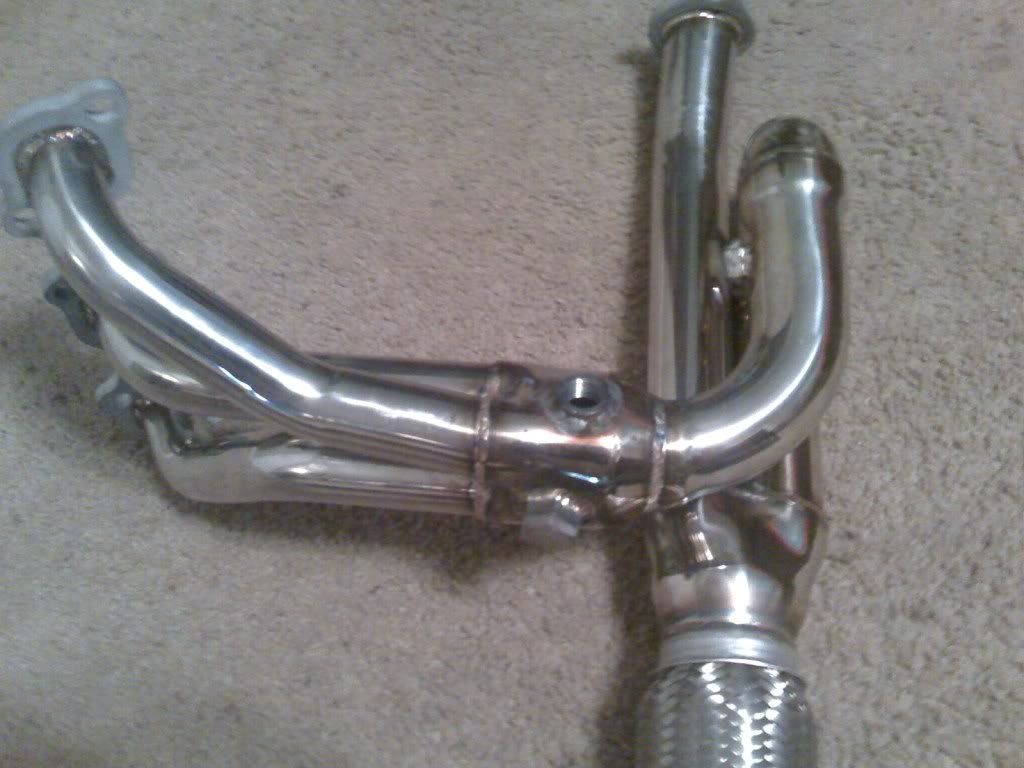

This will give me a lot more room to work with in that cramped rear section of the engine compartment.
Hearing it from guys that have installed these headers numerous times... its a must pre-install mod.
I emailed Nissan Tech Support today to find out if the connectors on a 2.5 are the same for a 3.5. If so... I think these will work:
http://www.2kracing.com/Product/2722.html
http://www.2kracing.com/Product/2722.html
Well... Its more so you don't have to worry about fitting that O2 sensor in the tiny, tiny space between the manifold and the firewall. I've seen pics where the O2 sensor actually rubs against the wall and under hard acceleration or bump in the road it could very well damage the sensor or break it off.
This will give me a lot more room to work with in that cramped rear section of the engine compartment.
Hearing it from guys that have installed these headers numerous times... its a must pre-install mod.
This will give me a lot more room to work with in that cramped rear section of the engine compartment.
Hearing it from guys that have installed these headers numerous times... its a must pre-install mod.
Edit: Are there any bungs you'd need to fill/block that were already welded into the headers?
Last edited by MoncefA33; May 26, 2009 at 11:11 AM.
They never got back to me. I posted a thread in the main section and it seemed that most didn;t think the connectors looked the same.
So while that's not a definite answer it's somewhat of a good indicator that those wouldn't work.
The search continues...
So while that's not a definite answer it's somewhat of a good indicator that those wouldn't work.
The search continues...

The extender we tried on Maximo's OBX header install didn't prevent the CEL. But some extender are designed better than others! I would get the ones with only 1 or 2 holes no more! You want it to sniff but a restricted sniff! Unsure what brand...but did see the extenders work on a SRT-4 Neon! It had only one hole to sniff thru! Maybe our system on the Maxima are more accurate!!!
The extender we tried on Maximo's OBX header install didn't prevent the CEL. But some extender are designed better than others! I would get the ones with only 1 or 2 holes no more! You want it to sniff but a restricted sniff! Unsure what brand...but did see the extenders work on a SRT-4 Neon! It had only one hole to sniff thru! Maybe our system on the Maxima are more accurate!!!
Are you referring to a spark plug anti-fouler?
He's referring to an O2 sensor harness extension, if you read the post he quoted...